MCQ
$\Psi^2$ (psi) the wave function represents the probability of finding electron. Its value depends:
- Ahow much it is near the nucleus
- ✓upon the type of orbital
- Chow much it is inside the nucleus
- Dhow much it is far from the nucleus
Generate a complete, print-ready paper with questions like this in minutes — across 16+ boards, with answer keys.
$(A)$ Stereochemistry of addition - SYN ONLY
$(B)$ Regiochemistry of addition- ANTI-MARKOVNIKOV OR ANTI-MARKOVNIKOV LIKE
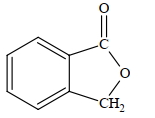
$(i)$ $\left[ FeF _{6}\right]^{3-}$
$(ii)$ $\left[ Co \left( NH _{3}\right)_{6}\right]^{3+}$
$(iii)$ $\left[ NiCl _{4}\right]^{2-}$
$(iv)$ $\left[ Cu \left( NH _{3}\right)_{4}\right]^{2+}$
$(a)$ They might be configurational isomers $(b)$ They might be diastereomers
$(c)$ They might be constitutional isomers $(d)$ They might be tautomers
$(e)$ They might be conformational isomers $(f)$ They might be enantiomers
$(g)$ They might be positional isomers
(Molecular mass of $CHCl_3 = 119.5 \,u$ and molecular mass of $CH_2Cl_2 = 85\, u$)