MCQ
Radiocarbon is produced in the atmosphere as a result of:
  • A
    Collision between fast neutrons and nitrogen nuclei present in the atmosphere.
  • B
    Action of ultraviolet light from the sun on atmospheric oxygen.
  • C
    Action of solar radiations particularly cosmic rays on carbon dioxide present in the atmosphere.
  • D
    Lightning discharge in atmosphere.

Answer

  1. Collision between fast neutrons and nitrogen nuclei present in the atmosphere.

Explanation:

Radiocarbon is produced in the atmosphere as result of collision between fast neutrons and nitrogen nuclei present in the atmosphere.

Nuclear reaction is given as:

7​N14 + 0​n1 → 6​C14 + 1​H1

Need a full question paper?

Generate a complete, print-ready paper with questions like this in minutes — across 16+ boards, with answer keys.

Start Generating Free

Similar questions

When the intensity of magnetic field is increased four times the time period of suspended magnetic needle becomes :
What is the atomic mass (u) of chlorine?

On increasing the temperature of a conductor, its resistance increases because

(a) Relaxation time decreases

(b) Mass of the electrons increases

(c) Electron density decreases

(d) None of the above

Which of the following increases the maximum kinetic energy of the photoelectrons emitted?

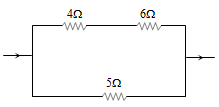
In the circuit shown in figure, the heat produced in 5 ohm resistance is 10 calories per second. The heat produced in 4 resistance is

(a) 1 cal / sec

(b) 2 cal/sec

(c) 3 cal / sec

(d) 4 cal/sec

In an electromagnetic wave, the electric magnetising fields are $\frac{100\text{V}}{\text{m}}$ and $\frac{0.265\text{A}}{\text{m}}$ The maximum energy flow is?

An electron and a proton with equal momentum enter perpendicularly into a uniform magnetic field, then

(a) The path of proton shall be more curved than that of electron

(b) The path of proton shall be less curved than that of electron

(c) Both are equally curved

(d) Path of both will be straight line

Hydrogen atom excites energy level from fundamental state to n = 3. Number of spectral lines according to Bohr, is?

The spectrum of light emitted by a glowing solid is

(a) Continuous spectrum

(b) Line spectrum

(c) Band spectrum

(d) Absorption spectrum

An observer on earth observes that wave length of spectral line in spectrum of a milky way shifts towards red end of spectrum. According to the observer, the milky-way is: