Question
Read the text carefully and answer the questions:
Understanding Perpetuity
An annuity is a stream of cash flows. A perpetuity is a type of annuity that lasts forever, into perpetuity. The stream of cash flows continues for an infinite amount of time. In finance, a person uses the perpetuity calculation in valuation methodologies to find the present value of a company's cash flows when discounted back at a certain rate.
An example of a financial instrument with perpetual cash flows was the British-issued bonds known as consols, which the Bank of England phased out in 2015. By purchasing a consol from the British government, the bondholder was entitled to receive annual interest payments forever.
Perpetuity Present Value Formula
The formula to calculate the present value of perpetuity or security with perpetual cash flows is as follows:
$PV =\frac{C}{(1+r)^1}+\frac{C}{(1+r)^2}+\frac{C}{(1+r)^3} \cdots=\frac{C}{r}$
where:
PV present value
C = cash flow
r = discount rate
(a) Find the present value of a perpetuity of ₹ 900 payable at the end of each year, if money is worth 5% per annum.
(b) Find the present value of a perpetuity of ₹ 500 payable at the end of each quarter, if money is worth 8% per annum.
(c) Find the present value of a perpetuity of ₹ 300 payable at the beginning of every 6 months, if money is worth 6% per annum.
Answer

Read the text carefully and answer the questions:
Understanding Perpetuity
An annuity is a stream of cash flows. A perpetuity is a type of annuity that lasts forever, into perpetuity. The stream of cash flows continues for an infinite amount of time. In finance, a person uses the perpetuity calculation in valuation methodologies to find the present value of a company's cash flows when discounted back at a certain rate.
An example of a financial instrument with perpetual cash flows was the British-issued bonds known as consols, which the Bank of England phased out in 2015. By purchasing a consol from the British government, the bondholder was entitled to receive annual
interest payments forever.
Perpetuity Present Value Formula
The formula to calculate the present value of perpetuity or security with perpetual cash flows is as follows:
$PV =\frac{C}{(1+r)^1}+\frac{C}{(1+r)^2}+\frac{C}{(1+r)^3} \cdots=\frac{C}{r}$
where:
PV present value
C = cash flow
r = discount rate
(i) ₹ 18000
(ii) ₹ 25000
(iii)₹ 10300

Need a full question paper?

Generate a complete, print-ready paper with questions like this in minutes — across 16+ boards, with answer keys.

Start Generating Free

Similar questions

An automobile company uses three types of steel $\mathrm{S}_{1}, \mathrm{~S}_{2}$ and $\mathrm{S}_{3}$ for producing three types of cars $\mathrm{C}_{1}, \mathrm{C}_{2}$ and $\mathrm{C}_{3}$.
Steel requirements (in tons) for each type of cars are given below:
 Cars
steel$\mathrm{C}_{1}$$\mathrm{C}_{2}$$\mathrm{C}_{3}$
$\mathrm{~S}_{1}$234
$\mathrm{~S}_{2}$112
$\mathrm{~S}_{3}$321
Using Cramer's rule, find the number of cars of each type which can be produced using 29, 13 and 16 tonnes of steel of three types respectively.
Read the text carefully and answer the questions:
The nominal rate of return is the amount of money generated by an investment before factoring in expenses such as taxes, investment fees, and inflation. If an investment generated a $10 \%$ return, the nominal rate would equal $10 \%$. After factoring in inflation during the investment period, the actual return would likely be lower. However, the nominal rate of return has its merits since it allows investors to compare the performance of an investment irrespective of the different tax rates that might be applied for each investment.
(a) A person invests ₹ 10000 in $10 \%$ ₹ 100 shares of a company available at a premium of ₹ 25 . Find his rate of return
(b) A man invests ₹ 22500 in ₹ 50 shares available at $10 \%$ discount. If the dividend paid by the company is $12 \%$, calculate his rate of return.
(c) A person invested ₹200000 in a fund for one year. At the end of the year, the investment was worth ₹216000. Calculate his rate of return.
OR
Balwant invests a sum of money in ₹50 shares paying $10 \%$ dividend quoted at $20 \%$ discount. If his annual dividend is ₹ 600 , calculate his rate of return from the investment.
Read the following text and answer the following questions on the basis of the same:
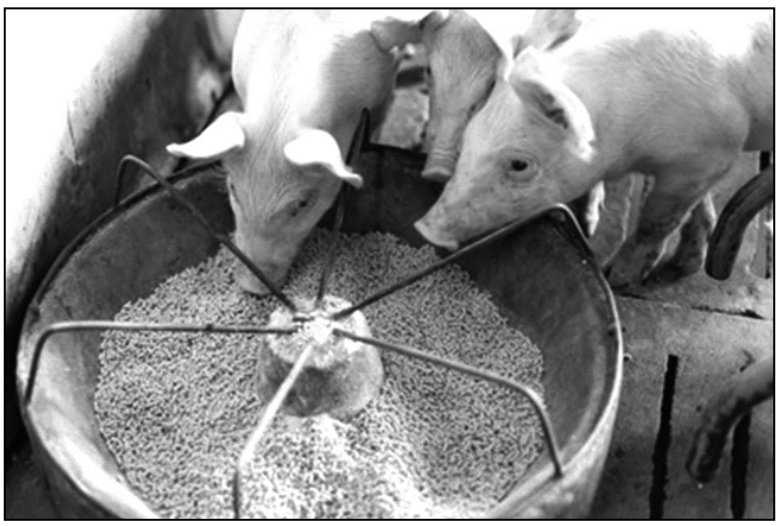
For a random sample of 10 pigs fed on diet A, the increases in weight in pounds in a certain period were 10, 6, 16, 17, 13, 12, 8, 14, 15, 9 lbs for another random sample of 12 pigs fed on diet B, the increases in the same period were 7, 13, 22, 15, 12, 14, 18, 8, 21, 23, 10, 17 lbs

Image

Q.1. Mean of increases in weight on diet A is
(A) 12 pounds (B) 15 pounds (C) 20 pounds (D) 27 pounds

Q.2. Sum of square of deviation for diet B is:
(A) 120 (B) 314 (C) 150 (D) 214

Q.3. The number of degrees of freedom is:
(A) 10 (B) 12 (C) 15 (D) 20

Q.4. The standard error of this is:
(A) 4.65 (B) 4.55 (C) 46.5 (D) 4.10
Loans are an integral part of our lives today. We take loans for a specific purpose - for buying a home, or a car,or sending kids abroad for education - loans help us achieve some significant life goals. That said, when we talk about loans, the word “EMI", eventually crops up because the amount we borrow has to be returned to the lender
with interest.
Suppose a person borrows ₹1 lakh for one year at the fixed rate of 9.5 percent per annum with a monthly rest. In this case, the EMI for the borrower for 12 months works out to approximately ₹8,768.
Example:
In year 2000, Mr. Tanwar took a home loan of ₹3000000 from State Bank of India at 7.5% p.a. compounded monthly for 20 years.
(a) Find the equated monthly installment paid by Mr. Tanwar.
(b) Find interest paid by Mr. Tanwar in 150th payment.
(c) Find Principal paid by Mr. Tanwar in 150th payment
OR
Find principal outstanding at the beginning of 193th month.
A bakery in an establishment produces and sells flour-based food baked in an oven such as bread, cakes, pastries, etc. Ujjwal cake store makes two types of cake. First kind of cake requires 200g of flour and 25 g of fat and 2nd type of cake requires 100g of flour and 50 g of fat.
Image
Based on above information answer the following questions.
i. If the bakery make x cakes of first type and y cakes of 2nd type and it can use maximum 5 kg flour, then write the constraint.
ii. If Bakery can use maximum 1 kg fat, then write the constraint.
iii. Represent total number of cakes made by bakery which is represented by Z.
iv. What is the maximum number of total cakes which can be made by bakery, assuming that there is no shortage of ingredients used in making the cakes?
v. What are number of first and second type of cakes?