Question
Read the following and answer any four questions from (i) to (v) given below:

During copulation, semen is released by the penis into the vagina. 'The motile sperms swim rapidly, fuse with ovum in the ampullary region, resulting in fertilisation. Haploid nucleus of sperm fuse with that of ovum to form diploid zygote.

  1. In female genital tract, sperms are made capable of fertilising the egg. This phenomenon of sperm activation is called:
  1. Amphimixis.
  2. Cortical reaction.
  3. Capacitation.
  4. Acrosomal reaction.
  1. Select the correct sequence of various physical and chemical events that take place during fertilisation.
  1. Fusion of cortical granules with plasma membrane of secondary oocyte.
  2. Formation of fertilisation cone to receive sperm.
  3. Release of sperm lysin from acrosome.
  4. Mixing up of chromosomes of a sperm and an ovum.
  1. R → Q → P → S
  2. Q → S → R → P
  3. Q → R → S → P
  4. R → P → Q → S
  1. Assertion: Only one sperm can fertilise an ovum.

Reason: The secretion of acrosome help the sperm to enter into cytoplasm of ovum through zona pellucida and plasma membrane.

  1. Both assertion and reason are true, and reason is the correct explanation of assertion.
  2. Both assertion and reason are true, but reason is not the correct explanation of assertion.
  3. Assertion is true, but reason is false.
  4. Both assertion and reason are false
  1. What is the significance of fertilisation?
  1. It restores haploid number of chromosomes.
  2. It produces offspring genetically identical to parents.
  3. It initiates cleavage.
  4. Both (b) and (c).
  1. Site of fertilisation in humans is:
  1. Endometrium of uterine cavity.
  2. Ampullary isthmic junction of oviduct.
  3. Cervix of uterus.
  4. Infundibulum of fallopian tube.

Answer

  1. (c) Capacitation.

​​​​​​​​​​​​​​​​​​​​​​​​​​​​​​​​​​​​​​​​​​​​​​​​​Explanation:

The secretions of female genital tract remove coating substances deposited on the surface of the sperms. This phenomenon of sperm activation is called capacitation.

  1. (d) R → P → Q → S
  2. (b) Both assertion and reason are true, but reason is not the correct explanation of assertion.

​​​​​​​Explanation:

Binding of sperm to the secondary oocyte induces depolarisation of the oocyte plasma membrane. Depolarisation prevents polyspermy and ensures monospermy.

  1. (c) It initiates cleavage.

​​​​​​​Explanation:

Fertilisation restores diploid number of chromosomes. It introduces variations as it combines characters of the two parents.

  1. (b) Ampullary isthmic junction of oviduct.

Need a full question paper?

Generate a complete, print-ready paper with questions like this in minutes — across 16+ boards, with answer keys.

Start Generating Free

Similar questions

Read the following and answer any four questions from (i) to (v) given below:

Age sex structure of a population can be depicted in the form of a pyramid by plotting the percentage of population of each sex in each age class. Two age sex pyramids are as follows.

  1. Which of the following is correct regarding pyramid B?
  1. It represents stable population.
  2. It represents expanding population.
  3. It represents declining population.
  4. Both (a) and (b).
  1. Total number of individuals of a species per unit area per unit time is called.
  1. Population size.
  2. Population density.
  3. Demography.
  4. Population dynamics.
  1. Which of the following is correct regarding age sex pyramid A and B?
  1. A represents the age sex pyramid of developed country.
  2. B represents the age sex pyramid of developing country.
  3. A represents rapidly growing population.
  4. Both (a) and (b).
  1. A population with a large proportion of older individuals than younger ones will likely to:
  1. Grow larger first and then decline.
  2. Continue to grow indefinitely.
  3. Decline.
  4. None of these.
  1. Assertion: Bell shaped age pyramid represents a stable population.

Reason: ln a stable population, proportion of individuals in reproductive age group is higher than the individuals in pre reproductive age group.

  1. Both assertion and reason are true and reason is the correct explanation of assertion.
  2. Both assertion and reason are true but reason is not the correct explanation of assertion.
  3. Assertion is true but reason is false.
  4. Both assertion and reason are false.
Read the following text carefully and answer the questions that follow:
Gene regulation is the mechanism of switching off and switching on of the genes depending upon the requirement of cells and the state of development. Gene regulation is of two types: negative and positive. In negative gene regulation, the genes continue expressing their effect till their activity is suppressed. Positive gene regulation is the one in which the genes remain non-expressed unless and until they are induced to do it. Operon model is a co-ordinated group of genes such as structural gene, operator gene, promoter gene, regulator gene which function together and regulate a metabolic pathway as a unit, e.g., lac operon, trp operon, ara operon, etc.
Image
i. Regulation of gene expression occurs at which the level? (1)
ii. What is complementary to an mRNA molecule transcribed from the lac operon contains nucleotide sequences? (1)
iii. Describes the control of transcription of the genes involved in the breakdown of lactose in Escherichia coli?
(2)
OR
What is the function of catabolic activator protein in lac operon? (2)
Read the following and answer any four questions from (i) to (v) given below:
Disposal of untreated sewage into the river or freshwater pond causes huge water pollution. Four water samples from different sources (A, B, C, D) are collected and tested for BOD value in a lab to assess their quality. The BOD values are presented in the given table. Water samples are collected from primary effluent, secondary effluent, untreated sewage and river water. Study the given table and answer the following.
Sample BOD
A 20mg/ L
B 5mg/ L
C 300mg/ L
D 400mg/ L
  1. The source of sample 'C' is:
  1. River water.
  2. Primary effluent.
  3. Secondary effluent.
  4. Untreated sewage water.
  1. If sewage in untreated condition is disposed off in a freshwater body then.
  1. BOD and dissolved oxygen both will increase.
  2. BOD will increase and dissolved oxygen will decreas.
  3. BOD will decrease and dissolved oxygen will increase.
  4. BOD and dissolved oxygen both will decrease.
  1. A large number of pathogenic microbes can be present in water sample of:
  1. C
  2. A
  3. D
  4. Both (a) and (c).
  1. High value of BOD in sample O is due to:
  1. High amount of organic wastes and aerobic microbes.
  2. High amount of inorganic wastes and anaerobic microbes.
  3. High amount of organic wastes and anaerobic microbes.
  4. High amount of inorganic wastes and aerobic microbes.
  1. River water is represented by the sample.
  1. A
  2. B
  3. C
  4. D
Explain co-dominance in humans with the help of example.
Explain the amplification of gene of interest using PCR (Diagram is must)
Read the following and answer any four questions from (i) to (v) given below:
The pollen grains or microspores are the male reproductive bodies of a flower and are contained in the pollen sac or microsporangia. Each pollen grain consists of a single microscopic cell, possessing two coats: the exine and the in tine. The exine of a pollen grain is made of chemically stable material. Because of this, pollen grains are often very well preserved for thousands of years in soil and sediments.
  1. One of the most resistant biological material present in the exine of pollen grain is:
  1. Pectocellulose.
  2. Sporopollenin.
  3. Suberin.
  4. Cellulose.
  1. The exine possesses one or more thin places known as:
  1. Raphe.
  2. Germ pores.
  3. Hilum.
  4. Endothecium.
  1. What is the function of germ pore?
  1. Emergence of radicle.
  2. Absorption of water for seed germination.
  3. Initiation of pollen tube.
  4. All of these.
  1. What is the key advantage to the plant for having such strong pollen grain walls?
  1. It protects the vital genetic material in the pollen grain.
  2. It allows pollen to serve as a valuable fossil record for the study of ancient plants.
  3. It prevents the pollen tube from growing out before the pollen grain reaches the stigma of a compatible species.
  4. It gives weight to the pollen grain, allowing it to cling better to the body surfaces of insect pollinators.
  1. The number of germ pores in dicots and monocots respectively are:
  1. One and three.
  2. Three and two.
  3. Two and three.
  4. Three and one.
Read the following and answer any four questions from (i) to (v) given below:

Over population causes number of family problems. Strategies like birth control methods help to control population explosion. Natural methods of birth control do not involve medications or devices to prevent pregnancy, but rather rely on behavioural practices and/ or making observations about menstrual cycle.

  1. Which method helps in contraception by temporary absence of sex?
  1. Coitus interruptus.
  2. Withdrawal method.
  3. Rhythm method.
  4. Lactational amenorrhea method.
  1. Assertion: The effectiveness of coitus interruptus method is limited.

Reason: Some sperms may pass into vagina before ejaculation.

  1. Both assertion and reason are true, and reason is the correct explanation of assertion.
  2. Both assertion and reason are true, but reason is not the correct explanation of assertion.
  3. Assertion is true, but reason is false.
  4. Both assertion and reason are false.
  1. Why is lactational amenorrhea effective for about 4-5 months after parturition?
  1. Ovulation occurs on about the 14th day of menstruation.
  2. Ovulation does not occur during intense lactation.
  3. This method inhibits mobility of sperms.
  4. Both (b) and (c).
  1. Which fact is not the basis of periodic absence method of birth control?
  1. Ovum remains alive for about 1-2 days.
  2. Ovulation occurs on about 14th day of menstruation.
  3. Sperms survive for about 3 days.
  4. Alteration in uterine endometrium.
  1. On which days of menstrual cycle should coitus be avoided to prevent fertilisation?
  1. 10-17
  2. 6-13
  3. 1-5
  4. 15-28
Read the following and answer any four questions from (i) to (v) given below:

Ginkgo tree has been saved from extinction by selective breeding followed by channeling into trade of nature lovers. This is an ex-situ conservation, where endangered species are protected from all adverse factors. Offspring produced in captive breeding are released in natural habitat for acclimatisation.

  1. What is the significance of offsite collections?
  1. Restock depleted populations.
  2. Protection of endangered species.
  3. Reintroduce species in wild.
  4. All of these.
  1. Which of the following is not an ex-situ conservation?
  1. Wetlands
  2. Orchards
  3. Aquaria
  4. Botanical gardens.
  1. Select the incorrect statements for ex-situ conservation.
  1. It is conservation of species outside their natural habitats.
  2. Endangered species are kept under human supervision and provided all the essentials.
  3. The species population recovers in natural environment.
  4. Both (b) and (c).
  1. Conditions maintained in seed banks for orthodox seeds are:
  1. Low moisture content.
  2. Anaerobic conditions.
  3. Low temperature.
  4. All of these.
  1. Assertion: Animal species which have become extinct in wild continue to be maintained in zoological parks.

Reason: Captive breeding is the conservation of those cases where these is no realistic chance of in-situ survival.

  1. Both assertion and reason are true and reason is the correct explanation of assertion.
  2. Both assertion and reason are true but reason is not the correct explanation of assertion.
  3. Assertion is true but reason is false.
  4. Both assertion and reason are false.
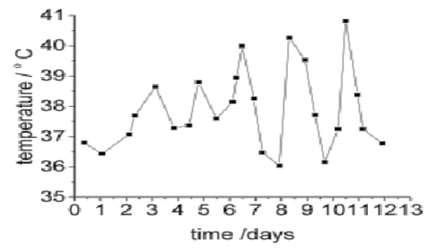
Given below is the pattern of temperature in a person suffering from a non-viral disease transmitted by mosquitoes. Study the graph and answer the questions that follow:
Image
A. Explain the factor(s) responsible for this pattern of temperature.
B. How does this pathogen multiply in the human body?
C. How is this infection transmitted to humans?
OR
D. Which stages of the life cycle of this pathogen are completed in the mosquito's gut?
Define ecological pyramids and describe with examples, pyramids of number and biomass.