Question
Read the passage given below and answer the following questions from (i) to (v).
When a system (such as a simple pendulum or a block attached to a spring) is displaced from its equilibrium position and released, it oscillates with its natural frequency $\omega,$ and the oscillations are called free oscillations. All free oscillations eventually die out because of the ever present damping forces. However, an external agency can maintain these oscillations. These are called forced or driven oscillations. We consider the case when the external force is itself periodic, with a frequency wd called the driven frequency. The most important fact of forced periodic oscillations is that the system oscillates not with its natural frequency $\omega,$ but at the frequency $\omega,$ d of the external agency; the free oscillations die out due to damping. The most familiar example of forced oscillation is when a child in a garden swing periodically presses his feet against the ground (or someone else periodically gives the child a push) to maintain the oscillations. The maximum possible amplitude for a given driving frequency is governed by the driving frequency and the damping, and is never infinity. The phenomenon of increase in amplitude when the driving force is close to the natural frequency of the oscillator is called resonance. In our daily life, we encounter phenomena which involve resonance. Your experience with swings is a good example of resonance. You might have realized that the skill in swinging to greater heights lies in the synchronization of the rhythm of pushing against the ground with the natural frequency of the swing.
  1. When a system oscillates with its natural frequency ω, and the oscillations are called:
  1. Free oscillations.
  2. Forced oscillations.
  1. All free oscillations eventually die out because of:
  1. Damping force.
  2. electromagnetic force.
  3. None of these.
  1. What is free oscillation?
  2. What is forced oscillations?
  3. What is resonance?

Answer

  1. a) Free oscillations.
  2. a) Damping force.
  3. When a system (such as a simple pendulum or a block attached to a spring) is displaced from its equilibrium position and released, it oscillates with its natural frequency ω, and the oscillations are called free oscillations.
  4. Forced oscillations are oscillations where external force drives the oscillations with frequency given by external force.
  5. The phenomenon of increase in amplitude when the driving force is close to the natural frequency of the oscillator is called resonance. In our daily life, we encounter phenomena which involve resonance. Your experience with swings is a good example of resonance. You might have realized that the skill in swinging to greater heights lies in the synchronization of the rhythm of pushing against the ground with the natural frequency of the swing.

Need a full question paper?

Generate a complete, print-ready paper with questions like this in minutes — across 16+ boards, with answer keys.

Start Generating Free

Similar questions

The weight Mg of an extended body is generally shown in a diagram to act through the centre of mass. Does it mean that the earth does not attract other particles?
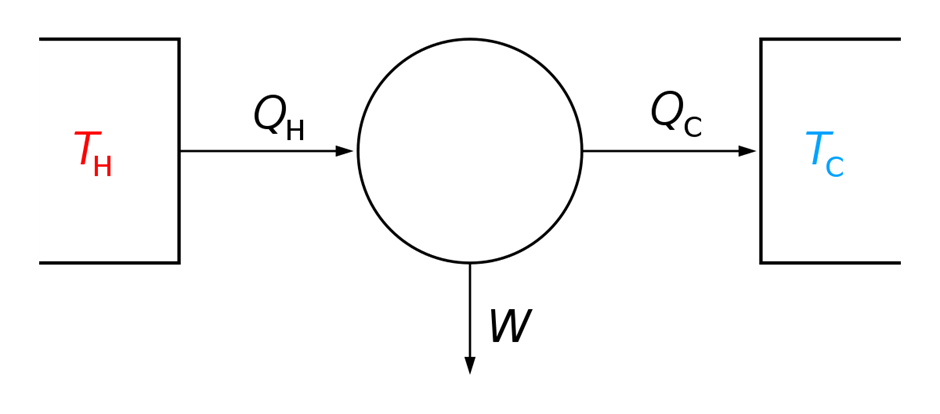
Read the passage given below and answer the following questions from (i) to (v) Carnot principles are only for the cyclical devices like heat engines, which state that the efficiency of an irreversible heat engine is always less than the efficiency of a reversible one operating between the same two reservoirs. The efficiencies of all reversible heat engines operating between the same two reservoirs are the same.
  1. In a Carnot cycle, the working medium rejects heat at a ________ temperature.
    1. Higher
    2. Lower
    3. constant
    4. none of these
  2. Which of the following is NOT a state variable?
    1. work
    2. internal energy.
    3. entropy
    4. all of the above
  3. The efficiency of reversible heat engine is:
    1. $1 +(T_2/T_1)$
    2. $(T_1/T_2)+1$
    3. $(T_1 /T_2)- 1$
    4. $1 - (T_2 / T_1)$
  4. Other factors remaining constant, if the temperature of the source is increased, the efficiency of the Carnot engine will:
    1. decrease
    2. increase
    3. constant
    4. increase or decrease depending upon temperature ratio
  5. Over the complete Carnot cycle, entropy:
    1. increase
    2. decrease
    3. constant
    4. first increase and then decrease
Read the passage given below and answer the following questions from 1 to 5.In physics, we can classify quantities as scalars or vectors. Basically, the difference is that a direction is associated with a vector but not with a scalar. A scalar quantity is a quantity with magnitude only. It is specified completely by a single number, along with the proper unit. Examples are: the distance between two points, mass of an object, the temperature of a body and the time at which a certain event happened. The rules for combining scalars are the rules of ordinary algebra. Scalars can be added, subtracted, multiplied and divided just as the ordinary numbers. A vector quantity is a quantity that has both a magnitude and a direction and obeys the triangle law of addition or equivalently the parallelogram law of addition. So, a vector is specified by giving its magnitude by a number and its direction. Some physical quantities that are represented by vectors are displacement, velocity, acceleration and force. Answer the following
  1. Force is example of:
  1. Scalar
  2. Vector
  3. Tensor
  4. None of these
  1. Mass of an object is:
  1. Scalar
  2. Vector
  3. Tensor
  4. None of these
  1. Define scalar quantity and vector quantity
  1. Can we add vectors like ordinary algebra? If not then how vectors are added?
  1. Differentiate between scalar and vectors
Read the passage given below and answer the following questions from 1 to 3. Bernoulli's Theorem It states that for the streamline flow of an ideal liquid through a tube, the total energy (the sum of pressure energy, the potential energy and kinetic energy) per unit volume remains constant at every cross-section throughout the tube.$\text{P}+\text{pgh}+\frac{1}{2}\text{pv}^2$ = constant
or $\frac{\text{P}}{\text{pg}}+\text{h}+\frac{1}{2}\frac{\text{v}^2}{\text{g}}$ = another constant Here, $\frac{\text{P}}{\text{pg}}$ = pressure head; h = potential head and $\frac{1}{2}\frac{\text{v}^2}{\text{g}}$ velocity head. If the liquid is flowing through a horizontal tube, then h is constant, then according to Bernoulli’s theorem,$\frac{\text{P}}{\text{pg}}+\frac{1}{2}\frac{\text{v}^2}{\text{g}}$ constant
Bernoulli’s theorem is based on law of conser - vation of energy.
  1. Bernoulli’s equation for steady, non-viscous, incompressible flow expresses the:
  1. Conservation of linear momentum
  2. Conservation of angular momentum
  3. Conservation of energy
  4. Conservation of mass
  1. Applications of Bernoulli’s theorem can be seen in:
  1. Dynamic lift of aeroplane
  2. Hydraulic press
  3. Helicopter
  4. None of these
  1. A tank filled with fresh water has a hole in its bottom and water is flowing out of it. If the size of the hole is increased, then:
  1. The volume of water flowing out per second will decrease.
  2. The velocity of outflow of water remains unchanged.
  3. The volume of water flowing out per second remains zero.
  4. Both (b) and (c)
A deflection magnetometer is placed with its arms in north-south direction. How and where should a short magnet having $\frac{\text{M}}{\text{B}_\text{H}}=40\text{A-m}^2\text{T}$ be placed so that the needle can stay in any position?
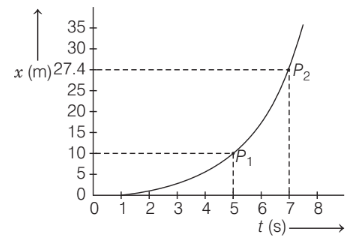
When an object is in motion, its position changes with time. So, the quantity that describes how fast is the position changingm w.r.t. time and in what direction is given by average velocity. It is defined as the change in position or displacement $(\triangle\text{x})$ divided by the time interval $(\triangle\text{t})$ in which that displacement occur. However, the quantity used to describe the rate of motion over the actual path, is average speed. It defined as the total distance travelled by the object divided by the total time taken.
  1. A $250m$ long train is moving with a uniform velocity of $45\ kmh^{-1}.$ The time taken by the train to cross a bridge of length $750m$ is:
  1. $56s$
  2. $68s$
  3. $80s$
  4. $92s$
  1. A truck requires 3hr to complete a journey of $150\ km$. What is average speed?
  1. $50\ km/h$
  2. $25\ km/h$
  3. $15\ km/h$
  4. $10\ km/h$
  1. Average speed of a car between points $A$ and $B$ is $20\ m/s$, between $B$ and $C$ is 15m/s and between $C$ and $D$ is $10\ m/s.$ What is the average speed between $A$ and $D$, if the time taken in the mentioned sections is $20s, 10s$ and $5s,$ respectively?
  1. $17.14\ m/s$
  2. $15\ m/s$
  3. $10\ m/s$
  4. $45\ m/s$
  1. A cyclist is moving on a circular track of radius 40m completes half a revolution in $40s.$ Its average velocity is:
  1. $\text{Zero}$
  2. $2\text{ms}^{-1}$
  3. $4\pi\text{ms}^{-1}$
  4. $8\pi\text{ms}^{-1}$
  1. In the following graph, average velocity is geometrically represented by:
  1. Length of the line $P_1 P_2.$
  2. Slope of the straight line $P_1 P_2.$
  3. Slope of the tangent to the curve at $P_1.$
  4. Slope of the tangent to the curve at $P_2.$
Read the passage given below and answer the following questions from $(i)$ to $(v)$. All engineering phenomena deal with definite and measured quantities and so depend on the making of the measurement. We must be
clear and precise in making these measurements. To make a measurement, magnitude of the physical quantity (unknown) is compared.
The record of a measurement consists of three parts, i.e. the dimension of the quantity, the unit which represents a standard quantity and a number which is the ratio of the measured quantity to the standard quantity.
  1. A device which is used for measurement of length to an accuracy of about $10^{-5}m$, is:
  1. Screw gauge
  2. Spherometer
  3. Vernier callipers
  4. Either $(a)$ or $(b)$
  1. Which of the technique is not used for measuring time intervals?
  1. Electrical oscillator
  2. Atomic clock
  3. Spring oscillator
  4. Decay of elementary particles
  1. The mean length of an object is 5cm. Which of the following measurements is most accurate?
  1. $4.9\ cm$
  2. $4.805\ cm$
  3. $5.25\ cm$
  4. $5.4\ cm$
  1. If the length of rectangle $l = 10.5\ cm,$ breadth $b = 2.1\ cm$ and minimum possible measurement by scale$ = 0.1\ cm,$ then the area is:
  1. $22.0\ cm^2$
  2. $21.0\ cm^2$
  3. $22.5\ cm^2$
  4. $21.5\ cm^2$
  1. Age of the universe is about $10^{10}$ yr, whereas the mankind has existed for $10^6$ yr. For how many seconds would the man have existed, if age of universe were $1$ day?
  1. $9.2\ s$
  2. $10.2\ s$
  3. $8.6\ s$
  4. $10.5\ s$
The friction coefficient between an athelete's shoes and the ground is 0.90. Suppose a superman wears these shoes and races for 50m. There is no upper limit on his capacity of running at high speeds.
  1. Find the minimum time that he will have to take in completing the 50m starting from rest.
  2. Suppose he takes exactly this minimum time to complete the 50m, what minimum time will he take to stop?
Read the passage given below and answer the following questions from (i) to (v).
A motion that repeats itself at regular intervals of time is called periodic motion. Very often, the body undergoing periodic motion has an equilibrium position somewhere inside its path. When the body is at this position no net external force acts on it. Therefore, if it is left there at rest, it remains there forever. If the body is given a small displacement from the position, a force comes into play which tries to bring the body back to the equilibrium point, giving rise to oscillations or vibrations. Every oscillatory motion is periodic, but every periodic motion need not be oscillatory. Circular motion is a periodic motion, but it is not oscillatory. The smallest interval of time after which the motion is repeated is called its period. Let us denote the period by the symbol T. Its SI unit is second. The reciprocal of T gives the number of repetitions that occur per unit time. This quantity is called the frequency of the periodic motion. It is represented by the symbol n. The relation between n and T is $\text{n}=\frac{1}{\text{T}}$. The unit of n is thus $s^{-1}$​​​​​​​. After the discoverer of radio waves, Heinrich Rudolph Hertz (1857–1894), a special name has been given to the unit of frequency. It is called hertz (abbreviated as Hz). Answer the following.
  1. Every oscillatory motion is periodic motion true or false?
  1. True
  2. False
  1. Circular motion is
  1. Oscillatory motion
  2. Periodic motion
  3. Rotational motion
  4. None of these
  1. Define period. Give its SI unit and dimensions
  2. Define frequency of periodic motion. How it is related to time period
  3. What is oscillatory motion
A tangent galvanometer shows a deflection of $45^{\circ}$ when 10 mA of current is passed through it. If the horizontal component of the earth's magnetic field is $\mathrm{B}_{\mathrm{H}}=3.6 \times 10^{-5} \mathrm{~T}$ and radius of the coil is 10 cm , find the number of turns in the coil.