Question
Rectify the following entries assuming that the narration in each case is correct: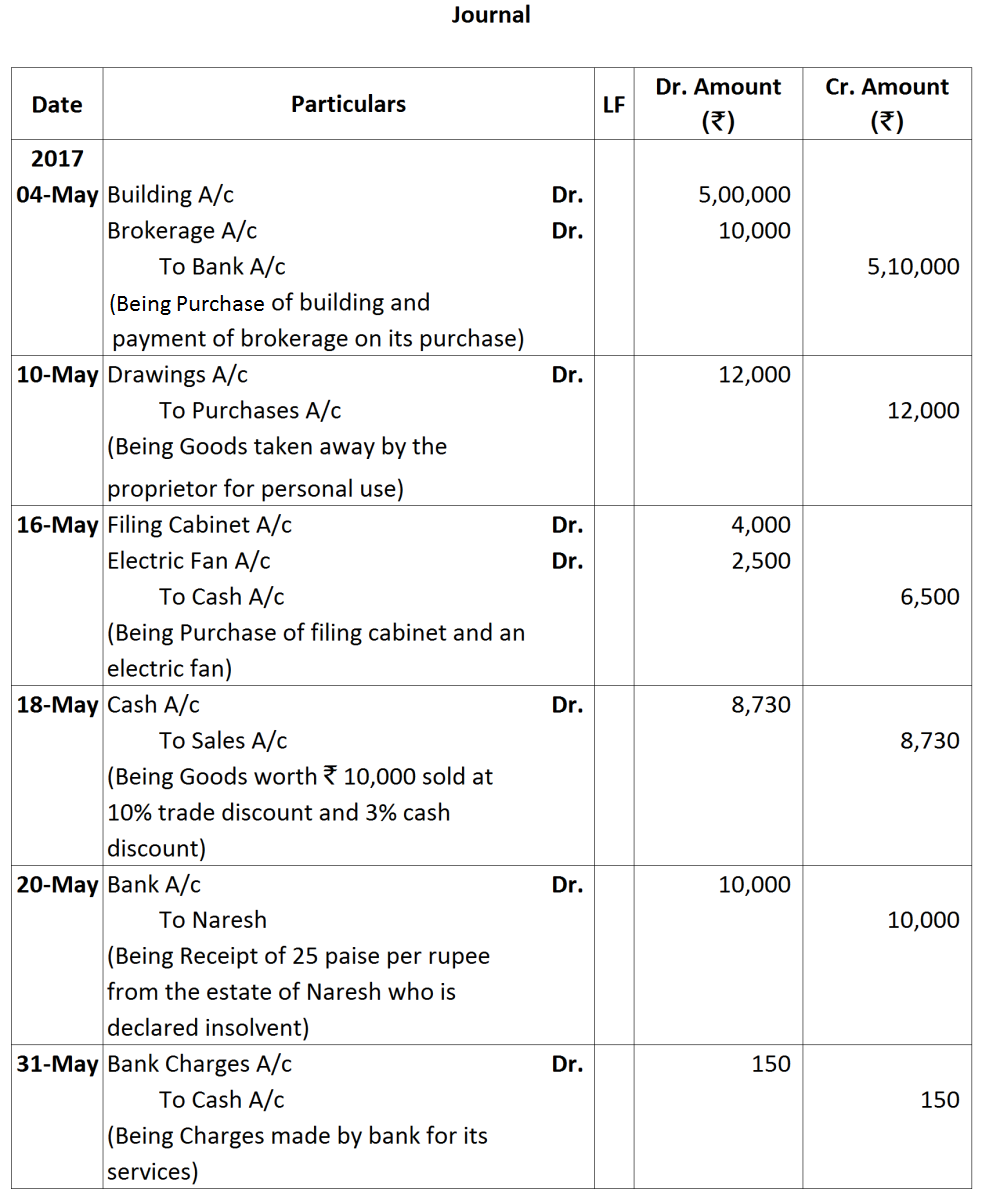
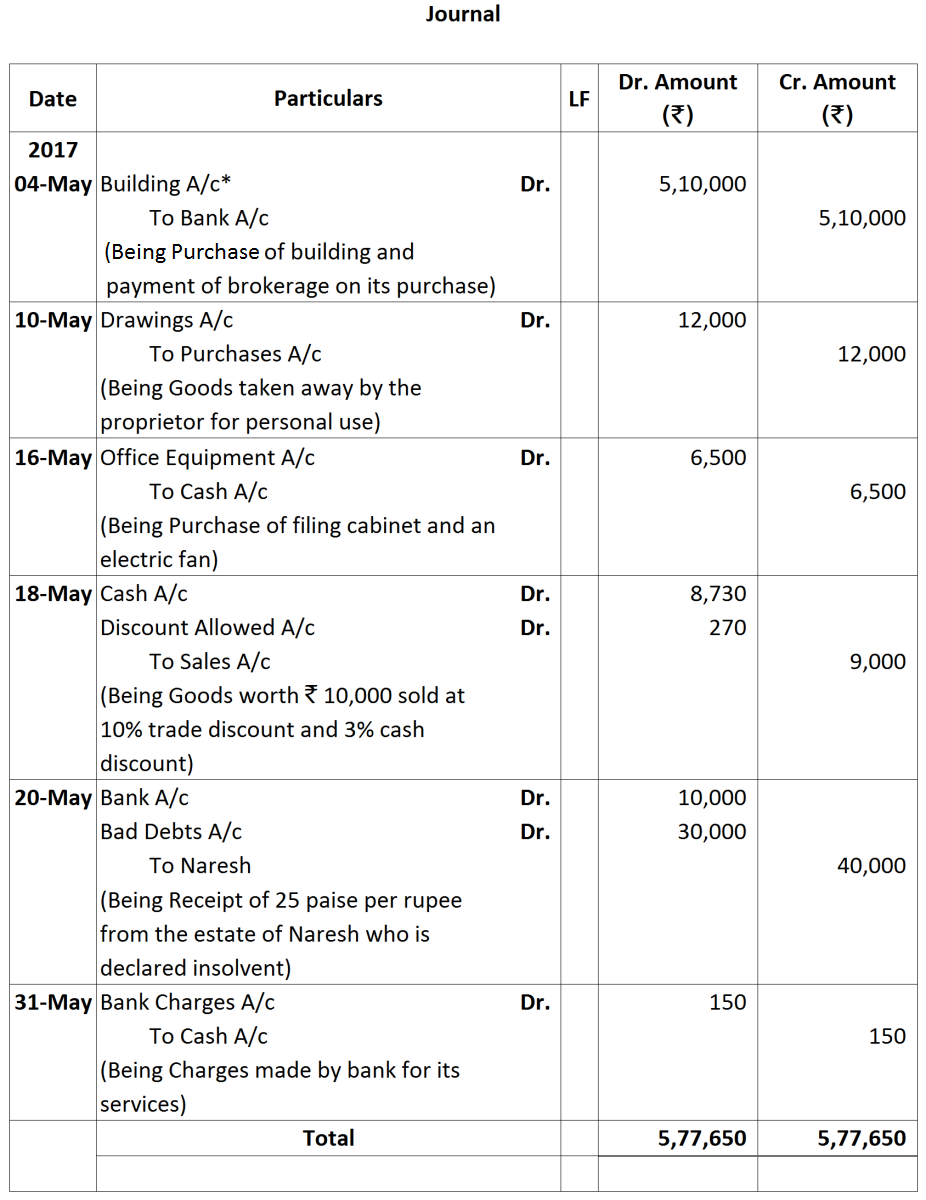 *Payment of brokerage will be included in cost of the building as it is incurred at time of purchase of building.
| Cost | = | 10,000 |
| Less: Trade Discount (10% on 10,000) | = | 1,000 |
| = | $\overline{9,000}$ | |
| Less: Cash Discount (3% on 9,000) | = | 270 |
| Sale Price | = | $\overline{8,730}$ |
Generate a complete, print-ready paper with questions like this in minutes — across 16+ boards, with answer keys.
|
S.no
|
Assets
|
=
|
Liabilities
|
+
|
Capital
|
|
(i)
|
₹ 20,000
|
=
|
₹ 15,000
|
+
|
?
|
|
(ii)
|
?
|
=
|
₹ 5,000
|
+
|
₹ 10,000
|
|
(iii)
|
₹ 10,000
|
=
|
?
|
+
|
₹ 8,000
|
|
|
|
₹
|
|
i.
|
Business started with cash
|
1,75,000
|
|
ii.
|
Purchased goods from Rohit
|
50,000
|
|
iii.
|
Sold goods on credit to Manish (costing ₹ 17,500)
|
20,000
|
|
iv.
|
Purchased furniture for office use
|
10,000
|
|
v.
|
Cash paid to Rohit in full settlement
|
48,500
|
| vi. | Cash received from Manish | 20,000 |
| vii. | Rent paid | 1,000 |
| viii. | Cash withdrew for personal use | 3,000 |
|
|
|
₹
|
|
i.
|
Manu started business with cash
|
50,000
|
|
ii.
|
Bought furniture for
|
500
|
|
iii.
|
Purchased goods on credit
|
4,000
|
|
iv.
|
Sold goods on cash (cost ₹ 500) for
|
700
|
|
v.
|
Received rent
|
200
|
|
vi.
|
Purchased goods for cash
|
1,000
|
| vii. | Withdrew for personal use | 700 |
| viii. | Paid to creditors | 400 |
| ix. | Paid for salaries | 200 |
|
2019
|
|
₹
|
|
March 1
|
Manohar Lal & Sons started business with cash
|
60,000
|
|
March 2
|
Purchased furniture for cash
|
10,000
|
|
March 4
|
Purchased goods for cash
|
25,000
|
|
March 5
|
Bought goods from Kamlesh
|
15,000
|
|
March 10
|
Paid cash to Kamlesh
|
15,000
|
|
March 16
|
Purchased goods from Sohan
|
6,000
|
|
March 18
|
Purchased goods from Sohan for cash
|
8,000
|
|
March 20
|
Paid rent for the office
|
1,000
|