MCQ
Reduction of carboxylic acids gives
  • A
    Alcohol with hydrogen in presence of palladium
  • Alcohol with $LiAl{H_4}$
  • C
    Aldehyde with $LiAl{H_4}$
  • D
    Alcohol with $2HI(P)$

Answer

Correct option: B.
Alcohol with $LiAl{H_4}$
b
(b)$C{H_3}COOH\xrightarrow{{LiAl{H_4}}}C{H_3}C{H_2}OH$

Need a full question paper?

Generate a complete, print-ready paper with questions like this in minutes — across 16+ boards, with answer keys.

Start Generating Free

Similar questions

In the following sets of reactants which two sets best exhibit the amphoteric characters of $Al_2O_3. xH_2O$ ?

Set $1$: $Al_2O_3 .xH_2O\, (s)$ and $OH^-(aq)$

Set $2$: $Al_2O_3 .xH_2O\, (s)$ and $H_2O\,(l)$

Set $3$: $Al_2O_3 .xH_2O\, (s)$ and $H^+(aq)$

Set $4$: $Al_2O_3 .xH_2O\, (s)$ and $NH_3(aq)$
The oxidation number and co-ordination number of cobalt in $K[Co(CO)_4]$ is
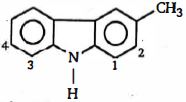
Identify the position where $E.A.S.$ can take place
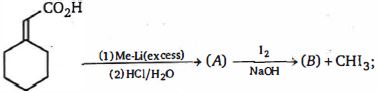
Product $(B)$ in this reaction is
The metal commonly present in brass and german silver is
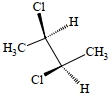
The correct statement $(s)$ about the compound given below is $(are)$ $Image$

$(A)$ The compound is optically active

$(B)$ The compound possesses centre of symmetry

$(C)$ The compound possesses plane of symmetry

$(D)$ The compound possesses axis of symmetry
$Cr^{+2}$ has a magnetic moment same as that of
Toluene is nitrated and the resulting product is reduced with tin and hydrochloric acid. The product so obtained is diazotised and then heated wth cuprous bromide. The reaction mixture so formed contans
Identify $(A)$ in the following reaction sequence

$\mathop {(A)}\limits_{ gives\,\,positive ~\\ iodoform\,Test }  \xrightarrow[\begin{subarray}{l} (ii)\,{H^ + },{H_2}O +  ~\\ (iii)\,conc.\,{H_2}S{O_4}/\Delta \end{subarray} ]{{{\text{(i) C}}{{\text{H}}_{\text{3}}}{\text{MgBr}}}}(B)\xrightarrow{{{O_3}/Zn,{H_2}O}}$

An alkene $A$ on reaction with $\mathrm{O}_{3}$ and $\mathrm{Zn}-\mathrm{H}_{2} \mathrm{O}$ gives propanone and ethanal in equimolar ratio. Addition of $HCl$ to alkene $A$ gives $B$ as the major product. The structure of product $B$ is: