MCQ
Referring to the above two questions, the acceleration due to gravity is given by
  • $10 m / sec ^2$
  • B
    $5 m / sec ^2$
  • C
    $20 m / sec ^2$
  • D
    $2.5 m / sec ^2$

Answer

Correct option: A.
$10 m / sec ^2$
(a) $a_x=\frac{d}{d t}\left(v_x\right)=0, a_y=\frac{d}{d t}\left(v_y\right)=-10 m / s ^2$$\therefore$ Net acceleration $a=\sqrt{a_x^2+a_y^2}=\sqrt{0^2+10^2}=10 m / s$

Need a full question paper?

Generate a complete, print-ready paper with questions like this in minutes — across 16+ boards, with answer keys.
Start Generating Free

Similar questions

The radius of curvature for a convex lens is $40 \mathrm{~cm}$, for each surface. Its refractive index is $1.5$ The focal length will be
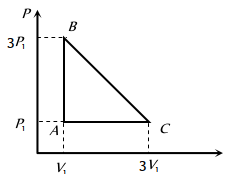
An ideal gas is taken around the cycle $A B C A$ as shown in the $P-V$ diagram. The net work done by the gas during the cycle is equal to
Image
In a thermodynamic process, pressure of a fixed mass of a gas is changed in such a manner that the gas molecules gives out $20 \mathrm{~J}$ of heat and $10 \mathrm{~J}$ of work is done on the gas. If the initial internal energy of the gas was $40 \mathrm{~J}$, then the final internal energy will be
The stationary wave $y=2 a \sin k x \cos \omega t$ in a closed organ pipe is the result of the superposition of $y=a \sin (\omega t-k x)$ and
Out of the following statements which is not correct
The focal length of a concave mirror is $50 \mathrm{~cm}$. Where an object be placed so that its image is two times and inverted
A galvanometer of resistance $100\,\Omega $ has $50\, divisions$ on its scale and has sensitivity of $20\,\mu A / division$. It is to be converted to a voltmeter with three ranges, of $0-2\, V$, $0-10\, V$ and $0-20\, V$. The appropriate circuit to do so is
The apparent frequency of a note, when a listener moves towards a stationary source, with velocity of $40 \mathrm{~m} / \mathrm{s}$ is $200 \mathrm{~Hz}$. When he moves away from the same source with the same speed, the apparent frequency of the same note is $160 \mathrm{~Hz}$. The velocity of sound in air is (in $\mathrm{m} / \mathrm{s}$ )
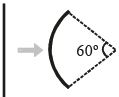
A magnetised wire of moment $M$ is bent into an arc of a circle subtending an angle of $60^o$ at the centre; then the new magnetic moment is
The least velocity required to throw a body away from the surface of a planet so that it may not return is (radius of the planet is $\left.6.4 \times 10^6 \mathrm{~m}, g=9.8 \mathrm{~m} / \mathrm{sec}^2\right)$