MCQ
Relation between current I flowing in moving coil galyanometer and deflection $\theta$ is :
- A$I \propto \tan \theta$
- ✓$I \propto \theta$
- C$I=\frac{1}{\theta}$
- D$1 \propto \cot \theta$
Generate a complete, print-ready paper with questions like this in minutes — across 16+ boards, with answer keys.
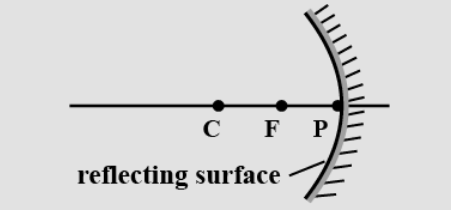
The distance CP is the:
The working of dynamo is based on principle of
|
(a) Electromagnetic induction |
(b) Conversion of energy into electricity |
|
(c) Magnetic effects of current |
(d) Heating effects of current |
Assertion : Bohr had to postulate that the electrons in stationary orbits around the nucleus do not radiate.
Reason : According to classical physics all moving electrons radiate.
|
(a) If both assertion and reason are true and the reason is the correct explanation of the assertion. |
|
(b) If both assertion and reason are true but reason is not the correct explanation of the assertion. |
|
(c) If assertion is true but reason is false. |
|
(d) If the assertion and reason both are false. |
The half life of a radioactive element which has only  of its original mass left after a lapse of 60 days is
|
(a) 12 days |
(b) 32 days |
(c) 60 days |
(d) 64 days |