Question
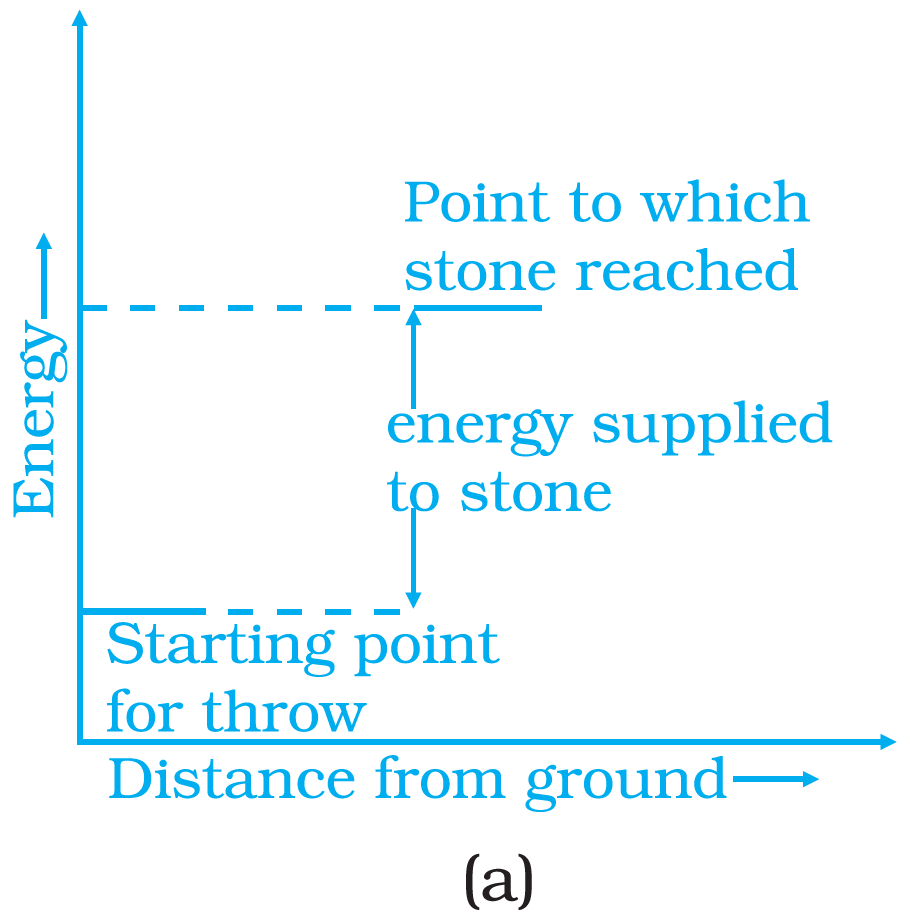
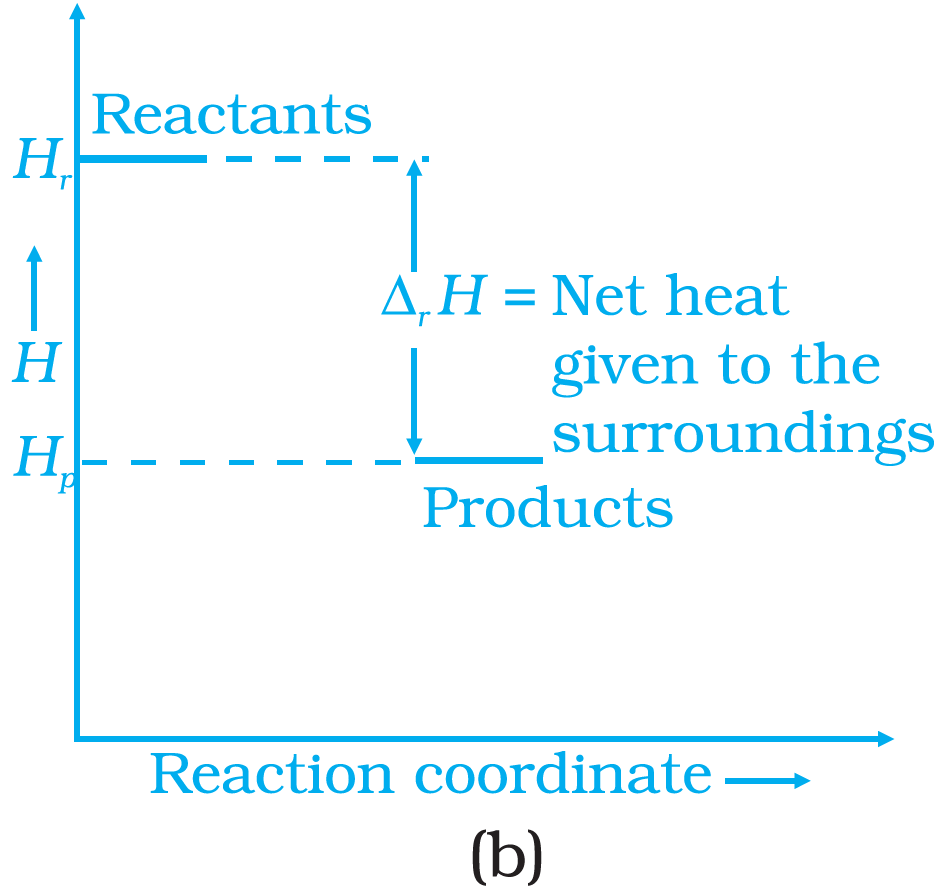
Represent the potential energy/enthalpy change in the following processes graphically.
  1.  Throwing a stone from the ground to roof.
  2.  $\frac{1}{2}\text{H}_2(\text{g})+\frac{1}{2}\text{Cl}_2(\text{g})\rightleftharpoons\text{HCl}(\text{g})$ $\Delta_\text{r}\text{H}^\ominus=-92.32\text{kJ}\ \text{mol}^{-1}$​​​​​​
In which of the processes potential energy/enthalpy change is contributing factor to the spontaneity?

Need a full question paper?

Generate a complete, print-ready paper with questions like this in minutes — across 16+ boards, with answer keys.

Start Generating Free

Similar questions

Explain with the help of suitable example polar covalent bond.
Perform the following calculations and express the results to proper number of significant figures.
  1. 144.3 m2 + (2.54 m × 8.4 m).
  2. (4.05 × 10²mL) - (0.0225 × 10²mL).
  3. (3.50 × 102cm) (4.00 × 106cm).
Match the following species with the corresponding conjugate acid.

Species

Conjugate acid

i.

$\text{NH}_3$

a.

$\text{CO}_3^{2-}$

ii.

$\text{HCO}_3^-$

b.

$\text{NH}_4^+$

iii.

$\text{H}_2\text{O}$

c.

$\text{H}_3\text{O}^+$

iv.

$\text{HSO}_4^-$

d.

$\text{H}_2\text{SO}_4$


e.

$\text{H}_2\text{CO}_3$

Determine the molecular formula of an oxide of iron, in which the mass per cent of iron and oxygen are 69.9 and 30.1, respectively.
Note: Given that the molar mass of the oxide is 159.69g mol-1
The first ionization constant of H2S is 9.1 × 10⁻⁸. Calculate the concentration of HS ion in its 0.1M solution. How will this concentration be affected if the solution is 0.1M in HCl also ? If the second dissociation constant of H2S is 1.2 × 10⁻¹³, calculate the concentration of S2– under both conditions.
Assuming complete dissociation, calculate the pH of the following solutions : (a) 0.003 M HCl (b) 0.005 M NaOH (c) 0.002 M HBr (d) 0.002 M KOH
  1. At 473K, equilibrium constant, K for decomposition of PCl5 is 8.3 × 10⁻³. If decomposition is depicted as

$\text{PCl}_5(\text{s})\rightleftharpoons\text{PCl}_3(\text{s})+\text{Cl}_2(\text{g});$

$\Delta_\text{r}\text{H}^\text{o}=124.0\text{kJ mol}^{-1}$

  1. Write an expression for Kc for the reaction.
  2. What is the value of Kc for the reverse reaction at same temperature.
  3. What would be the effect on Kc if:
  1. The pressure is increased?
  2. The temperature is increased?
  1. Write equilibrium constant for the following reactions:
  1. $\text{BaCO}_3(\text{s})\rightleftharpoons\text{BaO(s)}+\text{CO}_2(\text{g})$

  2. $\text{CH}_4(\text{g})+2\text{O}_2(\text{g})\rightleftharpoons\text{CO}_2(\text{g})+2\text{H}_2\text{O(g)}$

Explain electronic configuration of elements according to period.
Explain isomerism and nomenclature of alkynes.
What are significant figures? State rules to determine it.