Question
✓
Answer
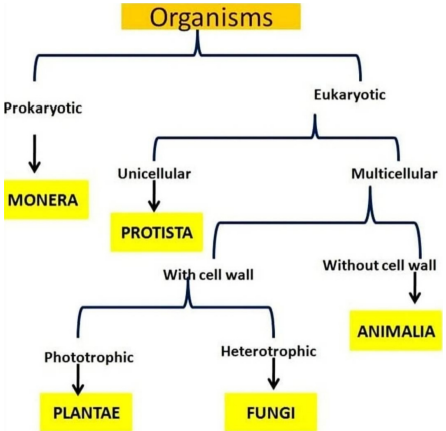
i. All organisms are multicellular, eukaryotes with heterotrophic mode of nutrition.
ii.
iii. Linnaeus used artificial system kingdom of classification.
Drawbacks of Linnaeus two kingdom classification:
• Linnaeus developed a Two Kingdom system of classification with Plantae and Animalia kingdoms.
• This system did not distinguish between eukaryotes and prokaryotes, unicellular and multicellular organisms, photosynthetic (green algae) and non-photosynthetic (fungi) organisms.
OR
No, Fungi-Autotrophic (Photosynthetic) and Heterotrophic is not correct match. The walls of the fungi were made of chitin, whereas the green plants had a cellulose cell wall.
ii.
| Prokaryotic cell | Eukaryotic cell |
| Genetic material is not enclosed in a nuclear envelope and is present suspended in the cytoplasm in a region called nucleoid. | Genetic material is enclosed within the nucleus by a nuclear envelope and is not present in direc contact with cytoplasm. |
| Cell wall is made up of peptidoglycan. | Cell wall is made up of chitin in fungi and cellulose in plants. |
| Nucleolus is absent. | Nucleolus is present. |
Drawbacks of Linnaeus two kingdom classification:
• Linnaeus developed a Two Kingdom system of classification with Plantae and Animalia kingdoms.
• This system did not distinguish between eukaryotes and prokaryotes, unicellular and multicellular organisms, photosynthetic (green algae) and non-photosynthetic (fungi) organisms.
OR
No, Fungi-Autotrophic (Photosynthetic) and Heterotrophic is not correct match. The walls of the fungi were made of chitin, whereas the green plants had a cellulose cell wall.
Need a full question paper?
Generate a complete, print-ready paper with questions like this in minutes — across 16+ boards, with answer keys.
Explore more
Similar questions
Write any four differences between afferent arteriole and efferent arteriole.
Can you identify the correct sequence of taxonomical categories?
- Species → Order → Phylum → Kingdom
- Genus → Species → Order → Kingdom
- Species → Genus → Order → Phylum
Briefly describe any four valves found in the human heart. Make labelled diagram of a cross section of a human heart.
Structure of human body is made up of different type of cells .These cells
predominantly consist of forms two states of matter solid and Liquid with gaseous state
dissolve in its one type of tissue. This all three form of matter in human body form the
basis of human body structure. How beautifully nature has already connected
Chemistry and Biology.
Many famous players like Sachin Tendulkar ,Raffel Nadal,suffered from muscle and
bone detachment problems which also shows the significance of connective tissue for
athletes too.
Based on above paragraph answer the following:
(1). Name the connective tissue present in liquid form in our body.
(2). Which tissue connects bones to muscles is _______
(3). The liquid connective tissue contains no-
(a) Fibre (b)Matrix (c)Cell (d)all the above
(4). Areolar tissue connects _______
(a).Two Bones
(b).Muscle & Bone
(c).Muscle & fat tissue
(d).muscles and their compounds
(5). Tip of the nose and external ears have
(a). Areolar tissue (b).Ligament (c).cartilage (d).bone
predominantly consist of forms two states of matter solid and Liquid with gaseous state
dissolve in its one type of tissue. This all three form of matter in human body form the
basis of human body structure. How beautifully nature has already connected
Chemistry and Biology.
Many famous players like Sachin Tendulkar ,Raffel Nadal,suffered from muscle and
bone detachment problems which also shows the significance of connective tissue for
athletes too.
Based on above paragraph answer the following:
(1). Name the connective tissue present in liquid form in our body.
(2). Which tissue connects bones to muscles is _______
(3). The liquid connective tissue contains no-
(a) Fibre (b)Matrix (c)Cell (d)all the above
(4). Areolar tissue connects _______
(a).Two Bones
(b).Muscle & Bone
(c).Muscle & fat tissue
(d).muscles and their compounds
(5). Tip of the nose and external ears have
(a). Areolar tissue (b).Ligament (c).cartilage (d).bone
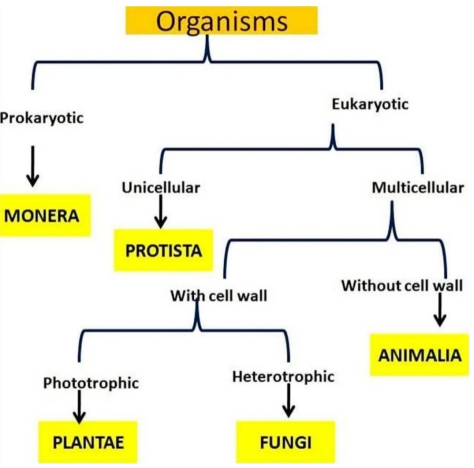
There are thousands of different eubacteria or 'true bacteria'. They are characterized by the presence of a rigid cell wall, and if motile, a flagellum. The cyanobacteria (also referred to as blue-green algae) have chlorophyll a similar to green plants and are photosynthetic autotrophs. The cyanobacteria are unicellular, colonial or filamentous, freshwater/marine or terrestrial algae. The colonies are generally surrounded by gelatinous sheath. They often form blooms in polluted water bodies. Some of these organisms can fix atmospheric nitrogen in specialized cells called heterocysts, e.g., Nostoc and Anabaena. Chemosynthetic autotrophic bacteria oxidise various inorganic substances such as nitrates, nitrites and ammonia and use the released energy for their ATP production. They play a great role in recycling nutrients like nitrogen, phosphorous. iron and Sulphur.
(1) Which of the following can be termed as 'Photosynthetic Autotrophs'
(a) All monerans (b) Chemosynthetic Bacteria (c) Cyanobacteria (d) All Eubacteria
(2) Blue green algae are characterized by :
(a) They often form blooms in polluted water bodies.
(b) Some of these organisms can fix atmospheric nitrogen
(c) Their colonies are generally surrounded by gelatinous sheath.
(d) All of these
(3) Which is incorrect about Heterocysts:
(a) These are specialized cells
(b) These are present in all Cyanobacteria.
(c) Nostoc and Anabaena have Heterocysts.
(d) Organisms having these cells can fix atmospheric nitrogen
(4) Green plants are similar to Blue green algae in having:
(a) chlorophyll a (b) Heterocysts (c) chlorophyll b (d) None of these
(5) Which of these can be described as ‘true Bacteria’.
(a) Cyanobacteria only
(b) Only Chemosynthetic autotrophic bacteria
(c) Bacteria without cell wall.
(d) Eubacteria
(1) Which of the following can be termed as 'Photosynthetic Autotrophs'
(a) All monerans (b) Chemosynthetic Bacteria (c) Cyanobacteria (d) All Eubacteria
(2) Blue green algae are characterized by :
(a) They often form blooms in polluted water bodies.
(b) Some of these organisms can fix atmospheric nitrogen
(c) Their colonies are generally surrounded by gelatinous sheath.
(d) All of these
(3) Which is incorrect about Heterocysts:
(a) These are specialized cells
(b) These are present in all Cyanobacteria.
(c) Nostoc and Anabaena have Heterocysts.
(d) Organisms having these cells can fix atmospheric nitrogen
(4) Green plants are similar to Blue green algae in having:
(a) chlorophyll a (b) Heterocysts (c) chlorophyll b (d) None of these
(5) Which of these can be described as ‘true Bacteria’.
(a) Cyanobacteria only
(b) Only Chemosynthetic autotrophic bacteria
(c) Bacteria without cell wall.
(d) Eubacteria
The fungi constitute a unique kingdom of heterotrophic organisms. They show a great diversity in morphology
and habitat. Fungi are cosmopolitan and occur in air, water, soil, and on animals and plants. They prefer to grow in warm and humid places. Most fungi are heterotrophic and absorb soluble organic matter from dead substrates and hence are called saprophytes. When a fungus reproduces sexually, two haploid hyphae of compatible mating types come together and fuse. In some fungi, the fusion of two haploid cells immediately results in diploid cells (2n). The fungiform fruiting bodies in which reduction division occurs, leading to the formation of haploid spores. Symbionts - in association with algae as lichens and with roots of higher plants as mycorrhiza. Three types of reproduction occur in fungi
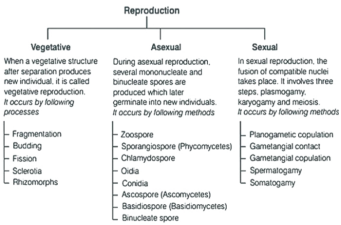
i. Observe the given flow chart of reproduction and mention which steps involves in the sexual cycle of fungi.
(1)
ii. What is Rhizopus? Also, mention Rhizopus - wheat rush a correct match? (1)
iii. What is Mycorrhiza? And mention its function. (2)
OR
In which form Fungi Stores Food Material? Do fungi have food vacuoles? (2)
and habitat. Fungi are cosmopolitan and occur in air, water, soil, and on animals and plants. They prefer to grow in warm and humid places. Most fungi are heterotrophic and absorb soluble organic matter from dead substrates and hence are called saprophytes. When a fungus reproduces sexually, two haploid hyphae of compatible mating types come together and fuse. In some fungi, the fusion of two haploid cells immediately results in diploid cells (2n). The fungiform fruiting bodies in which reduction division occurs, leading to the formation of haploid spores. Symbionts - in association with algae as lichens and with roots of higher plants as mycorrhiza. Three types of reproduction occur in fungi
i. Observe the given flow chart of reproduction and mention which steps involves in the sexual cycle of fungi.
(1)
ii. What is Rhizopus? Also, mention Rhizopus - wheat rush a correct match? (1)
iii. What is Mycorrhiza? And mention its function. (2)
OR
In which form Fungi Stores Food Material? Do fungi have food vacuoles? (2)
Write any four differences in the cortex of monocotyledon and dicotyledon stem.