MCQ
$RNA$ is different from $DNA$ because $RNA$ contains
- ARibose sugar and thymine
- ✓Ribose sugar and uracil
- CDeoxyribose sugar and thymine
- DDeoxyribose sugar and uracil
Generate a complete, print-ready paper with questions like this in minutes — across 16+ boards, with answer keys.
$\overline{\text { [Given : }}$ Atomic mass of $H =1, C =12, O =16, P =31, Br =80, Ag =108]$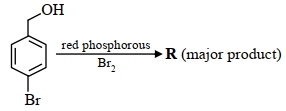
$(A)$ The number of $Cl = O$ bonds in $(ii)$ and $(iii)$ together is two
$(B)$ The number of lone pairs of electrons on $Cl$ in $(ii)$ and $(iii)$ together is three
$(C)$ The hybridization of $Cl$ in $(iv)$ is $sp ^3$
$(D)$ Amongst $(i)$ to $(iv)$, the strongest acid is $(i)$

$A$. The stability of the hydrides decreases in the order $\mathrm{NH}_3>\mathrm{PH}_3>\mathrm{AsH}_3>\mathrm{SbH}_3>\mathrm{BiH}_3$
$B$. The reducing ability of the hydrides increases in the order $\mathrm{NH}_3<\mathrm{PH}_3<\mathrm{AsH}_3<\mathrm{SbH}_3<\mathrm{BiH}_3$
$C$. Among the hydrides, $\mathrm{NH}_3$ is strong reducing agent while $\mathrm{BiH}_3$ is mild reducing agent.
$D$. The basicity of the hydrides increases in the order $\mathrm{NH}_3<\mathrm{PH}_3<\mathrm{AsH}_3<\mathrm{SbH}_3<\mathrm{BiH}_3$Choose the most appropriate from the option given below: