Question
Scutellum is the single cotyledon found in the monocot embryo only. Explain.

Answer

Embryo of monocors possesses only one coryledon at one end (lateral) of the embryonal axis and this coryledon is called scutellum.
At the lower end, the embryonal axis has radical and root cap enclosed in an undifferentiated sheath called coleorhiza. The portion of the embryonal axis above the level of artachment of scurellum is the epicotyl.

Need a full question paper?

Generate a complete, print-ready paper with questions like this in minutes — across 16+ boards, with answer keys.
Start Generating Free

Similar questions


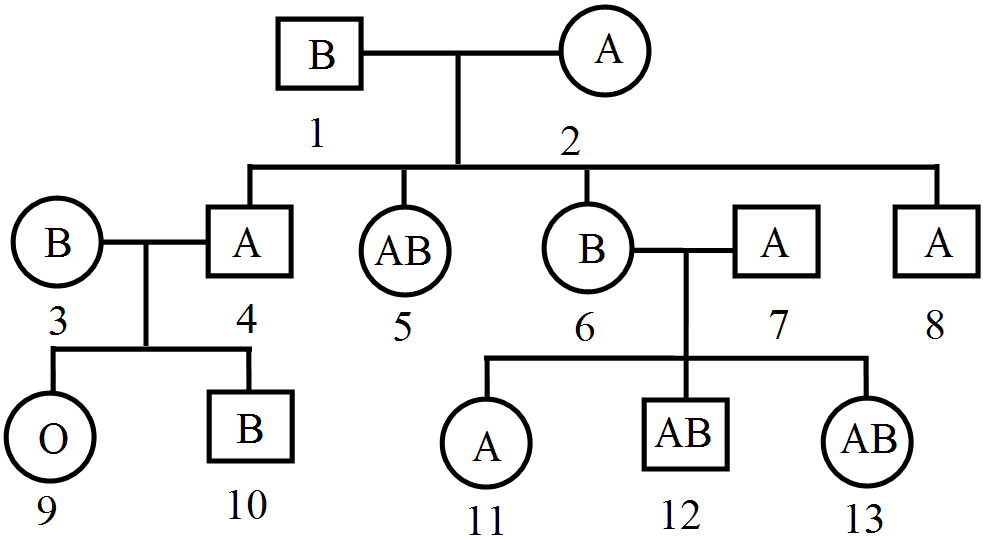
Study the pedigree chart given above, showing the inheritance pattern of blood groups in a family and answer the following questions:
  1. Give the possible genotypes of the individuals 1 and 2.
  2. Which antigen or antigens will be present on the plasma membranes of the RBCs of individuals 5 and 9?
  3. Give the genotypes of the individuals 3 and 4.
Define decomposition and describe the processes of decomposition. (Diagram is not required)
During reproduction, the chromosome number (2n) reduces to half (n) in the gametes and again resume the original number (2n) in the offspring, what are the processes through which these events take place?
Why is a DNA molecule considered as a better hereditary material than RNA molecule?

OR

Why is DNA a better genetic material when compared to RNA?

Pollen banks are playing a very important role in promoting plant breeding programme the world over. How are pollens preserved in the pollen banks? Explain. How are such banks benefitting our farmer? Write any two ways.
  1. Name the infective stage Plasmodium which Anopheles mosquito takes in along with the blood meal from an infected human.
  2. Why does the infection cause fever in human?
  3. Give a flow chart of the part of the life-cycle of this parasite passed in the insect.
Explain the increase in the numbers of melanic (dark winged) moths in the urban areas of post-industrialisation period in England.
Match Column I with Column II.
S. No.
Column I
S. No.
Column II
A.
Cleavage
1.
Outer layer of the blastocyst that attaches to the endometrium during implantation.
B.
Implantation
2.
Mitotic divisions of the zygote in quick succession.
C.
Inner cell mass
3.
Embedding of the blastocyst in the endometrium of uterus.
D.
Trophoblast
4.
Release of secondary oocyte from the ovary.
E.
 
5.
Group of cells attached to one end of trophoblast that differentiate into embryo proper.
During a monohybrid cross involving a tall pea plant with a dwarf pea plant, the offspring populations were tall and dwarf in equal ratio. Work out a cross to show how it is possible.
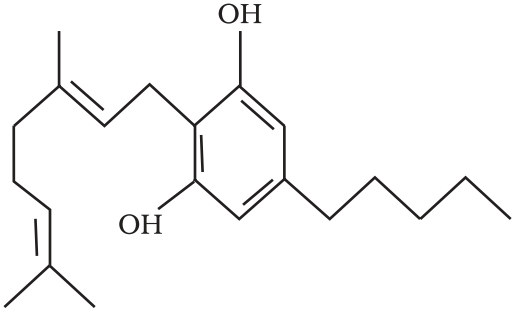
The outline structure of a drug is given below,
  1. Which group of drugs does this represent?
  2. What are the modes of consumption of these drugs?
  3. Name the organ of the body which is affected by consumption of these drugs.
​​​​​​​