MCQ
Select the elements belonging to same group from the following list :-
  • $Z = 12, 38, 4, 88$
  • B
    $Z = 9, 16, 3, 35$
  • C
    $Z = 5, 11, 27, 19$
  • D
    $Z = 24, 47, 42, 55$

Answer

Correct option: A.
$Z = 12, 38, 4, 88$
a
option $A$ is correct .

because every period is having certain intervals such as 2,8,8,18,18,32,31 to 1 to 7 periods respectively.

so that if we add these numbers to element atomic number we can get next element of the same group.a)

 $4,4+8,12+8,20+18,38+18,56+32$

Need a full question paper?

Generate a complete, print-ready paper with questions like this in minutes — across 16+ boards, with answer keys.
Start Generating Free

Similar questions

The valency of carbon is four. On what principle it can be explained in a better way
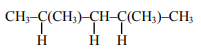
In the given compound, the number of 2° carbon atom/s is _____.
Image
The structure of diborane contains :-
Which compound has the highest boiling point
?
The solubility product of $AgCl$ is $4.0 \times {10^{ - 10}}$ at $298\,\,K.$ The solubility of $AgCl$ in $0.04\,m\,\,CaC{l_2}$ will be
Relationship between products $(Q)$ and $(S)$ is

$\mathrm{CH}_{3}-\mathrm{CH}=\mathrm{CH}_{2}$ $\xrightarrow[{{\text{H}}_{2}}{{\text{O}}_{2}},\bar{O}\text{H}]{\text{B}{{\text{H}}_{3}},\text{THF}}(P)$ $\xrightarrow[\text{C}{{\text{H}}_{2}}\text{C}{{\text{l}}_{2}}]{\text{ Pyridinium Chloro Chromate }(\text{PCC})}$ $(Q)$

$\mathrm{CH}_{3}-\mathrm{CH}=\mathrm{CH}_{2}$ $\xrightarrow[NaB{{H}_{4}}\,,\,H{{O}^{\Theta }}]{Hg\,{{(OAc)}_{2}}\,,\,{{H}_{2}}O}(R)$ $\xrightarrow[\text{C}{{\text{H}}_{2}}\text{C}{{\text{l}}_{2}}]{\text{ Pyridinium Chloro Chromate }(\text{PCC})}$ $(S)$
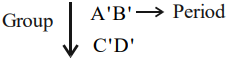
Consider the following elements.

Image
Which of the following is/are true about $A \ ^{\prime}, B \ ^{\prime}, C \ ^{\prime}$ and $D \ ^{\prime}$ ?
$A.$ Order of atomic radii: $B \ ^{\prime}< A \ ^{\prime}< D \ ^{\prime}< C \ ^{\prime}$
$B.$ Order of metallic character : $B \ ^{\prime}< A \ ^{\prime}< D \ ^{\prime}< C \ ^{\prime}$
$C.$ Size of the element: $D \ ^{\prime}< C \ ^{\prime}< B \ ^{\prime}< A \ ^{\prime}$
$D.$ Order of ionic radii : $B ^{\prime+}< A ^{\prime+}< D ^{\prime+}< C ^{\prime+}$
Choose the correct answer from the options given below :
In a chemical reaction equilibrium is established when
$D-$ glucose $\overset{H{{O}^{-}}}{\longleftrightarrow}$ $A + B; A$ and $B$ are