MCQ
Select the mismatch.
  • A
    Gas vacuoles -Green bacteria
  • Large central vacuoles -Animal cells
  • C
    Protists -Eukaryotes
  • D
    Methanogens -Prokaryotes

Answer

Correct option: B.
Large central vacuoles -Animal cells
b
(b) : Large central vacuole is the characteristic of plant cell, not animal cell which may have many small scattered vacuoles.

Need a full question paper?

Generate a complete, print-ready paper with questions like this in minutes — across 16+ boards, with answer keys.

Start Generating Free

Similar questions

Which of the following type of age pyramid reflects a stable population growth?
Reducing power $NADH+ H^+$ is produced during conversion step of glycolysis.
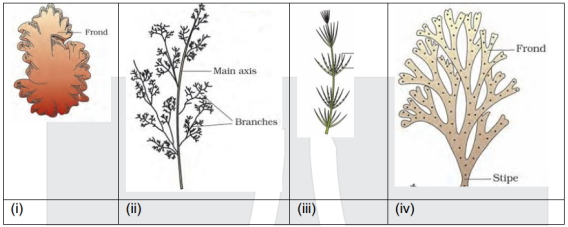
Identify the diagrams
An example of agarophyte is
Respiration occurs
Read the following statements and choose option which contain wrong statement for growth.
(i) The period of growth is generally divided into three phases, namely, meristematic, elongation and maturation.
(ii) The constantly dividing cells, both at the root apex and the shoot apex, represent the meristematic phase of growth.
(iii) The cells proximal (just next, away from the tip) to the zone represent the phase of elongation.
(iv) Further away from the apex, i.e., more proximal to the phase of elongation, lies the portion of axis which is undergoing the phase of maturation.
(v) The cells in elongation phase region are rich in protoplasm, possess large conspicuous nuclei and cell walls are primary in nature.
(vi) Increased vacuolation, cell enlargement and new cell wall deposition are the characteristics of the cells in phase of meristematic region.
(vii) The cells of zone of maturation, attain their maximum size in terms of wall thickening and protoplasmic modifications.
If the cell has $14$ chromosomes at interphase. Then how many chromosomes will the cell have at $G_{1}$-phase of cell cycle?
The male cone of Pinus is formed of
Angiosperms differ from gymnosperms in
The process by which the chromosomes are separated in the sex cells and their number reduced from the diploid to haploid condition is known as