MCQ
Select the right option in the following
  • A
    Christian Huygens a contemporary of Newton established the wave theory of light by assuming that light waves were transverse
  • Maxwell provided the compelling theoretical evidence that light is transverse wave
  • C
    Thomas Young experimentally proved the wave behaviour of light and Huygens assumption
  • D
    All the statements give above, correctly answers the question "what is light"
Answer

Correct option: B.
Maxwell provided the compelling theoretical evidence that light is transverse wave

Need a full question paper?

Generate a complete, print-ready paper with questions like this in minutes — across 16+ boards, with answer keys.

Start Generating Free

Similar questions

The wing span of an aeroplane is $20$ metre. It is flying in a field, where the vertical component of magnetic field of earth is $5 \times 10$ tesla, with velocity $360 \mathrm{~km} / \mathrm{h}$. The potential difference produced between the blades will be
Dimensional formula of capacitance is
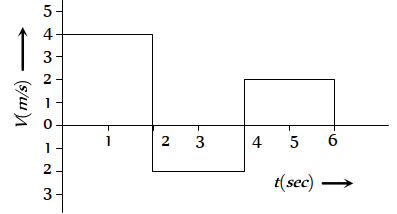
The velocity-time graph of a body moving in a straight line is shown in the figure. The displacement and distance travelled by the body in 6 sec are respectively
Image
The period of oscillations of a magnet is $2 \mathrm{sec}$. When it is remagnetised so that the pole strength is 4 times its period will be
Fundamental frequency of pipe is $100 \mathrm{~Hz}$ and other two frequencies are $300 \mathrm{~Hz}$ and $500 \mathrm{~Hz}$ then
A galvanometer can be converted into an ammeter by connecting
An electric lamp is marked $60 \ W , 230 \ V$. The cost of $1$ kilowatt hour of power is $Rs.\ 1.25.$ The cost of using this lamp for $8$ hours is
A thin lens made of glass of refractive index $1.5$ has a front surface + II $D$ power and back surface - $6 D$. If this lens is submerged in a liquid of refractive index $1.6,$ the resulting power of the lens is
A body is executing S.H.M. When its displacement from the mean position is $4 cm$ and $5 cm$, the corresponding velocity of the body is $10 cm / sec$ and $8 cm / sec$. Then the time period of the body is [CPMT 1991; MP PET 1995]
A body is moving according to the equation $x=a t+b t^2-c t^3$ where $x=$ displacement and $a, b$ and $c$ are constants. The acceleration of the body is