Question
Set $A$ has three elements and set $B$ has four elements. The number of injections that can be defined from $A$ to $B$ is

Answer

(c) : Since $3<4$, injective functions from $A$ to $B$ are defined and the total number of such functions is
$
{ }^4 P_3=\frac{4 !}{(4-3) !}=4 \times 3 \times 2 \times 1=24 .
$

Need a full question paper?

Generate a complete, print-ready paper with questions like this in minutes — across 16+ boards, with answer keys.
Start Generating Free

Similar questions

$\int e ^{5 \log x} dx$ is equal to:
Probability that $A$ speaks truth is $\frac{4}{5}. A$ coin is tossed. $A$ reports that a head appears. The probability that actually there was head is
The number of solutions of the system of equations
2x + y − z = 7
x − 3y + 2z = 1
x + 4y − 3z = 5
  1. 3
  2. 2
  3. 1
  4. 0
Vikas printing company takes fee of Rs. 28 to print a oversized poster and Rs. 7 for each colour of ink used. Raaj printing company does the same work and charges poster for Rs. 34 and Rs. 5.50 for each colour of ink used. If z is the colours of ink used, find the values of z such that Vikas printing company would charge more to print a poster than Raaj printing company.
The area bounded by $y = x^2, y = [x+1], \text{x}\leq1$ and the $y -$ axis is$:$
Consider the curves $\text{y}=\sin\text{x}$ and  $\text{y}=\cos\text{x}.$ What is the area of the region bounded by the above two curves and the lines $\text{x}=0$ and $\text{x}=\frac{\pi}{4}?$
  1. $\sqrt{2}-1$
  2. $\sqrt{2}+1$
  3. $\sqrt{2}$
  4. $2$
If S is the samle space and $\text{P(A)}=\frac{1}{3}, \text{P(B)}$ and $\text{S}=\text{A}\cup\text{B,}$ where A and B are tow mutually exclusive events, then P(A) =
  1. $\frac{1}{4}$
  2. $\frac{1}{2}$
  3. $\frac{3}{4}$
  4. $\frac{3}{8}$
Two dice are thrown. If it is known that the sun of the numbers on the dice was less than 6, than the probability of gettinga sum 3, is
  1. $\frac{1}{18}$
  2. $\frac{5}{18}$
  3. $\frac{1}{5}$
  4. $\frac{2}{5}$
The number of points in $(-\infty,\infty)$ for which $\text{x}^{2}-\text{x}\sin\text{x}-\cos\text{x}=0,$ is:
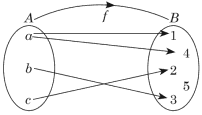
The diagram given below shows that
Image