Question
$SiF _6^{2-}$ is known but $SiCl _6^{2-}$ is not, why?

Answer

Due to smaller size of F as compared to Cl , steric repulsions will be less in $SiF _6^{2-}$ than in $SiCl _6^{2-}$. Because of smaller $S - F$ bond as compared to $S - Cl$ bond, the interaction of F lone pair of electrons with Si is stronger than that of Cl lone pairs.

Need a full question paper?

Generate a complete, print-ready paper with questions like this in minutes — across 16+ boards, with answer keys.
Start Generating Free

Similar questions

Explain the fact that in aryl alkyl ethers (i) the alkoxy group activates the benzene ring towards electrophilic substitution and (ii) it directs the incoming substituents to ortho and para positions in benzene ring.
Describe the following :
Decarboxylation
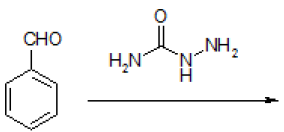
Complete each synthesis by giving missing starting material, reagent or products:-
Image
Explain the difference between reucing and non-reducing sugars with examples.
Calculate the time to deposit 1.5 g of silver at cathode when a current of 1.5 A was passed through the solution of AgNO3. (Molar mass of Ag = 108 g mol-1, 1F = 96500 C mol-1)
Vapour pressure of pure water at 298 K is 23.8 mm Hg. 50 g of urea (NH2CONH2) is dissolved in 850 g of water. Calculate the vapour pressure of water for this solution and its relative lowering.
If the value of rate constants are same for three reactions whose orders are 1,2 , and 3 , then what will be the order of the rates of these reactions if the value of concentration is 1 M , less than 1 M and more than 1 M ?
Explain briefly how +2 state becomes more and more stable in the first half of the first row transition elements with increasing atomic number?
  1. Following reactions occur at cathode during the electrolysis of aqueous silver chloride solution:

Ag+(aq) + e- $\rightarrow$  Ag(s)               E= +0.80 V

H+(aq) + e- $\rightarrow$ H2(g)                  Eo = 0.00 V

On the basis of their standard reduction electrode potential (Eo) values, which reaction is feasible at the cathode and why?

  1. Define limiting molar conductivity. Why conductivity of an electrolyte solution decreases with the decrease in concentration?
Write chemical reaction of aniline with benzoyl chloride and write the name of the product obtained.