MCQ
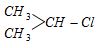
$S{N^1}$ reaction is faster in
  • A
    $C{{H}_{3}}C{{H}_{2}}Cl$
  • B

  • $\begin{array}{*{20}{c}}
      {\,\,\,\,\,\,\,\,\,\,C{H_3}} \\ 
      {\,\,\,\,|} \\ 
      {C{H_3} - C - Cl} \\ 
      {\,\,\,\,|} \\ 
      {\,\,\,\,\,\,\,\,\,\,C{H_3}} 
    \end{array}$
  • D
    $C{{H}_{3}}-\underset{C{{H}_{3}}}{\mathop{\underset{\underset{|}{\mathop{C}}\,{{H}_{2}}}{\mathop{\underset{|}{\mathop{C}}\,H\ }}\,}}\,-Cl$

Answer

Correct option: C.
$\begin{array}{*{20}{c}}
  {\,\,\,\,\,\,\,\,\,\,C{H_3}} \\ 
  {\,\,\,\,|} \\ 
  {C{H_3} - C - Cl} \\ 
  {\,\,\,\,|} \\ 
  {\,\,\,\,\,\,\,\,\,\,C{H_3}} 
\end{array}$
c
(c) $S{N^1}$ mechanism proceeds through carbocation intermediate.

$\begin{array}{*{20}{c}}
  {\,\,\,\,\,\,\,\,\,\,C{H_3}} \\ 
  {\,\,\,\,|} \\ 
  {C{H_3} - C - Cl} \\ 
  {\,\,\,\,|} \\ 
  {\,\,\,\,\,\,\,\,\,\,C{H_3}} 
\end{array}$

provides stable carbocation intermediate because it has tertiary carbon.

Need a full question paper?

Generate a complete, print-ready paper with questions like this in minutes — across 16+ boards, with answer keys.

Start Generating Free

Similar questions

What is the effect of the addition of sugar on the boiling and freezing points of water
$t_{1/2} =$ constant, confirms the first order reaction, If $a^2t_{1/2} =$ constant, confirms that the order of reaction is ( $a =$ initial concentration of reactant)
Consider the following reaction :

Ethanol $\xrightarrow{{PB{r_3}}}X\,\xrightarrow{{alc.\,KOH}}\,Y$$\,\xrightarrow[{(ii)\,{H_2}O\,,\,heat}]{{(i)\,{H_2}S{O_4},\,room\,\,temperature}}Z$

the product $Z$ is

Glucose and mannose are
With increase of temperature, which of these changes
The strongest base among the following is
A solution is made by dissolving $20\, g$ of a substance in $500\, mL$ of water. Its osmotic pressure was found to be $600\, mm$ of $Hg$ at $15\,^oC$. The molecular weight of the substance is
$\alpha$ - helix is found in
Redox reactions play a pivotal role in chemistry and biology. The values of standard redox potential ( $\mathrm{E}^{\circ}$ ) of two half-cell reactions decide which way the reaction is expected to proceed. A simple example is a Daniel cell in which zinc goes into solution and copper gets deposited. Given below are a set of half-cell reactions (acidic medium) along with their $E^{\circ}$ ($V$ with respect to normal hydrogen electrode) values. 

$\mathrm{I}_2+2 \mathrm{e}^{-} \rightarrow 2 \mathrm{I}\ \ \   \mathrm{E}^{\circ}=0.54 $

$\mathrm{Cl}_2+2 \mathrm{e}^{-} \rightarrow 2 \mathrm{Cl}^{-} \ \ \  \mathrm{E}^{\circ}=1.36 $

$\mathrm{Mn}^{3+}+\mathrm{e}^{-} \rightarrow \mathrm{Mn}^{2+} \ \ \  \mathrm{E}^{\circ}=1.50 $

$\mathrm{Fe}^{3+}+\mathrm{e}^{-} \rightarrow \mathrm{Fe}^{2+} \ \ \  \mathrm{E}^{\circ}=0.77 $

$\mathrm{O}_2+4 \mathrm{H}^{+}+4 \mathrm{e}^{-} \rightarrow 2 \mathrm{H}_2 \mathrm{O} \ \ \  \mathrm{E}^{\circ}=1.23$

$1.$ Among the following, identify the correct statement.

$(A)$ Chloride ion is oxidized by $\mathrm{O}_2$

$(B)$ $\mathrm{Fe}^{2+}$ is oxidized by iodine

$(C)$ Iodide ion is oxidized by chlorine

$(D)$ $\mathrm{Mn}^{2+}$ is oxidized by chlorine

$2.$ While $\mathrm{Fe}^{3+}$ is stable, $\mathrm{Mn}^{3+}$ is not stable in acid solution because

$(A)$ $\mathrm{O}_2$ oxidises $\mathrm{Mn}^{2+}$ to $\mathrm{Mn}^{3+}$

$(B)$ $\mathrm{O}_2$ oxidises both $\mathrm{Mn}^{2+}$ and $\mathrm{Fe}^{2+}$ to $\mathrm{Fe}^{3+}$

$(C)$ $\mathrm{Fe}^{3+}$ oxidizes $\mathrm{H}_2 \mathrm{O}$ to $\mathrm{O}_2$

$(D)$ $\mathrm{Mn}^{3+}$ oxidises $\mathrm{H}_2 \mathrm{O}$ to $\mathrm{O}_2$

$3.$ Sodium fusion extract, obtained from aniline, on treatment with iron $(II)$ sulphate and $\mathrm{H}_2 \mathrm{SO}_4$ in presence of air gives a Prussian blue precipitate. The blue colour is due to the formation of

$(A)$ $\mathrm{Fe}_4\left[\mathrm{Fe}(\mathrm{CN})_6\right]_3$ $(B)$ $\mathrm{Fe}_3\left[\mathrm{Fe}(\mathrm{CN})_6\right]_2$

$(C)$ $\mathrm{Fe}_4\left[\mathrm{Fe}(\mathrm{CN})_6\right]_2$ $(D)$ $\mathrm{Fe}_3\left[\mathrm{Fe}(\mathrm{CN})_6\right]_3$

Give the answer question $1,2$ and $3.$

The correct order of reduction potentials of the following pairs is

$A.$ $Cl _{2} / Cl^{-}$   $B.$ $I _{2} / I^{-}$   $C.$ $Ag ^{+} / Ag$   $D.$ $Na ^{+} / Na$   $E.$ $Li ^{+} / Li$

Choose the correct answer from the options given below.