Question
Solve each of the following equations using the formula:
$\sqrt{6} x^2-4 x-2 \sqrt{6}=0$

Answer

$\sqrt{6} x^2-4 x-2 \sqrt{6}=0$
Here $a =\sqrt{6}, b=-4$ and $c=-2 \sqrt{6}$
Then $x =\frac{-b \pm \sqrt{b}^2-4 a c}{2 a}$
$=\frac{-4(4) \pm \sqrt{\left((-4)^2-4 \sqrt{6}\right)(-2 \sqrt{6})}}{2(\sqrt{6})}$
$=\frac{4 \pm \sqrt{64}}{2 \sqrt{6}}=\frac{4 \pm 8}{2 \sqrt{6}}$
$=\frac{4+8}{2 \sqrt{6}}$ and $\frac{4-8}{2 \sqrt{6}}$
$=\frac{6}{\sqrt{6}}$ and $-\frac{2}{\sqrt{6}}=\sqrt{6}$ and $-\frac{\sqrt{6}}{3}$

Need a full question paper?

Generate a complete, print-ready paper with questions like this in minutes — across 16+ boards, with answer keys.
Start Generating Free

Similar questions

Prove the following identitie:
$\operatorname{cosec} A-\cot A=\frac{\sin A}{1+\cos A}$
For an event E, write a relation representing the range of values of P(E)
Gopal has a cumulative deposit account and deposits Rs 900 per month for a period of 4 years he gets Rs 52,020 at the time of maturity, find the rate of interest.
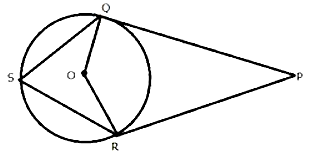
In the following figure, PQ and PR are tangents to the circle, with centre O. If ∠ QPR = 60° , calculate:
∠ QSR 
If $\left.A=\left[\begin{array}{ll}1 & 4 \\ 2 & 1\end{array}\right], B=\left[\begin{array}{cc}-3 & 2 \\ 4 & 0\end{array}\right]\right]$ and $C=\left[\begin{array}{ll}1 & 0 \\ 0 & 2\end{array}\right]$ Simplify $A^2+B C$
A person invests ₹ $ 4,368$ in hundred - rupee share at ₹ $ 91$. Shares worth ₹ $ 2,400$ face value are sold at ₹ $ 95$ and the rest at ₹ $85$. Find (i) the number of shares bought at ₹ $91$ (ii) the number of shares sold at ₹ $85$ (iii) the loss or gain in the deal.
When divided by $(x-3)$, the polynomials $p(x)=x^3-p x^2+x+6$ and $q(x)=2 x^3-x^2-(p+3) x-6$ leave the same remainder. Find the value of $p$. Also, find the remainder.
In the map of a rectangular plot of land the length $=2.5 \mathrm{~cm}$ and breadth $=1.4 \mathrm{~cm}$. If the scale is $1: 10000$, then find the area of the plot in $\mathrm{m}^2$.
Construct a frequency distribution table for each of the following distributions.
Marks (more than) 0 10 20 30 40 50 60 70 80 90 100
Cumulative frequency 100 87 65 55 42 36 31 21 18 7 0
Using remainder theorem, find the value of $k$ if on dividing $2 x^3+3 x^2-k x+5$ by $(x-2)$, leaves a remainder 7.