Question
Solve the following quadratic equations by factorization:
$6x^2 + 11x + 3 = 0$

Answer

We have been given
$6x^2 + 11x + 3 = 0$
$6x^2 + 9x + 2x + 3 = 0$
$3x(2x + 3) + 1(2x + 3) = 0$
$(2x + 3)(3x + 1) = 0$
$2x + 3 = 0$
$\text{x}=\frac{-3}{2}$
Or, $3x + 1 = 0$
$\text{x}=\frac{-1}{3}$
Hence, $\text{x}=\frac{-3}{2}$ or $\text{x}=\frac{-1}{3}$

Need a full question paper?

Generate a complete, print-ready paper with questions like this in minutes — across 16+ boards, with answer keys.
Start Generating Free

Similar questions

The diameter of a metallic sphere is equal to $9\ cm$. It is melted and drawn into a long wire of diameter 2mm having uniform cross-section. Find the length of the wire.
A play ground has the shape of a rectangle, with two semi-circles on its smaller sides as diameters, added to its outside. If the sides of the rectangle are 36m and $24.5\ m$, find the area of the playground. $\Big(\text{Take }\pi=\frac{22}{7}\Big).$
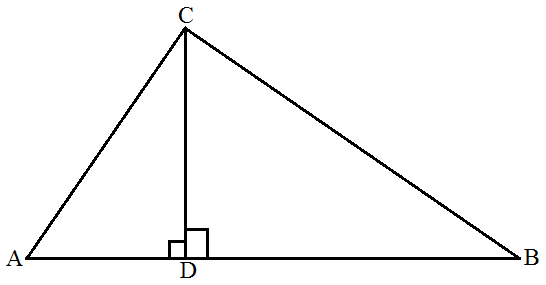
If $\angle\text{ACB}=\angle\text{CDA},$ $AC = 8cm$ and $AD = 3cm$, find $BD.$

 
Prove the following trigonometric identities.
$\frac{1}{\sec\text{A}+\tan\text{A}}-\frac{1}{\cos\text{A}}=\frac{1}{\cos\text{A}}-\frac{1}{\sec\text{A}-\tan\text{A}}$
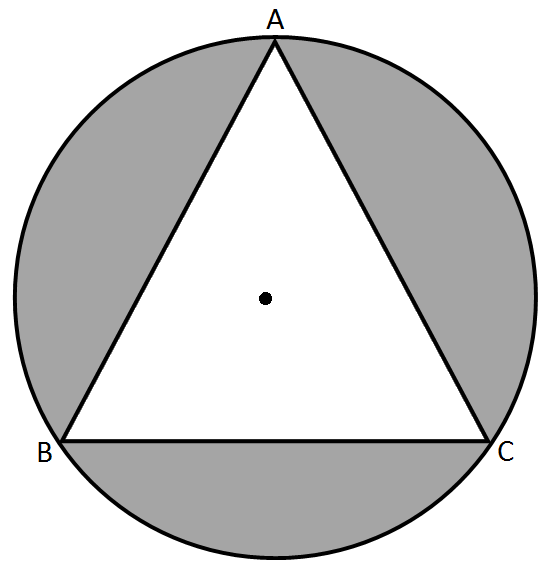
In the following figure, an equilateral triangle ABC of side 6cm has been inscribed a circle. Find the area of the shaded region. $\big(\text{Take }\pi=3.14\big).$
Prove that: $(1+\cos \theta-\operatorname{cosec} \theta) \cdot(1+\tan \theta+\sec \theta)=2$
Find the zeroes of quadratic polynomial $3x^2 - x - 4$ and verify the relationship between the zeroes and their coefficients.
In an equilateral triangle $\text{ABC} , A D$ is an altitude drawn from $A$ on the side $B C$. Prove that $\frac{3}{4} A B^2=A D^2$
Find the sum of the following arithmetic series:
$7+10\frac{1}{2}+14+...+84$
Water is flowing at the rate of 2.52km/h through a cylindrical pipe into a cylindrical tank, the radius of the base is 40cm. If the increase in the level of water in the tank, in half an hour is 3.15m, find the internal diameter of the pipe.