Question
State and explain principle of superposition of waves.

Answer

Principle:
As waves don’t repulse each other, they overlap in the same region of the space without affecting each other. When two waves overlap, their displacements add vectorially.Explanation:
$i.$ Consider two waves travelling through a medium arriving at a point simultaneously.
$ii.$ Let each wave produce its own displacement at that point independent of the others. This displacement can be given as,
$y_1 =$ displacement due to first wave.
$y_2 =$ displacement due to second wave.
$iii.$ Then according to superposition of waves, the resultant displacement at that point is equal to the vector sum of the displacements due to all the waves.
$\therefore \vec{y}=\overrightarrow{y_1}+\overrightarrow{y_2}$

Need a full question paper?

Generate a complete, print-ready paper with questions like this in minutes — across 16+ boards, with answer keys.
Start Generating Free

Similar questions

State the restrictions for having images produced by spherical mirrors to be appreciably clear.
Why is the moment of a couple independent of the axis of rotation even if the axis is fixed?
In real life objects, never travel with uniform velocity, even on a horizontal surface, unless something is done? Why
is it so? What is to be done?
Why is the conductivity of a n-type semiconductor greater than that of p-type semiconductor even when both of these have same level of doping?
If $\overrightarrow{ A }=3 \hat{i}+4[$ [latex] $=3 \hat{j}$ and $\overrightarrow{ B }=7 \hat{i}+24 \hat{j}$, find a vector having the same magnitude as $\overrightarrow{ B }$ and parallel to $\overrightarrow{ A }$.
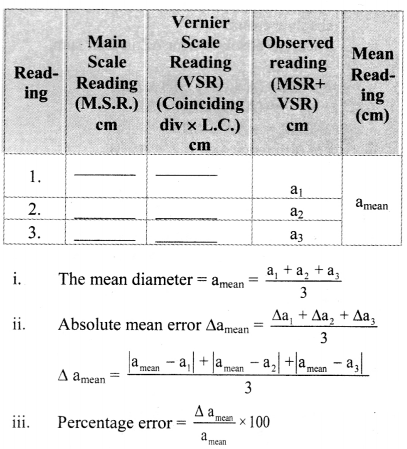
Given: L.C. = 0.01 cm
To measure external diameter of hollow cylinder readings are taken as follows:

Image

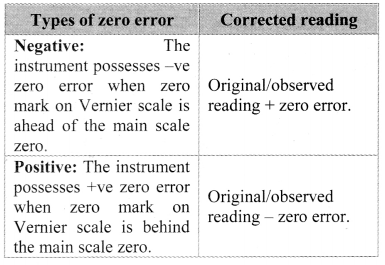
[Note: The above table is made assuming zero error in Vernier callipers. If calliper has positive or negative zero error, the zero error correction needs to be introduced into observed reading.]
Image

Find the odd man out:
(i) Force responsible for a string to become taut on stretching
(ii) Weight of an object
(iii) The force due to which we can hold an object in hand.
A metal ball falls from a height 1 m on a steel plate and jumps upto a height of 0.81 m. Find the coefficient of restitution.
Discuss the following as special cases of elastic collisions and obtain their exact or approximate final velocities in terms
of their initial velocities.
(i) Colliding bodies are identical.
(ii) A very heavy object collides on a lighter object, initially at rest.
(iii) A very light object collides on a comparatively much massive object, initially at rest.
A potential difference of $V = 100 ± 2$ volt, when applied across a resistance $R$ gives a current of $10 ± 0.5$ ampere. Calculate percentage error in $R$ given by $R V/I.$