Question
State any three methods by which animals cope with the temporary unfavourable conditions in their habitat when they cannot migrate.

Answer

Regulate: Homeostasis is maintained by ensuring constant body temperature and constant osmotic concentration, etc., by physiological and sometimes behavioural means. All birds, memmals, few lower vertebrates and invertebrates are endotherms as they have the mechanism of thermoregulation and osmoregulation for maintaining their homeostasis.
Conform: About 99% of animals and almost all plants cannot maintain a constant internal environment. Their body temperature changes with the ambient temperature, i.e. they are ectotherms.
Migrate: If an organism moves away temporarily from a stressful habitat to a more hospitable area and return, when the stressful period is over, the process is called migration.
Need a full question paper?

Generate a complete, print-ready paper with questions like this in minutes — across 16+ boards, with answer keys.

Start Generating Free

Similar questions

Draw a labelled schematic sketch of replication fork of DNA. Explain the role of the enzymes involved in DNA replication.
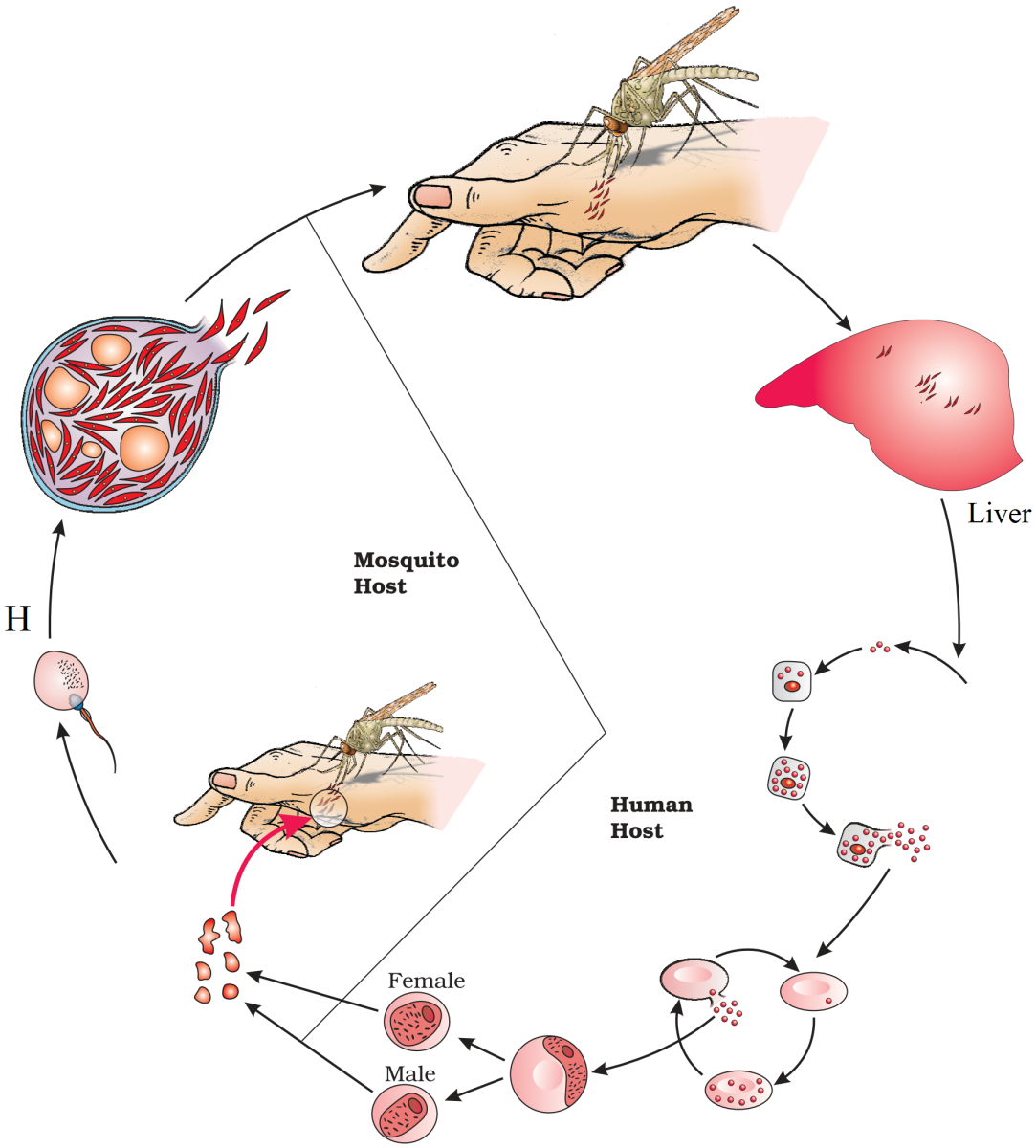
Refer to the diagram given below and answer the questions that follow.

  1. The parasite reproduces in human host by which method?
  2. The sexual stages of parasite are referred to as?
  3. Where does the fertilisation and development of parasite takes place in mosquito body?
  4. What are sporozoites?
  5. What is the cause of cycles of fever during malaria?
ion the characteristic symptoms of Dengue fever. How is the disease transmitted to others?
What name is given to the cells of inner cell mass, that have the potential to give rise to all tissues and organs in a human being?
Answer the following questions:
Biologists are not sure about how many prokaryotic species there might be. Give reasons.
Microbes have various contributions to the human welfare. For example, lactic acid bacteria help in checking disease causing microbes in our stomach. With reference to this fact, state the contribution of different microbes in the process of digestion in ruminants.
What is cancer? How is a cancer cell different from the normal cell? How do normal cells attain cancerous nature?
When did the following appear on the geological history?
  1. Invertebrates.
  2. Jawless fish.
  3. Sea weeds.
Explain co-evolution with reference to parasites and their hosts. Mention any four special adaptive features evolved in parasites for their parasitic mode of life.
Reproductive and Child Healthcare (RCH) programmes are currently in operation. One of the major tasks of these programmes is to create awareness amongst people about the wide range of reproduction related aspects. As this is important and essential for building a reproductively healthy society.
  1. “Providing sex education in schools is one of the ways to meet this goal.” Give four points in support of your opinion regarding this statement.
  2. List any two ‘indicators’ that indicate a reproductively healthy society.