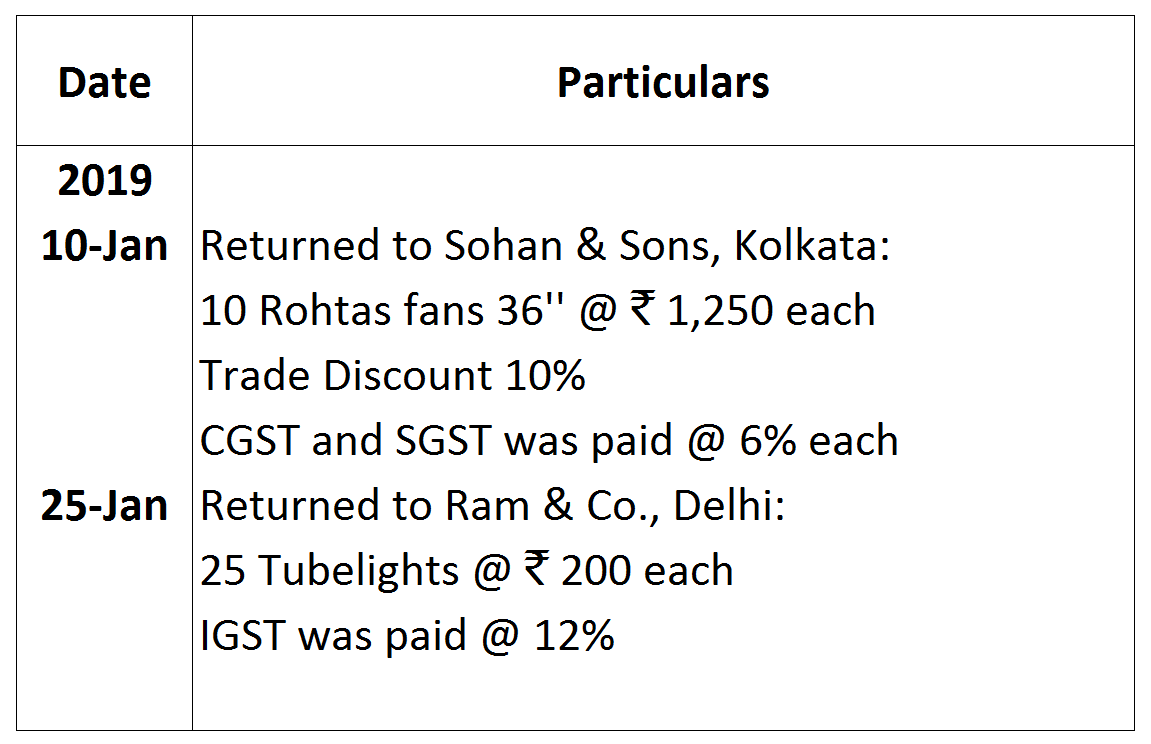
Question
State any two advantages between a bill of exchange and a draft.

Answer

The advantages of Bill of Exchange are:
  1. Facilitates Purchase and Sale of Goods on Credit: It facilitates credit purchase and sale of goods because Bill of Exchange is an unconditional promise to pay.
  2. Serves as a Source of Finance: Bills of Exchange can be discounted with a bank or NBFC so that the enterprise allowing credit can receive the amount immediately without the debtor having to pay before time.
  3. Easy to Recover the Amount: If a Bill of Exchange is dishonoured, it is easier to recover the amount legally than in the case of an ordinary debt.
  4. Endorsement: A Bill of Exchange can be endorsed to other parties; thus it serves almost the same purpose as cash.

Need a full question paper?

Generate a complete, print-ready paper with questions like this in minutes — across 16+ boards, with answer keys.

Start Generating Free

Similar questions

On 15th February, 2019, X sold goods to Y for ₹ 60,000. On the same day, Y accepted a bill drawn upon him by X for three months for ₹ 60,000. X immediately discounted the bill at 15% p.a. at his bank and Y met the bill on maturity. Make Journal entries in the books of both the parties.
i. On 31st March, 2023, the Bank Pass Book of Renu Enterprises showed a credit balance of ₹ 15,000 .
ii. Before that date, she had issued cheques amounting to ₹ 8,000 out of which cheques of ₹ 3,200 were presented for payment till 31st March, 2023.
iii. A cheque of ₹ 2,200 deposited by her into the bank on 28th March, 2023 is not yet credited in the Bank Pass Book.
iv. She had also received a cheque of ₹ 500 which although entered by her in the bank column of Cash Book, was omitted to be paid into the bank.
v. On 30th March, 2023, a cheque of₹ 1,570 received by her was paid into the bank but the same was omitted to be recorded in the Cash Book.
vi. There was a credit of ₹ 150 for interest on current account and a debit of ₹ 25 for bank charges.
vii. A wrong credit of ₹ 2,000 was given by bank on 27th March, 2023 and was reversed on 10th April, 2023.
Prepare Bank Reconciliation Statement as on 31st March, 2023.
Explain the following terms:
  1. Revenue.
  2. Trade Payables.
  3. Fictitious Assets.
  4. Working Capital.
Working Capital = Current Assets - Current Liabilities.
Give rectifying entries for the following:
  1. ₹ 5,400 received from Mr. A was posted to the debit of his account.
  2. The total of Sales Return Book overcasted by ₹ 800.
  3. ₹ 2,740 paid for repairs to motor car was debited to Motor Car Account as ₹ 1,740.
  4. Returned goods to Shyam ₹ 1,500 were passed through Returns Inward Book.
Show the effect of the following transactions on Assets, Liabilities and Capital through accounting equation:
a.
Started business with cash
₹ 1,20,000
b.
Rent received
₹ 10,000
c.
Invested in shares
₹ 50,000
d.
Received dividend
₹ 5,000
e.
Purchase goods on credit from Ragani
₹ 35,000
f.
Paid cash for house hold Expenses
₹ 7,000
g.
Sold goods for cash (costing ₹ 10,000)
₹ 14,000
h.
Cash paid to Ragani
₹ 35,000
i. Deposited into bank ₹ 20,000
(Ans: Assets = Cash ₹ 37,000 + Shares ₹ 50,000 + Goods ₹ 25,000 + Bank ₹ 20,000 = ₹ 1,32,000; Liabilities = Capital ₹ 1,32,000)
Prepare Accounting Equation from the following:
  1. Started business with Cash ₹ 2,00,000.
  2. Purchased goods for Cash ₹ 60,000 and on Credit ₹ 1,50,000.
  3. Sold goods for Cash costing ₹ 40,000 at a profit of 20% and on Credit costing ₹ 72,000 at a profit of 25%.
  4. Paid for Rent ₹ 5,000.
Prepare Purchases Return Book of Aruna Stores, Kolkata from the following transactions and post them into Ledger:
Distinguish between an accomodation bill and a trade bill.
Prepare a debit voucher for furniture purchased for ₹ 60,000 from Globe Furniture Mart on 02-01-2017.
Prepare a Bank Reconciliation Statement in the books of Bharti as on 31st January 2017:
  1. Balance as per Pass Book as on 31st January, 2017 was ₹ 62,500.
  2. Cheque of ₹ 17,800 was issued by her on 28th January 2017 but this was not presented for payment till 31st January 2017.
  3. A cheque of ₹ 4,000 issued to Mr. Rahim, was taken in the cash column.
  4. A cheque of ₹ 15,000 was paid into bank but was omitted to be entered in the cash book.
  5. The bank has charged ₹ 55 as its commission and has allowed interest ₹ 50.