Question
State the principle of centrifugation. Give its two applications.

Answer

The principle of centrifugation is that the denser particles are forced to settle at the bottom yhile the lighter particles stay at the top vhen spun rapidly. APPLICATIONS:
  1. Used in dairy to separate butter from cream.
  2. Used for blood and urine test.
  3. Used in vashing machine to squueze out vater from clothes.

Need a full question paper?

Generate a complete, print-ready paper with questions like this in minutes — across 16+ boards, with answer keys.
Start Generating Free

Similar questions

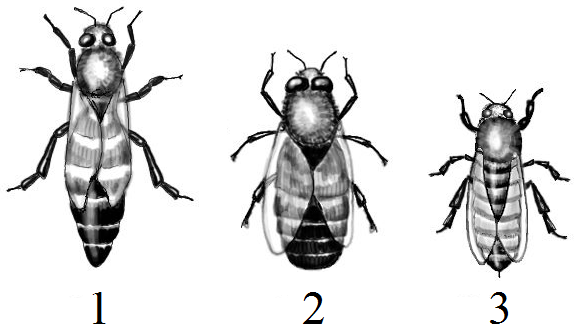
Look at Figures 1, 2 and 3 given alongside and answer the following questions.
  1. What do these figures show all together?
  2. Which one is queen bee?
  3. Which one of them is the haploid, fertile male? What is it called?
  4. What is the status of the insect shown in the figure: individual/ social?
Briefly describe the structure and functions of cell wall.
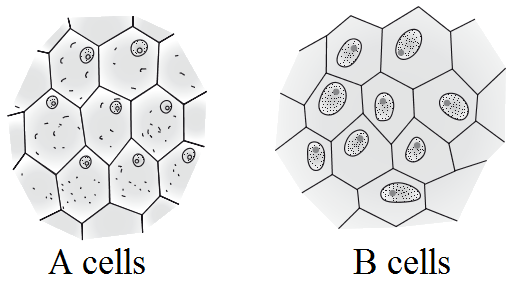
  1. Identify A and B cells.
  2. What will happen if B cells are kept in hypotonic solution.
  3. What will happen if A cells are kept in hypertonic solution.
In which tissue is found anyone of the following Structures: neuron, dendrite, cilia, collagen fibres, elastin fibre.
You want to wear your favourite shirt to a party, but the problem is that it is still wet after a wash. What steps would you take to dry it faster?
If there is low rainfall in a village throughout the year, what measures will you asuggest to the farmers for better cropping?
During an experiment the students were asked to prepare a $10\%$ (Mass/ Mass) solution of sugar in water. Ramesh dissolved $10\ g$ of sugar in $100\ g$ of water while Sarika prepared it by dissolving $10\ g$ of sugar in water to make $100\ g$ of the solution.
  1. Are the two solutions of the same concentration.
  2. Compare the mass $\%$ of the two solutions.
Differentiate between fumigation and spraying.
A cheetah starts from rest, and accelerates at $2m/s^2$ for $10$ seconds. Calculate: The distance travelled.
Show by an experiment that by increasing the temperature, the substance can be changed into liquid and then into vapours.