Question
State the significance of pollination. List any four differences between wind pollinated and animal pollinated flowers.

Answer

Pollination is the phenomena of transfer of pollen grains from anthers to the stigma of a pistil. Pollination is prerequisite for the beginning of fertilisation.
S. No
Wind-pollinated flowers
Animal pollinated flowers
(i)
This kind of flower is pollinated by abiotic pollinating agent.
This kind of flower is pollinated by biotic pollinating agent.
(ii)
They are small and inconspicuous.
They are large, colourful, fragrant and rich in nectar.
(iii)
The pollen grains are dry, light and nonsticky so that they can be easily transported by wind.
The pollen gains are generally sticky in animal pollinated flowers.
(iv)
The flowers are often clustered so as to carry out pollination.
The flowers are grouped to become more conspicuous.

Need a full question paper?

Generate a complete, print-ready paper with questions like this in minutes — across 16+ boards, with answer keys.
Start Generating Free

Similar questions

How has RNAi technique helped to prevent the infestation of roots in tobacco plants by a nematode Meloidegyne incognitia?
A plant with red flowers was crossed with another plant with yellow flowers. If $F_1$ showed all flowers orange in colour, explain the inheritance.
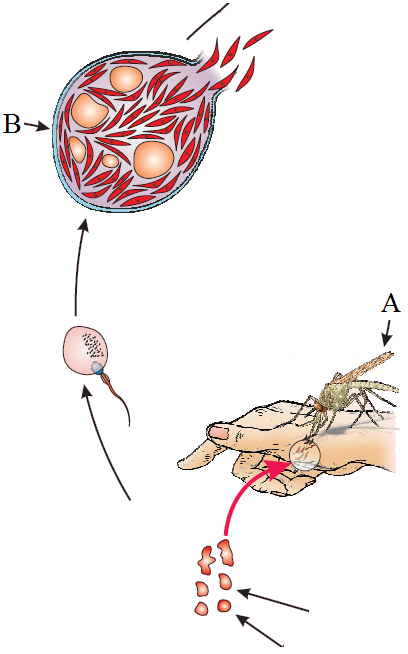
Study a part of the life cycle of malarial parasite given below. Answer the questions that follow:
  1. Mention the roles of 'A' in the life cycle of the malarial parasite.
  2. Name the event 'C' and the organ where this event occurs.
  3. Identify the organ 'B' and name the cells being released from it.
Write a short note on Biopiracy highlighting the exploitation of developing countries by the developed countries.
How do ecologists estimate the total number of species present in the world?
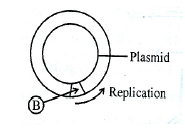
  1. Identify (A) and (B) illustrations in the following:
  1.  
  1.  
  1. Write the term given to (A) and (C) and why?
  2. Expand PCR. Mention its importance in biotechnology.
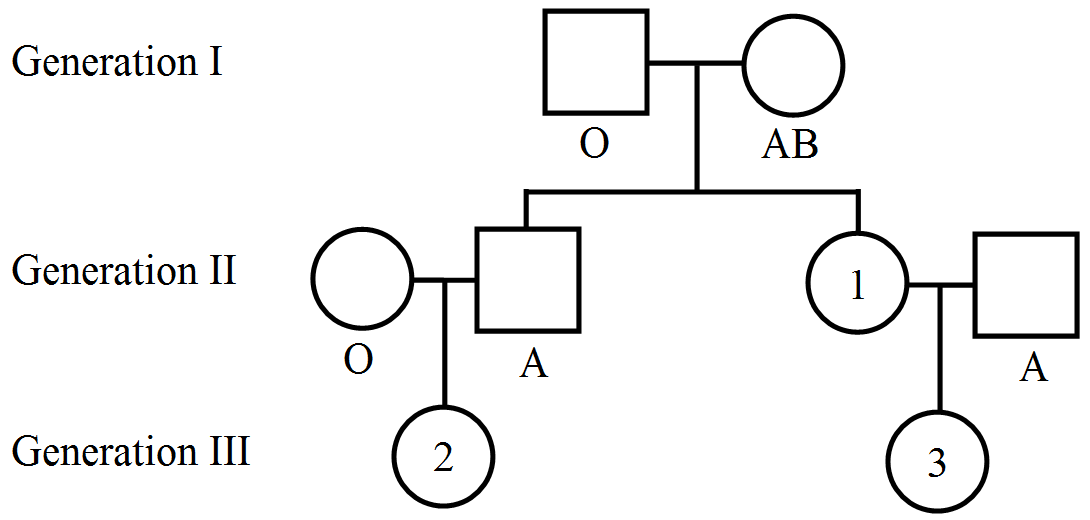
Study the following pedigree chart of a family, starting with mother with AB blood group and father with O blood group.
  1. Mention the blood group as well as the genotype of the offspring numbered 1 in generation II.
  2. Write the possible blood groups as well as their genotypes of the offspring numbered 2 and 3 in generation III.
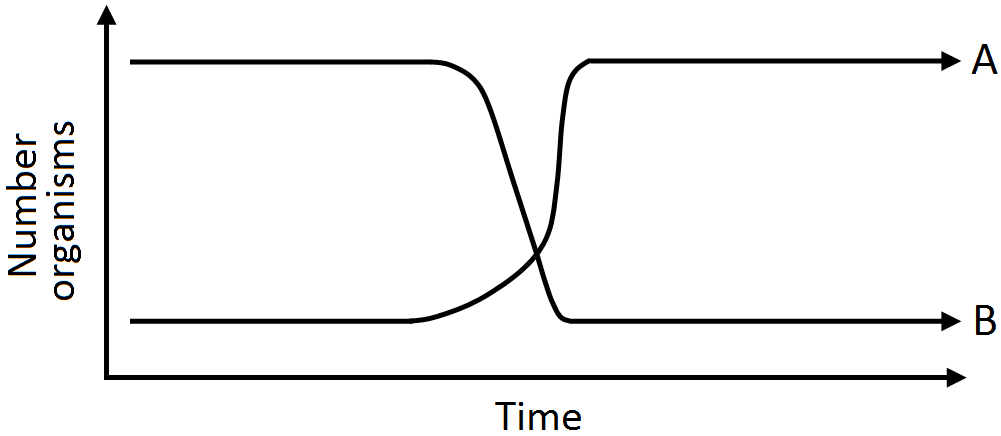
Two types of aquatic organisms in a lake show specific growth patterns as shown below, in a brief period of time. The lake is adjacent to an agricultural land extensively supplied with fertilisers.

Answer the questions based on the facts given above:
  1. Name the organisms depicting the patterns A and B.
  2. State the reason for the growth pattern seen in A.
  3. Write the effects of the growth patterns seen above.
Scientists have succeeded in recovering healthy sugarcane plants from a diseased one.
  1. Name the part of the plant used as explant by the scientists.
  2. Describe the procedure the scientists followed to recover the healthy plants.
  3. Name this technology used for crop improvement.
A non–haemophilic couple was informed by their doctor that there is possibility of a haemophilic child be born to them. Explain the basis on which the doctor conveyed this information. Give the genotypes and the phenotypes of all the possible children who could be born to them.