Question
State the views of Oparin and Haldane on evolution. How does S.L. Miller's experiment support their views?

OR

  1. Explain the theory of abiogenesis.
  2. How did Miller demonstrate experimentally the chemical evolution that happened three billion years ago?
Answer

  1. Theory of chemical evolution or abiogenesis was proposed by Oparin and Haldane.
  2. It states that the first form of life could have come from pre-existing non-living organic molecules (like RNA, proteins, etc.) and that formation of life was preceded by chemical evolution, i.e. formation of diverse organic molecules from inorganic constituents.

Miller's experiment:

  1. He created conditions similar to the primitive earth in the laboratory
  2. Electric discharge was produced by using electrodes) in a closed flask, containing methane, hydrogen, ammonia and water vapour.
  3. The temperature was kept at 800°C.
  4. After a week, he observed formation of amino acids.
  5. Such molecules must have reacted among themselves to form giant, self-replicating molecules, the first form of life.

Need a full question paper?

Generate a complete, print-ready paper with questions like this in minutes — across 16+ boards, with answer keys.

Start Generating Free

Similar questions

What are interferons? How do interferons check infection of new cells?
What background information did Watson and Crick have made available for developing a model of DNA? What was their contribution?
What is mutation? Explain with the help of an example, how a point mutation does affect the genetic code. Name another type of mutation.
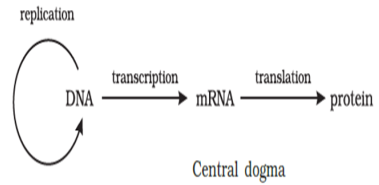
The schematic representation given below shows the concept of Central Dogma.
Image
A. During the process of replication and transcription the pairing of
nitrogenous bases is not similar. Explain.
B. How is the above process modified in a retrovirus? Name the process.
C. Justify why during the process of transcription only a segment of DNA is copied into RNA.
The sacred groves of Aravalli Hills and Ooty botanical garden, both aim at biodiversity conservation. How do they differ in their approaches? Explain.
Two children, A and B aged 4 and 5 years respectively visited a hospital with a similar genetic disorder. The girl A was provided enzyme-replacement therapy and was advised to revisit periodically for further treatment. The girl, B was, however, given a therapy that did not require revisit for further treatment.
  1. Name the ailments the two girls were suffering from?
  2. Why did the treatment provided to girl A required repeated visits?
  3. How was the girl B cured permanently?
Distinguish between :
Upright and inverted pyramid


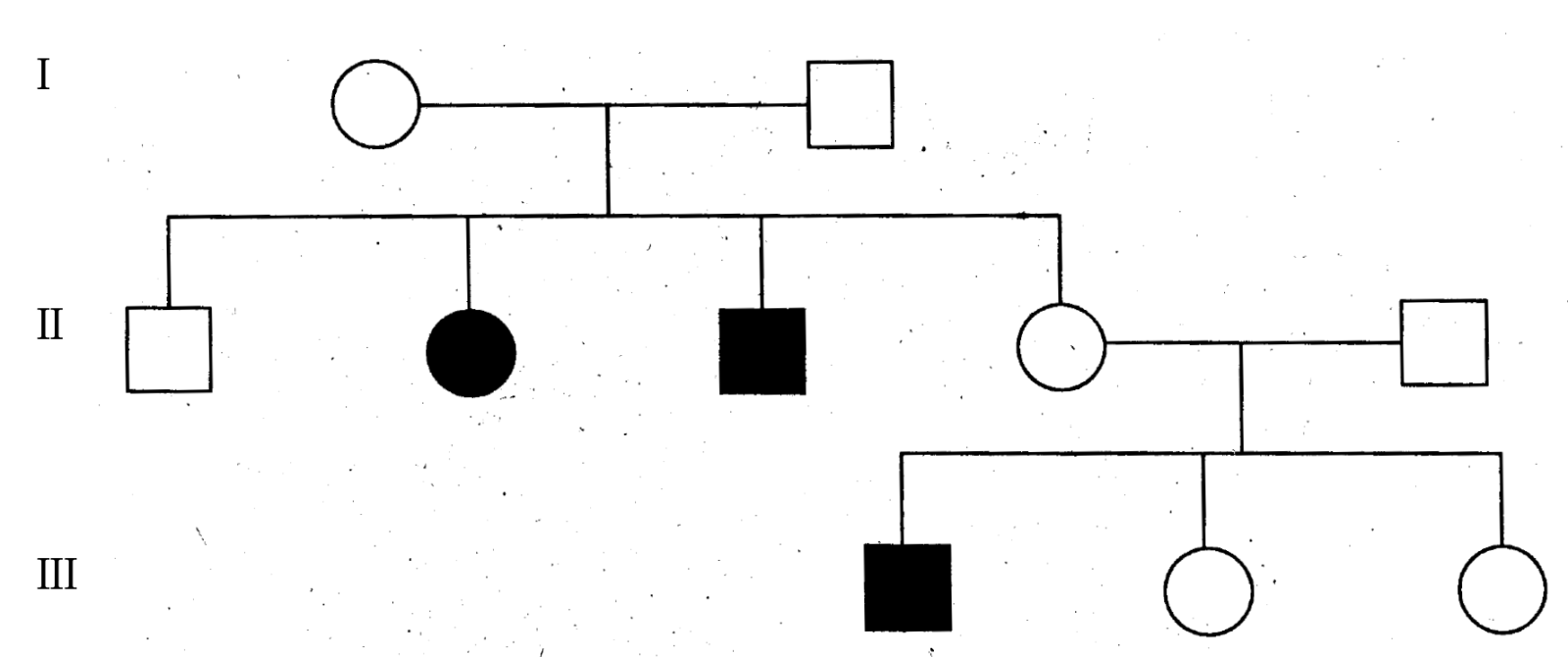
  1. Is the trait recessive or dominant?
  2. Is the trait sex-linked or autosomal?
  3. Give the genotypes of the parents in generation I and of their third and fourth child in Generation II.
When are polar bodies formed in female ovary?
What is DNA polymorphism? Why is it important to study it?