Question
State two observations which show that atom is not indivisible.

Answer

Two observations which shows that atom is not indivisible are:
  1. In J. J. Thomson’s experiment, the stream of cathode rays in the gas discharge tube shows the presence of negatively charged subatomic particles called electrons.
  2. In Goldstein’s experiment, the faint red glow in the gas discharge tube shows the presence of positively charged subatomic particles called protons.

Need a full question paper?

Generate a complete, print-ready paper with questions like this in minutes — across 16+ boards, with answer keys.
Start Generating Free

Similar questions


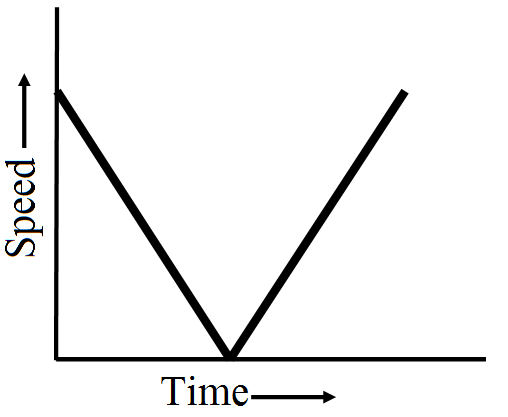
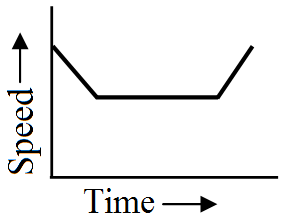
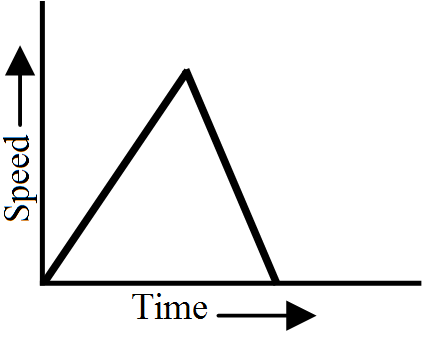
Three speed-time graphs are given below:


Which graph represents the case of:
  1. A cricket ball thrown vertically upwards and returning to the hands of the thrower?
  2. A trolley decelerating to a constant speed and then accelerating uniformly?
An echo is returned in 6s. What is the distance of reflecting surface from source? [given that speed of sound is 342m/s]
An inflated balloon full of air goes down slowly (becomes smaller and smallers lowly) even though the knot at the mouth of the balloon is air tight. And after a week all the air has escaped from the balloon. Explain how the air particles got out of the balloon.
A stone and the earth attract each other with an equal and opposite force. Why then we see only the stone falling towards the earth but not the earth rising towards the stone?
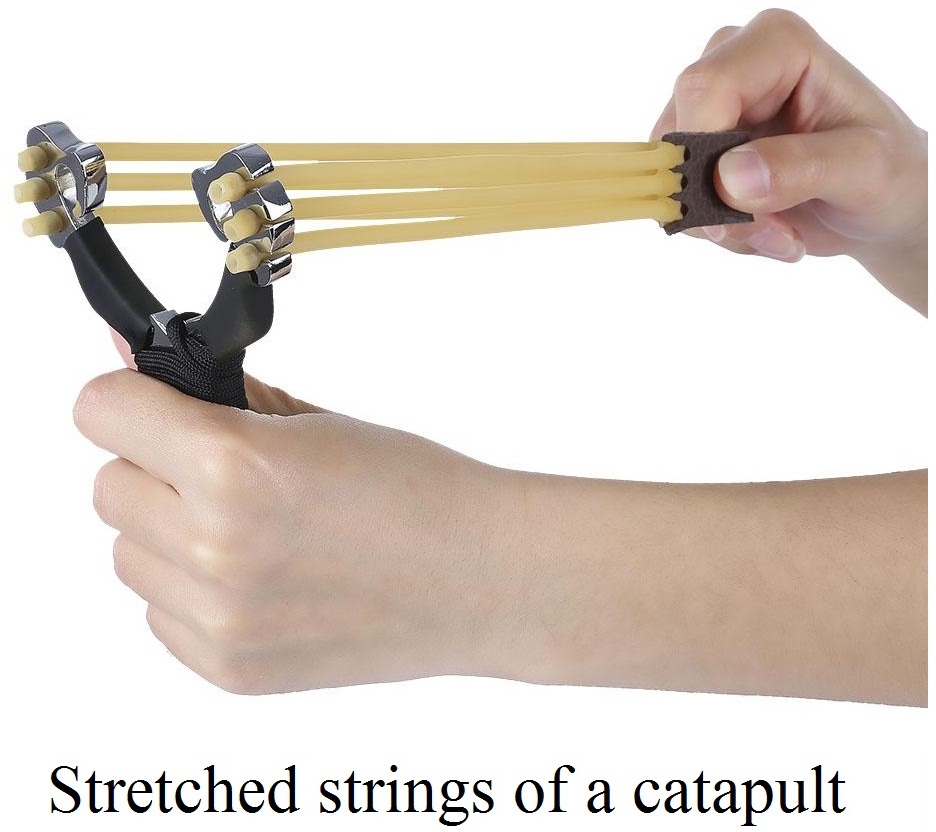
What type of energy is possessed:
  1. By the stretched rubber strings of a catapult?
  1. By the piece of stone which is thrown away on releasing the stretched rubber strings of catapult?
A trolley, while going down an inclined plane, has an acceleration of $2\ cm s^{-2}.$ What will be its velocity $3 s$ after the start?
Do action and reaction act on the same body or different bodies? How are they related in magnitude and direction? Are they simultaneous or not?
A car is moving along a straight road at a steady speed. It travels $150m$ in $5$ seconds:
How far does it travel in $6$ seconds?
A car falls off a ledge and drops to the ground in $0.5$ seconds. Let $g = 10\ ms^{-2},$ then What is its average speed during $0.5$ second?
What is vaccum? Explain why, sound cannot travel through vacuum?