Question
State uses of concave lens.

Answer

  1. Concave lenses are used for proper working of medical equipment, scanner, CD player – the instruments that employ laser rays.
  2. One or more concave lenses are used in a small safety device, fitted in the peep hole in a door, due to which we can see a large area outside the door.
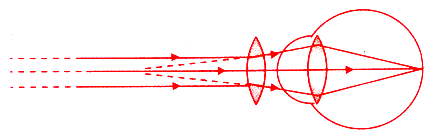
  3. Concave lenses are used in spectacles to correct nearsightedness (myopia).
  4. A concave lens is used to spread light emitted by the small bulb in a torch over a wide area.
  5. A concave lens is used in front of the eyepiece or inside the eyepiece fitted in a camera, telescope and microscope – the instruments employing convex lenses.

Need a full question paper?

Generate a complete, print-ready paper with questions like this in minutes — across 16+ boards, with answer keys.
Start Generating Free

Similar questions

A large coal-fired power station produces 2000MW of electrical energy. A wind turbine with 33m blades can produce 300kW.
  1. How many turbines would be needed to replace the power station?
  2. Why, in actual practice, this number of turbines could not replace the coal-fired power station?
Which type of lens is:
  1. A converging lens, and which is.
  2. A diverging lens? Explain your answer with diagrams.
Draw a neat labelled diagram. Flower with its sexual reproductive organs
Write a short note on alloying.
Observe the given below the figure, correct it and explain and write about the concept depicted in this figure.
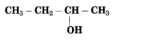
Write the IUPAC names of the following structural formulae:

Image

Explain with the help of a labelled ray diagram, why a pencil partly immersed in water appears to be bent at the water surface. State whether the bending of pencil will increase or decrease if water is replaced by another liquid which is optically more dense than water. Give reason for your answer.
Calculate the escape velocity on the surface of the moon given the mass and radius of the moon to be $7.34 \times 10^{22} kg$ and $1.74 \times 10^6 m$ respectively. $($Given: $G=6.67 \times 10^{-11} Nm ^2 / kg ^2 ).$
In a domestic electric supply, if two bulbs are connected in series instead of parallel, what will happen if the filament of one of the bulbs breaks?
Name two metals which react violently with cold water. Write any three observations you would make when such a metal is dropped into water. How would you identify the gas evolved, if any, during the reaction?