MCQ
Strong reducing behaviour of $H_3PO_2$ is due to
- AHigh oxidation state of phosphorus
- BPresence of two $-OH$ groups and one $P-H$ bond
- ✓Presence of one $-OH$ group and two $P-H$ bonds
- DHigh electron gain enthalpy of phosphorus
All oxy-acid of phosphorus which contain $\mathrm{P}-\mathrm{H}$ bond act as reductant.
presence of one - $\mathrm{OH}$ group and two $\mathrm{P}-\mathrm{H}$ bonds
Generate a complete, print-ready paper with questions like this in minutes — across 16+ boards, with answer keys.
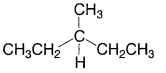
The ketone. $(A)$ is
Ketone $A\,\xrightarrow[2\,.\,{{H}_{2}}O]{1.\,{{C}_{2}}{{H}_{5}}MgBr}B$ $\xrightarrow[-\,{{H}_{2}}O]{{{H}_{2}}S{{O}_{4}},\,Heat}C$ $\xrightarrow[2.\,Zn\,,\,{{H}_{2}}O]{1.{{O}_{3}}}$ Figure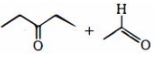
$M{n_{(S)}}|Mn_{(aq)}^{ + 2}(0.4\,M)||Sn_{(aq)}^{ + 2}(0.04\,M)|S{n_{(S)}}$,
Calculate free energy change $(\Delta G)$ at $298\,K$ .
Given :$E_{M{n^{ + 2}}|Mn}^o = \, - \,1.18\,V\,;\,E_{S{n^{ + 2}}|Sn}^o\, = \, - \,0.14\,volt$
$\frac{{2.303\,RT}}{F} = 0.06$