Question
Study the 3 representative figures of age pyramid relating to human population given below and answer the following question:
  1. Mention the names given to the 3 kinds of age profiles (i), (ii), and (iii).
  2. Which one of them is ideal for a population and why?
  3. How do such age-profile studies help policy makers get concerned about our growing population and prepare for future planning? (say for example: for the year 2022.)
[Hint. The age profile you would name as stable was prepared on the data available on January 2007].

Answer

  1.  
  1. Expanding.
  2. Stable.
  3. Declining.
  1. The stable pyramid is ideal for a population.
Because :

The number of individuals in the pre-reproductive period is almost equal to those in the reproductive period. As a result, the number of individuals in the reproductive period will be the same in future.
  1. The shape of the pyramids reflect the growth status of the population; any aspect of ecological processes is evaluated in terms of a change in the population size.

Need a full question paper?

Generate a complete, print-ready paper with questions like this in minutes — across 16+ boards, with answer keys.

Start Generating Free

Similar questions

Describe the nature of inheritance of the ABO type of blood group in humans. In which ways does this inheritance differ from that of height of the plant in garden pea?
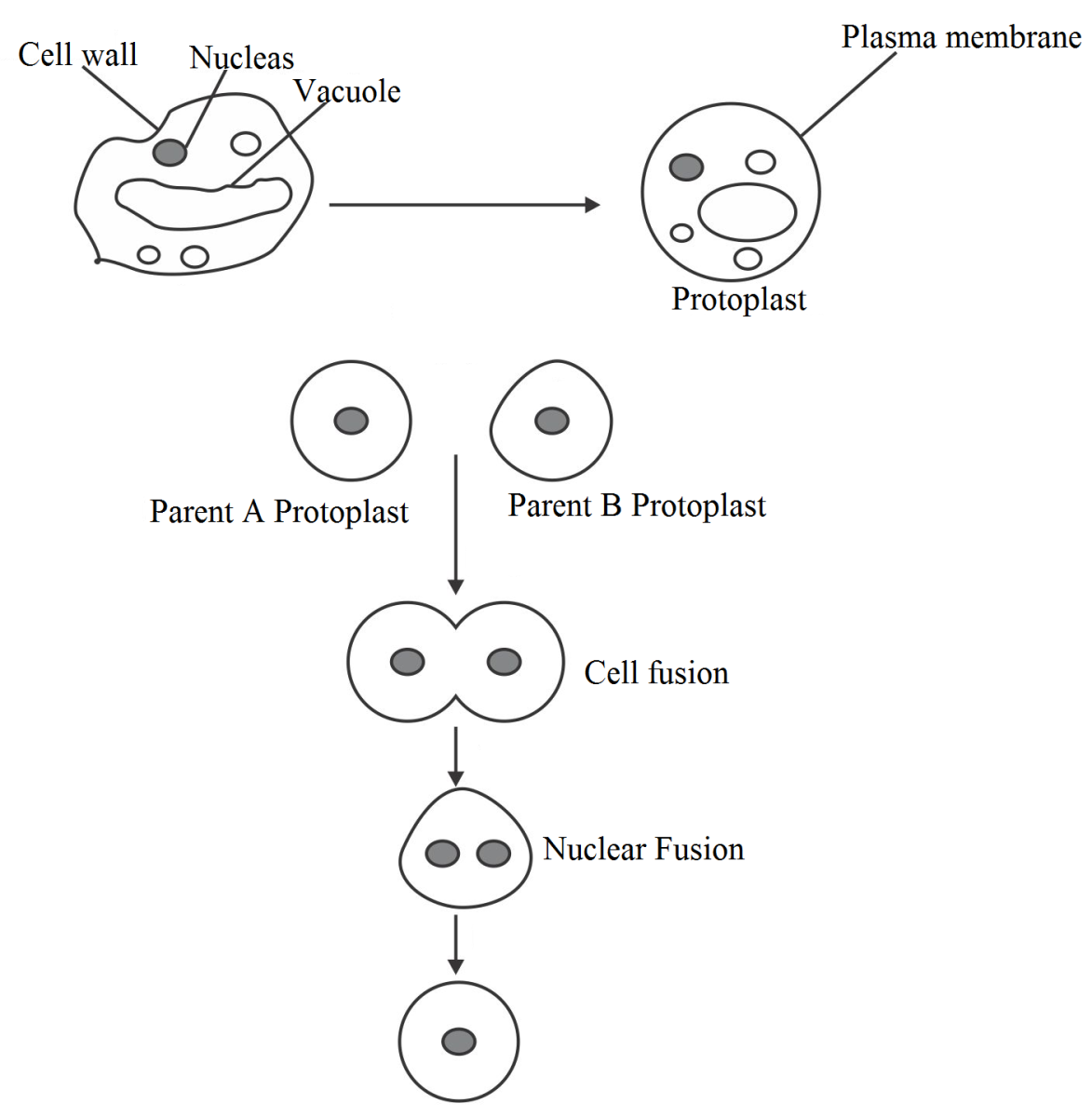
Figure given below represent a certain technique of tissue culture.
  1. Name the technique, as shown in the diagram.
  2. What are the enzymes used to digest plant cell wall?
  3. Name the fusinogen.
  4. What is the product of fusion of protoplasts?
Drugs and alcohol give short-term 'high' and long-term ‘damages’, Discuss.
Explain the ‘Competitive Exclusion Principle’ given by Gause.
The following table shows certain diseases, their causative organisms and symptoms. Fill the gaps.
  Name of the Disease Causative organism Symptoms
i. Ascariasis Ascaris ________
ii. ________ Trichophyton Appearance of dry, scaly lesions on various parts of the body.
iii. Typhoid ________ High fever, weakness, headache, stomach pain, constipation.
iv. Pneumonia Streptococcus pneumoniae ________
v. ________ Rhino viruses Nasal congestion and discharge, sorethroat, cough, headache.
vi. Filariasis ________ Inflammation in lower limbs.
Enumerate the points that have to be considered for successful bee-keeping.
Graafian follicle and Corpus luteum.
State the Mendelian principle which can be derived from such a cross and not from monohybrid cross.
Explain the development of a secondary oocyte (ovum) in a human female from the embryonic stage upto its ovulation. Name the hormones involved in this process.OR
When does oogenesis start in humans? Name the three hormones and their sources, linked with oogenesis. How do they influence the process of oogenesis? Explain.
Differentiate between,
Oestrus and menstrual cycles.