Question
Study the cartoon given below carefully and answer the questions that follow:
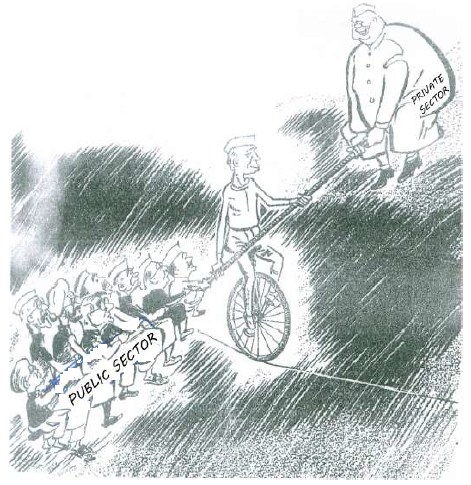
  1. Identify and name the person who is holding the balancing beam between the public sector and the private sector.
  2. Why has a big tilt towards the public sector been shown in the cartoon?
  3. How did the over-emphasis on public sector adversely affect the Indian economy?
Answer

  1. Pt. Jawaharlal Nehru.
  2. A big tilt towards the public sector has been shown because the state controlled key heavy industries, provided industrial infrastructure, regulated trade and made some crucial interventions in agriculture.
  3.  
  1. The state intervened only in those areas where the private sector was not prepared to go. Thus the state helped the private sector to make profit.
  2. Also, instead of helping the poor, the state intervention ended up creating a new ‘middle class’ that enjoyed the privileges of high salaries without much accountability.
  3. The state controlled more things than were necessary and this led to inefficiency and corruption.

Need a full question paper?

Generate a complete, print-ready paper with questions like this in minutes — across 16+ boards, with answer keys.

Start Generating Free

Similar questions

Explain the role of emerging alternative centers of power in transforming the different countries into prosperous economies.
Describe any four consequences of the disintegration of Soviet Union.

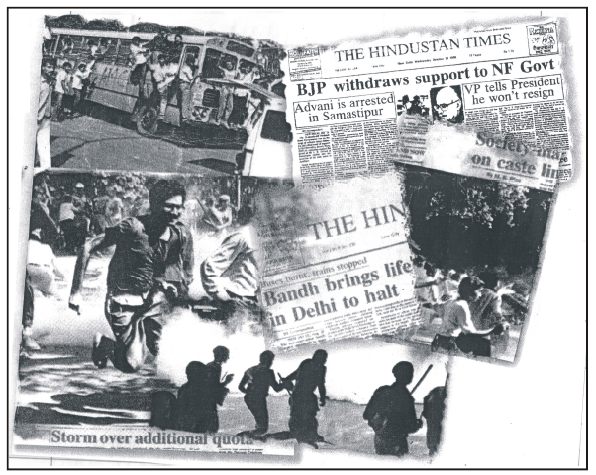
Study the above newspaper illustration carefully and answer the following questions:
  1. Identify the main issue that sparked off the agitation.
  2. What did the National Front Government decide in favour of or against the issue?
  3. How did the coalition partners in the National Front react to this decision?
Describe the journey of the movement for Right to Information which ultimately culminated into an Act i.e. RTI Act, 2005.
Read the following passage carefully and answer the following questions:
At the most simple level, globalisation results in an erosion of state capacity, that is, the ability of government to do what they do. All over the world, the old 'welfare state' is now giving way to a more minimalist state that performs certain core functions such as the maintenance of law and order and the security of its citizens. However, it withdraws from many of its earlier welfare functions directed at economic and social well-being. In place of the welfare state, it is the market that becomes the prime determinant of economic and social priorities.
  1. What do the words 'erosion of state capacity' imply? Explain with the help of an example.
  2. Why is the concept of welfare state giving way to a minimalist state?
  3. How has market become the prime determinant of social priorities?
Highlight the circumstances that compelled the socialists to form a separate Socialist Party in 1948. Mention any two grounds on which they criticized the Congress Party.
How did the New International Economic Order come into being? What reforms were proposed by UNCTAD in its report in 1972?
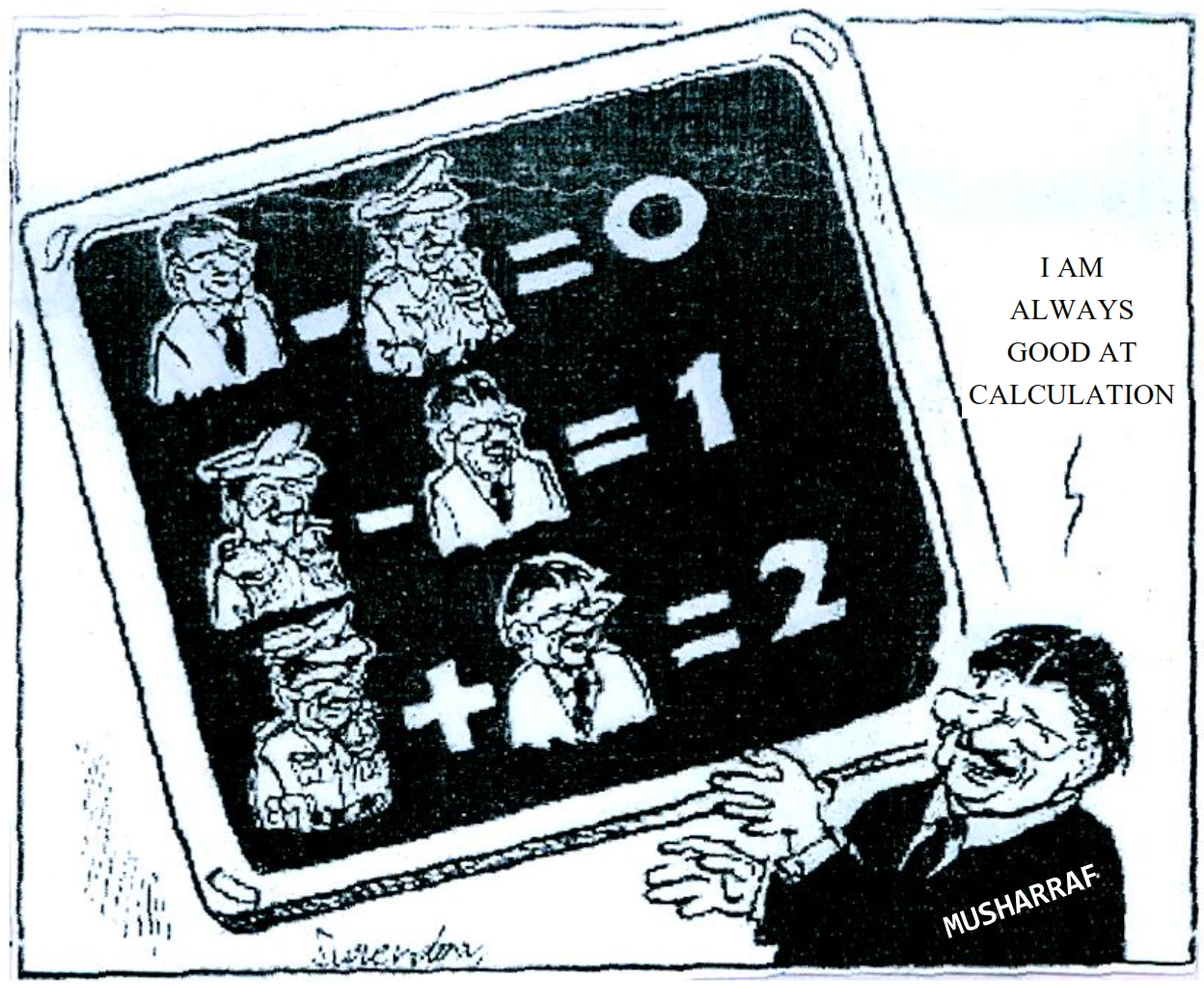
Study the cartoon given below carefully and answer the questions that follow:
  1. Identify the country related to this cartoon.
  2. Evaluate the system of governance being practised in this country.
  3. How is the system of governance in India different from that of the country related to the cartoon?
Examine the grave economic crisis prior to the fourth general elections of 1967. Assess the verdict of the electorate based on the Election.
How did the methods of voting in free India go on changing from time to time till day? Explain the reasons also.