Question
Sunlight and air are inexhaustible natural resources. Comment.

Answer

These resources are present in an unlimited quantity in nature and are not likely to be exhausted by human activities. There is a never ending supply of these resources in nature. These resources can be used again and again. They last forever.

Need a full question paper?

Generate a complete, print-ready paper with questions like this in minutes — across 16+ boards, with answer keys.

Start Generating Free

Similar questions

With the help of examples, show the variation in size and shape.
Cartilage is present in the joints of our body, which helps in their smooth movement. With advancing age, this cartilage wears off. How would this affect the movement of joints?
What is meant by an ‘embryo’? Can we identify the body features in an embryo?
What are meteoroids? Which of two is really a member of the Solar System: Meteoroid or Meteor?
Give examples to show that friction is both a friend and a foe.
What is meant by the migration of birds? why do birds migrate?
What is a constellation? Name any two constellations.
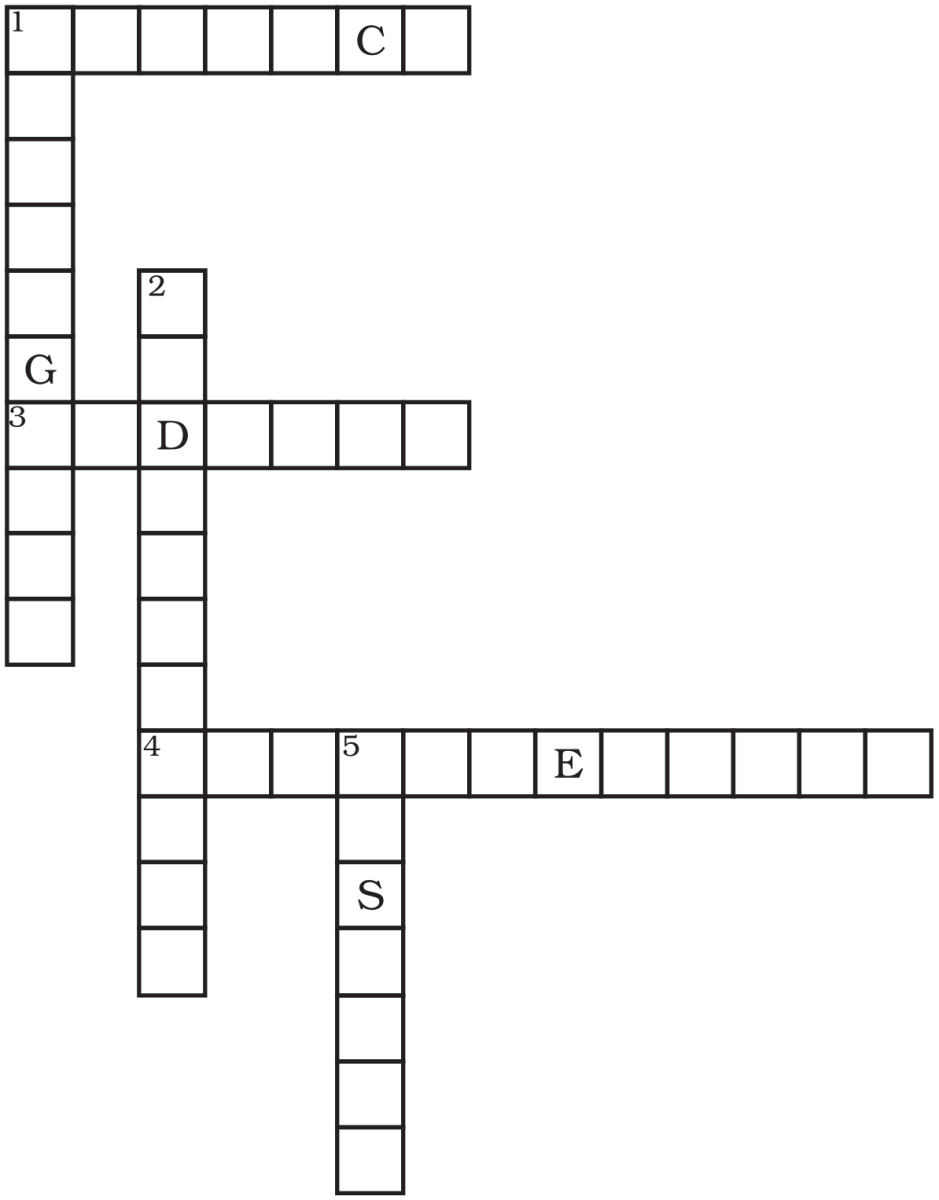
Complete the word puzzle.
Down:
$1.$ Species on the verge of extinction.
$2.$ A book carrying information about endangered species.
$5.$ Consequence of deforestation.
Across:
$1.$ Species which have vanished.
$3.$ Species found only in a particular habitat.
$4.$ Variety of plants, animals and microorganisms found in an area.
In animals, gametes are called sperm (male) and eggs (female). Fertilisation may take place in water, for example, male and female fish or frogs eject sperm and eggs, respectively, into the water where they combine to form the zygote. In birds and mammals, including humans, sperm are deposited inside the female, and fertilisation takes place when the sperm swim towards the egg produced by the female.
Q.1. What is the difference between fertilisation in fish and birds?
Q.2. Why do fish produce many eggs compared to birds?
Q.3. How does internal fertilisation benefit mammals like humans?
In a candle flame, what is the colour of: $(a)$ innermost zone $(b)$ middle zone, and $(c)$ outer zone?