MCQ
Suppose $y=y(x)$ be the solution curve to the differential equation $\frac{d y}{d x}-y=2-e^{-x}$ such that $\lim _{x \rightarrow \infty} y(x)$ is finite. If $a$ and $b$ are respectively the $x-$ and $y$-intercepts of the tangent to the curve at $x=0$, then the value of $a-4 b$ is equal to$....$
  • A
    $6$
  • B
    $2$
  • C
    $3$
  • D
    $0$

Answer

Need a full question paper?

Generate a complete, print-ready paper with questions like this in minutes — across 16+ boards, with answer keys.

Start Generating Free

Similar questions

A cubical die faces marked $1 ,2,3, ... ,6$ is tossed such that the probability of throwing the number $t$ is proportional to $t^2$. The probability that the number $5$ has appeared given that when the die is rolled the number turned up is not even, is
Choose the correct answer from the given four options.
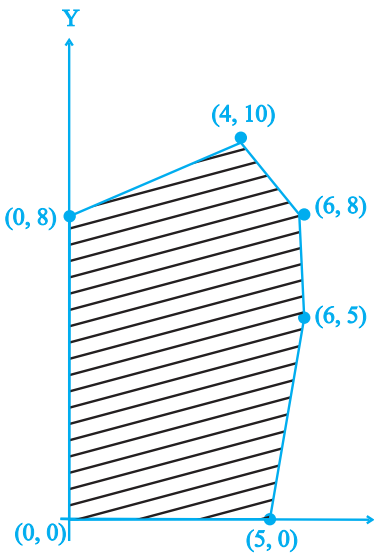
The feasible solution for a LPP is shown in. Let Z = 3x - 4y be the objective function.

Minimum of Z occurs at:
For any matrix $A , A =\left[\begin{array}{cc}\alpha & -2 \\ -2 & \alpha\end{array}\right],\left| A ^3\right|=125$ then value of $\alpha$ is :
The objective function of LPP defined over the convex set attains its optimum value at.
If $f(t) = \int_{\, - t}^{\,t} {\frac{{dx}}{{1 + {x^2}}},} $ then $f'(1)$ is
$\int {{e^{{x^2}}}}  \cdot {e^x}\left( {2{x^2} + x + 1} \right)dx = {e^{{x^2}}}\left( {f\left( x \right)} \right) + c$ where $c$ is constant of integration. If the minimum value of $f(x) $ is equal to $'m'$ then find the value of $\left[ { - \frac{1}{m}} \right]$ , $[·]$ denotes $[GIF]$ functions
The function $f(x) = \frac{{\log (1 + ax) - \log (1 - bx)}}{x}$ is not defined at $x = 0$. The value which should be assigned to f at $x =0$ so that it is continuos at $x = 0$, is
If S = [Sij] is a scalar matrix such that Sij = k and A is a square matrix of the same order, then AS = SA = ?
  1. Ak
  2. k + A
  3. kA
  4. kS
$\int_0^{2 \pi} \sin ^3 x \cos ^2 x d x=$ ___________ .
Calculate: $\int(\text{x}^3-\frac{1}{\text{x}}+{3\text{x}})\text{dx:}$
  1. $\frac{\text{x}^{4}}{3}-\log\text{x}+\frac{\text{5x}^{2}}{2}+\text{c}$
  2. $\frac{\text{x}^{4}}{4}-\log\text{x}+\frac{\text{2x}^{2}}{3}+\text{c}$
  3. $\frac{\text{x}^{4}}{4}-\log\text{x}+\frac{\text{3x}^{2}}{4}+\text{c}$
  4. $\frac{\text{x}^{4}}{4}-\log\text{x}+\frac{\text{3x}^{2}}{2}+\text{c}$