Question
$\text{If}\ \text{y}\sin\phi=\text{x}\sin(2\theta+\phi),$ prove that $(\text{x+y})\cot(\theta+\phi)=(\text{y}-\text{x})\cot\theta$

Answer

We have,
$\text{y}\sin\phi=\text{x}\sin(2\theta+\phi)$
$\Rightarrow\ \frac{\sin\phi}{\sin(2\theta+\phi)}=\frac{\text{x}}{\text{y}}...(\text{i})$
Now,
$\frac{\sin\phi}{\sin(2\theta+\phi)}=\frac{\text{x}}{\text{y}}$
$\Rightarrow\ \frac{\sin\phi}{\sin(2\theta+\phi)}+1=\frac{\text{x}}{\text{y}}+1$
$\Rightarrow\ \frac{\sin\phi+\sin(2\theta+\phi)}{\sin(2\theta+\phi)}=\frac{\text{x+y}}{\text{y}}...(\text{ii})$
Again,
$\frac{\sin\phi}{\sin(2\theta+\phi)}=\frac{\text{x}}{\text{y}}$ [By equation (i)]
$\Rightarrow\ \frac{\sin\phi}{\sin(2\theta+\phi)}-1=\frac{\text{x}}{\text{y}}-1$
$\Rightarrow\ \frac{\sin\phi-\sin(2\theta+\phi)}{\sin(2\theta+\phi)}=\frac{\text{x}-\text{y}}{\text{y}}...(\text{iii})$
Dividing equation (ii) by equation (iii), we get
$\frac{\sin\phi+\sin(2\theta+\phi)}{\sin\phi-\sin(2\theta+\phi)}=\frac{\text{x+y}}{\text{x}-\text{y}}$
$\Rightarrow\ \frac{2\sin\big(\frac{\phi+2\theta+\phi}{2}\big)\cos\big(\frac{\phi-2\theta-\phi}{2}\big)}{2\sin\big(\frac{\phi-2\theta-\phi}{2}\big)\cos\big(\frac{\phi+2\theta+\phi}{2}\big)}=\frac{\text{x+y}}{\text{x}-\text{y}}$
$\Rightarrow\ \frac{\sin(\theta+\phi)\cos(\theta-\phi)}{\sin(-\theta)\cos(\theta+\phi)}=\frac{\text{x+y}}{\text{x}-\text{y}}$
$\Rightarrow\ \frac{\sin(\theta+\phi)\cos(\theta)}{\cos(\theta+\phi)[-\sin(\theta)]}=\frac{\text{x+y}}{\text{x}-\text{y}}$
$\Rightarrow\ \frac{-\cot(\theta)}{\cot(\theta+\phi)}=\frac{\text{x+y}}{\text{x}-\text{y}}$
$\Rightarrow\ -(\text{x}-\text{y})\cot\theta=(\text{x+y})\cot(\theta+\phi)$
$\Rightarrow\ (\text{y}-\text{x})\cot\theta=(\text{x+y})\cot(\theta+\phi)$
$\Rightarrow\ (\text{x}+\text{y})\cot(\theta+\phi)=(\text{y}-\text{x})\cot\theta$ Hence proved.

Need a full question paper?

Generate a complete, print-ready paper with questions like this in minutes — across 16+ boards, with answer keys.
Start Generating Free

Similar questions

A man accepts a position with an initial salary of ₹ 5200 per month. It is understood that he will receive an automatic increase of ₹ 320 in the very next month and each month thereafter.
  1. Find his salary for the tenth month.
  2. What is his total earnings during the first year?
The owner of a milk store finds that he can sell 980 litres milk each week at Rs 14 per liter and 1220 liters of milk each week at Rs 16 per liter. Assuming a linear relationship between selling price and demand, how many liters could he sell weekly at Rs 17 per liter.
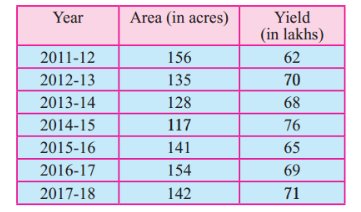
Compute the coefficient of variations for the following data to show whether the variation is greater in the field or in the area of the field.

Image

Differentiate the following from the first principle$\text{f}(\text{x})=\frac{\sin\text{x}}{\text{x}}$
Prove by the method of induction, for all n ∈ N.

$1^2+3^2+5^2+\ldots .+(2 n-1)^2=\frac{n}{3}(2 n-1)(2 n+1)$

$\text{x}^4+4\text{x}^3+6\text{x}^2+4\text{x}+9,$ when $\text{x}=-1+\text{i}\sqrt{2}$
In each of the following find the equation of the hyperbola satisfying the given conditions
foci $(0, \pm12), $ latus-rectum=36 [NCERT]
$\frac{\text{a}^2\sin(\text{B}-\text{C})}{\sin\text{A}}+\frac{\text{b}^2\sin(\text{C}-\text{A})}{\sin\text{B}}+\frac{\text{c}^2\sin(\text{A}-\text{B})}{\sin\text{C}}=0$
Calculate the mean deviation about the median of the following observation:
$38, 70, 48, 34, 42, 55, 63, 46, 54, 44$
If $\text{a}=\cos\theta+\text{i}\sin\theta,$ find the value of $\frac{1+\text{a}}{1-\text{a}}.$