MCQ
The basic structural and functional unit of all living organism is
  • cell
  • B
    cell wall
  • C
    cell membrane
  • D
    chloroplasts

Answer

Correct option: A.
cell

Need a full question paper?

Generate a complete, print-ready paper with questions like this in minutes — across 16+ boards, with answer keys.
Start Generating Free

Similar questions

Which of the following is the main cause of global warming?
An infectious disease is:
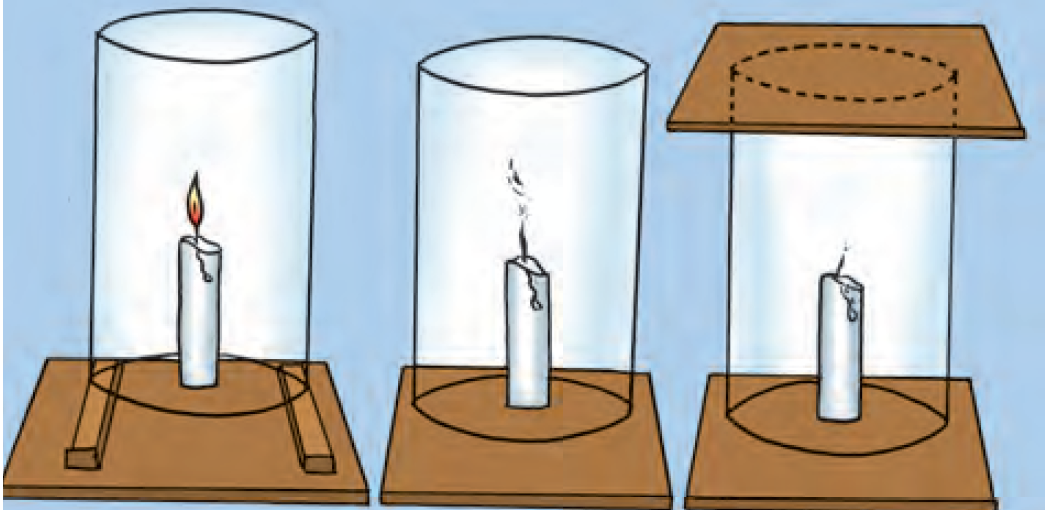
Three candles $X, Y,$ and $Z$ are fixed on a table. A glass chimney is placed over candle $X$, and is rested on wooden blocks in a manner which allows the entrance of oxygen. To candle $Y$, a glass chimney is placed in such a way that it is simply rested on the table. For candle $Z$, a similar arrangement is made along with the placement of a glass plate over the chimney. Candle _____$i$____ bums freely. The flame of candle _____$ii$_____ will flicker off giving smoke, and that of candle _____$iii$_____ will simply go off.

The information in which alternative completes the given statements?
For the metamorphosis of tadpoles which of the following elements must be available in water?
Spring balance is a device used for measuring the $...........$ acting on an object.
Which of the following is the electrolyte in a dry cell?
$1$ hertz is equal to:
Friction has advantages as well as disadvantages. Dilip prepares a list of some of the advantageous applications of friction, as shown in the given table. Application of friction
$I$. Walking
$II.$ Writing
$III.$ Wearing out of shoes
$IV.$ Igniting a matchstick
$V.$ Gripping an object Which of the items listed in me given table is riot an advantage of friction?
Amit puts some sand in his hands and tries to grip a glass tumbler. He then repeats the same by putting chalk power, mustard oil, and water on his palms respectively. For a proper grip, Amit should avoid gripping the tumbler with.
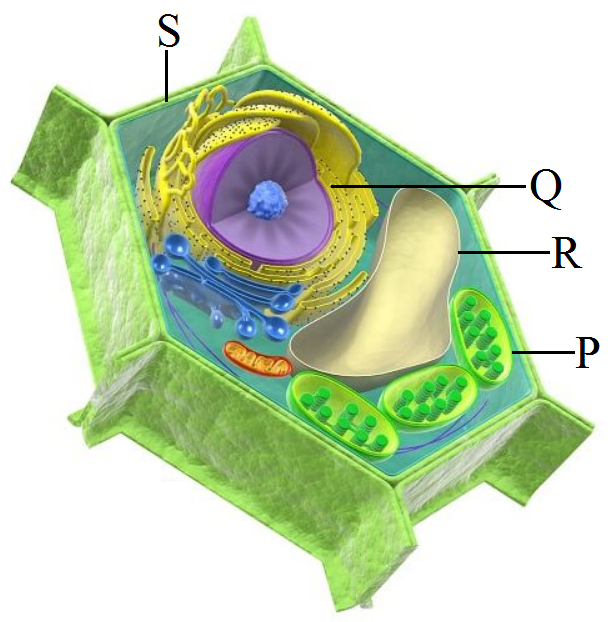
Select the option which correctly match the marked parts $P, Q, R$ and $S$ in the given figure with the functions given below.
$(i)$
Oxidation of food during cell respiration
$(ii)$
Storage and secretion of substances from the cell
$(iii)$
Allow minerals to pass through
$(iv)$
Transport of substances within cell.