Question
The battery discussed in the previous question is suddenly disconnected. Is a current induced in the other loop? If yes, when does it start and when does it end? Do the loops attract each other or repel?

Answer

As the battery is disconnected the current starts decreasing in lop 1 and thus now direction of current is in opposite direction as it was earlier and it ends when both loops are in equilibrium.

Need a full question paper?

Generate a complete, print-ready paper with questions like this in minutes — across 16+ boards, with answer keys.
Start Generating Free

Similar questions

The electric foree between two electric charges in a medium is F . The distance between them is $d$. At what distance were they placed from each other
so that the electric foree becomes (i) 3 F (ii) $\frac{ F }{4}$ ?
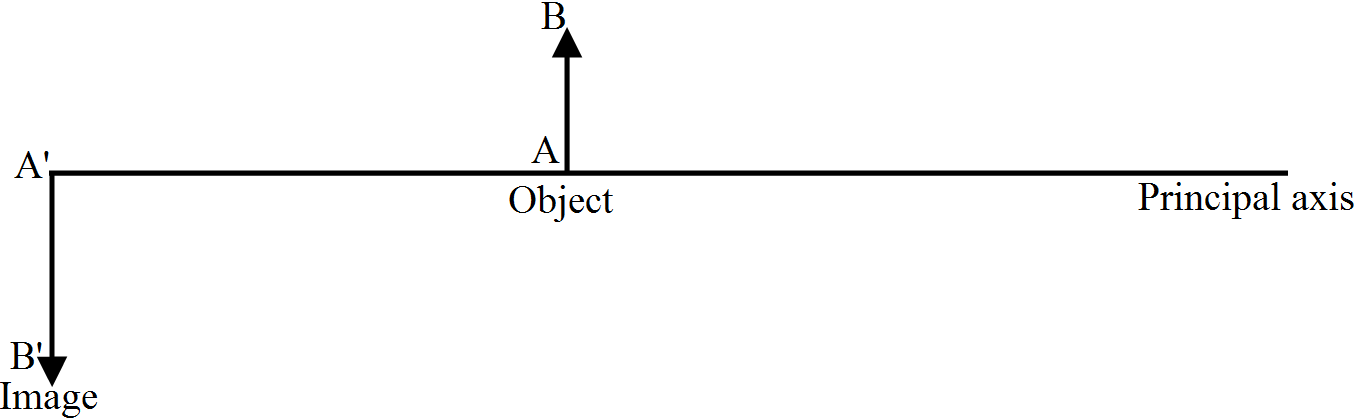
Redraw the diagram given below and mark the position of the centre of curvature of the spherical mirror used in the given set up.
  1. The peak voltage of an ac supply is $300V$. What is the rms voltage?
  2. The rms value of current in an ac circuit is $10A$. What is the peak current?
Calculate the mass of an $\alpha-$particle. Its binding energy is $28.2MeV.$
Three capacitors each of capacitance 9 pF are connected in series.
  1. What is the total capacitance of the combination?
  2. What is the potential difference across each capacitor if the combination is connected to a 120 V supply?
The radius of the innermost electron orbit of a hydrogen atom is 5.3 ×10⁻¹¹ m. What are the radii of the n = 2 and n = 3 orbits? 
Derive an expression for (i) induced emf and (ii) induced current when a conductor of length l is moved with a uniform velocity, normal to a uniform magnetic field B. Assume the resistance of conductor to be R.
Derive $D_m=A\left(n_{21}-1\right)$ for thin lens.
An extended object is placed at a distance of 5.0cm from a convex lens of focal length 8.0cm.
  1. Draw the ray diagram (to the scale) to locate the image and from this, measure the distance of the image from the lens.
  2. Find the position of the image from the lens formula and see how close the drawing is to the correct result.
If a particle is accelerating, it is either speeding up or speeding down. Do you agree with this statement?