MCQ
The beta and alpha glucose have different specific rotations. When either is dissolved in water, their rotation changes until the same fixed value results. This is called
- Aepimerisation
- Bracemisation
- Canomerisation
- ✓mutarotation
Generate a complete, print-ready paper with questions like this in minutes — across 16+ boards, with answer keys.
$(I)$ $BO_3^{-3} > CO_3^{-2} > NO_3^-$
$(II)$ $ClO_4^-> SO_4^{-2} > PO_4^{-3}$
$(III)$ $BF_3 > BCl_3 > BBr_3$
$(IV)$ $AlCl_3 > BCl_3$
$A$, (molecular formula $\left.\mathrm{C}_{6} \mathrm{H}_{12} \mathrm{O}_{2}\right)$ with a straight chain structure gives a $C_{4}$ carboxylic acid. $A$ is :
$A \frac{{Li} {A} {H} {H}_{4}}{{H}_{3} {O}^{+}} \longrightarrow B \stackrel{\text { Oxidation }}{\longrightarrow} {C}_{4}-$ carboxylic acid
| Column $-I$ (various solutions) |
Column $-II$ (Their freezing point ) |
||
| $a$ | $0.1\,M$ $BaCl_2$ solution | $p$ | $271\,K$ |
| $b$ | $0.1\,M$ $NaCl$ solution | $q$ | $270\,K$ |
| $c$ | $0.1\,M\, K_3 [Fe(CN)_6]$ solution | $r$ | $268\,K$ |
| $d$ | $0.1\,M\, Al_2 (SO_4)_3$ solution | $s$ | $269\,K$ |
Given : Freezing point of $0.1\,M$ sucrose solution $= 272\,K$ and $F.pt.$ of water $= 273\,K$
Which of the following option show correct matches ?
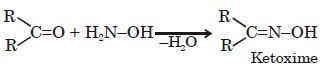
The total number of organic products (ketoxime) formed when the simplest ketone and it's next higher homologue react with $NH_2OH$, is :