MCQ
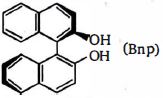
The binaphthol $(Bnp)$ is
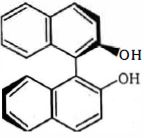
- Aan optically active compound having chiral centre
- Ban optically inactive compound
- Ca meso compound
- ✓an optically active compound without having chiral centre
Generate a complete, print-ready paper with questions like this in minutes — across 16+ boards, with answer keys.
$Mn^{2+} +2e- \rightarrow Mn;\, E^o = -1.18\,V$
$2(Mn^{3+} +e^- \rightarrow Mn^{2+} )\,;\,E^o=+1.51\,V$
The $E^o$ for $3Mn^{2+} \rightarrow Mn+ 2Mn^{3+}$ will be :
Reason : Phosphorus has lower electronegativity than nitrogen.
$\left[\right.$ Given $: \mathrm{h}=6.63 \times 10^{-34} \,\mathrm{Js}$ and $\left.\mathrm{c}=3.0 \times 10^{8} \,\mathrm{~ms}^{-1}\right]$
Statement $I$ : The rate law for the reaction $A+B \rightarrow C$ is rate $(r)=k[A]^2[B]$. When the concentration of both $\mathrm{A}$ and $\mathrm{B}$ is doubled, the reaction rate is increased " $\mathrm{x}$ " times.
Statement $II$ :
(Image)
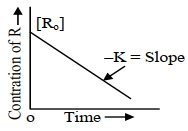
The figure is showing "the variation in concentration against time plot" for a $"y"$ order reaction. The value of $x+y$ is . . . . . .