MCQ
The compound which could not act both as oxidising as well as reducing agent is
- A$S{O_2}$
- B$Mn{O_2}$
- ✓$A{l_2}{O_3}$
- D$CrO$
Generate a complete, print-ready paper with questions like this in minutes — across 16+ boards, with answer keys.
| List - I | List - II | ||
| (A) | Adenine | (I) | 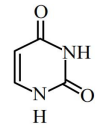 |
| (B) | Cytosine | (II) | 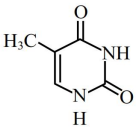 |
| (C) | Thymine | (III) | 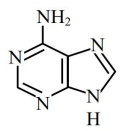 |
| (D) | Uracil | (IV) | 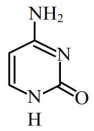 |
$(I)\, [Ni(CN)_4]^{2-}\,\,\,(II)\, [NiCl_4]^{2-}\,\,\,(III)\,Ni(CO_4)\,\,\,$
$(IV)\, [Ni(H_2O)_6 ]^{2+}$
$(A)$ The compound is optically active
$(B)$ The compound possesses centre of symmetry
$(C)$ The compound possesses plane of symmetry
$(D)$ The compound possesses axis of symmetry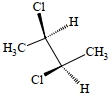
$\mathrm{CH}_{3} \mathrm{CH}_{2} \mathrm{CH}_{2} \mathrm{Br}+\mathrm{Z}^{-}$$\xrightarrow[{{\text{Sublimation}}}]{{{k_s}}} \mathrm{CH}_{3} \mathrm{CH}_{2} \mathrm{CH}_{2} \mathrm{Z}+\mathrm{Br}^{-}$
$\mathrm{CH}_{3} \mathrm{CH}_{2} \mathrm{CH}_{2} \mathrm{Br}+\mathrm{Z}^{-}$$\xrightarrow[{{\text{elimination}}}]{{{k_e}}}\mathrm{CH}_{3} \mathrm{CH}= \mathrm{CH}_{2} +\mathrm{HZ}+\mathrm{Br}^{-}$
where
$\mathrm{Z}^{-}=\mathrm{CH}_{3} \mathrm{CH}_{2} \mathrm{O}^{-}(\mathrm{A})$ or $\begin{array}{*{20}{c}}
{\,C{H_3}} \\
{|\,\,\,\,\,} \\
{C{H_3} - C - {O^ - }(B)} \\
{|\,\,\,\,} \\
{\,\,C{H_3}}
\end{array}$
$\mathrm{k}_{\mathrm{s}}$ and $\mathrm{k}_{\mathrm{e}},$ are $,$ respectively, the rate constants for the substitution and elimination, and $\mu=\frac{\mathrm{k}_{\mathrm{s}}}{\mathrm{k}_{\mathrm{e}}},$ the correct options is