MCQ
The Davisson-Germer experiment is the direct evidence of
  • A
    Particle nature of electron
  • Wave nature of electron
  • C
    Wave nature of light
  • D
    Particle nature of light

Answer

Correct option: B.
Wave nature of electron
b

Need a full question paper?

Generate a complete, print-ready paper with questions like this in minutes — across 16+ boards, with answer keys.
Start Generating Free

Similar questions

Assertion : On going away from a point charge or a small electric dipole, electric field decreases at the same rate in both the cases.
Reason : Electric field is inversely proportional to square of distance from the charge or an electric dipole.
The heavier nuclei tend to have larger $\frac{\text{N}}{\text{Z}}$ ratio because:
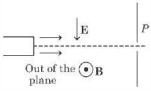
A collimated beam of charged and uncharged particles is directed towards a hole marked $P$ on a screen as shown below. If the electric and magnetic fields as indicated below are turned $ON$
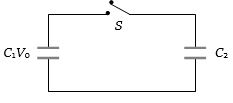
A capacitor of capacity ${C_1}$ is charged to the potential of ${V_o}$. On disconnecting with the battery, it is connected with a capacitor of capacity ${C_2}$ as shown in the adjoining figure. The ratio of energies before and after the connection of switch $S$ will be
$A$ flat glass slab of thickness $6\, cm$ and index $1.5$ is placed in front of a plane mirror. An observer is standing behind the glass slab and looking at the mirror. The actual distance of the observer from the mirror is $50\, cm$. The distance of his image from himself, as seen by the observer is .......$cm$
Which of the nine planets is nearest to sun
In Young's double slit interference experiment, the slit separation is made $3$ folds. The fringe width becomes ......... times
Assertion : The magnetic field produced by a current carrying solenoid is independent of its length and cross-sectional area.

Reason : The magnetic field inside the solenoid is uniform.

The same size images are formed by a convex lens when the object is placed at $20\, cm$ or at $10\, cm$ from the lens. The focal length of convex lens is ............ $cm$.
The refractive index of a certain glass is 1.5 for light whose wavelength in vacuum is 6000 Å. The wavelength of this light when it passes through glass is