MCQ
The decreasing order of boiling points is
  • $n-$ Pentane > iso-Pentane > neo-Pentane
  • B
    iso-Pentane > $ n-$ Pentane > neo-Pentane
  • C
    neo-Pentane > iso-Pentane >$ n-$ Pentane
  • D
    $n-$ Pentane > neo-Pentane > iso-Pentane

Answer

Correct option: A.
$n-$ Pentane > iso-Pentane > neo-Pentane
a
As the boiling point of an alkane depends on the surface area of a molecule, higher the surface is, higher the boiling point of alkane. The branched-chain isomer of an alkane has a lower surface area than that of its straight-chain isomer, so the branched-chain isomer of an alkane has a lower boiling point than its straight-chain isomer.

So, higher the branches, lower is the boiling point.

So, the order of boiling point of isomeric pentanes is $n -$ pentane $\,>\,$ iso $-$ pentane $\,>\,$ neo $-$ pentane.

Need a full question paper?

Generate a complete, print-ready paper with questions like this in minutes — across 16+ boards, with answer keys.

Start Generating Free

Similar questions

The order of reactivity of following compounds :

$(I)$ $\phi -CH_3$

$(II)$ $\phi -CH_2-CH_3$

$(III)$ $\phi -CH(CH_3)_2$

$(IV)$ $\phi-C(CH_3)_3$

towards electrophilic substitution will be - [where $\phi =C_6H_5$]

Petroleum refining is
Which forms interstitial compounds
Correct order of $H$ -bond strength is :

$F - H - \frac{a}{{}} -  - {F^ - }$               $F - H - \frac{b}{{}} -  - F$

$O - H - \frac{c}{{}} -  - N$                     $O - H - \frac{d}{{}} -  - O$

The ratio of the mass percentages of $'C$ $\&$ $H'$ and $'C$ $\&$ $O'$ of a saturated acyclic organic compound$'X'$ are $4 : 1$ and $3 : 4$ respectively. Then, the moles of oxygen gas required for complete combustion of two moles of organic compound $'X$' is
$pOH$ of water is $7.0$ at $298\,K$ . If water is heated to $350\,K$ , which of the following should be true?
Which is the correct sequence in the following, poperties? For the correct order mark $(T)$ and for the incorrect order mark $(F)$

$(a)$ Lewis acidity order : $SiF_4 < SiC_{4} < SiBr_4 < Sil_4$

$(b)$ Melting point : $NH_3 > SbH_3 > AsH_3 > PH_3$

$(c)$ Boiling point : $NH_3 > SbH_3 > AsH_3 > PH_3$

$(d)$ Dipole moment order : $NH_3 > SbH_3 > AsH_3 > PH_3$

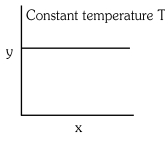
The given graph is a representation of kinetics of a reaction.

$[Image]$

The $y$ and $x$ axes for zero and first order reactions, respectively are
The major product obtained on treatment of
$CH_3CH_2CH(F)CH_3$ with $CH_3O^-/CH_3OH$ is
${H_2}S$ reacts with halogens, the halogens