MCQ
The Doppler effect is applicable for
  • A
    Sound waves only
  • B
    Light waves only
  • Both sound and light waves
  • D
    None of these

Answer

Correct option: C.
Both sound and light waves
c
The Doppler effect is applicable for both sound and light waves.

Need a full question paper?

Generate a complete, print-ready paper with questions like this in minutes — across 16+ boards, with answer keys.

Start Generating Free

Similar questions

A body of mass $10\ kg$ is acted upon by two perpendicular forces, $6N$ and $8N.$ The resultant acceleration of the body is:
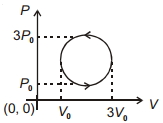
Work done in the cyclic process shown in figure is ...........
A source of frequency $\nu$ gives $5$ beats/second when sounded with a source of frequency $200 \;Hz$. The second harmonic of frequency $2\nu$ of source gives $10$ beats/second when sounded with a source of frequency $420\; Hz$. The value of $v$ is .... $Hz$
A sphere of ice at $0^o C$ having initial radius $R$ is placed in an environment having ambient temperature $> 0^o C$. The ice melts uniformly, such that shape remains spherical. After a time $‘t’$ the radius of the sphere has reduced to$r$. Assuming the rate of heat absorption is proportional to the surface area of the sphere at any moment, which graph best depicts $r (t)$.
A monkey is sitting on the pan of a spring balance which is placed on an elevator. The maximum reading of the spring balance will be when
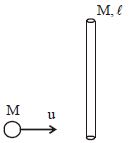
A rod of mass $M$ and length $l$ is at rest on plane horizontal smooth surface. A particle of same mass $M$ strike one end with velocity $u$ perpendicular to rod, elastically. Now just after collision what is the kinetic energy of upper half part of rod.
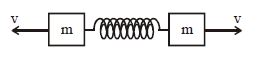
Two blocks each of mass $m$  are connected to a spring of spring constant $k.$  If both are given velocity $v$  in opposite directions, then the maximum elongation of the spring is
Albert Einstein introduced the concept of:
A ball is projected from ground at an angle of $\theta $ from horizontal then graph of kinetic energy and time will be
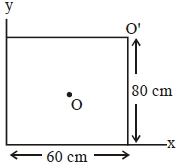
For a uniform rectangular sheet shown in the figure, the ratio of moments of inertia about the axes perpendicular to the sheet and passing through $O$ (the centre of mass) and $O ^{\prime}($ corner point $)$ is