MCQ
The electron emitted in beta radiation originates from:
- AInner orbits of atoms
- BFree electrons existing in nuclei
- CDecay of a neutron in a nucleus
- DPhoton escaping from the nucleus
Explanation:
The electron emitted in beta radiation may originates from neutron and it increases the atomic number 1.
Generate a complete, print-ready paper with questions like this in minutes — across 16+ boards, with answer keys.
The mass defect for the nucleus of helium is 0.0303 a.m.u. What is the binding energy per nucleon for helium in MeV
|
(a) 28 |
(b) 7 |
(c) 4 |
(d) 1 |
Isotopes are atoms having
|
(a) Same number of protons but different number of neutrons |
|
(b) Same number of neutrons but different number of protons |
|
(c) Same number of protons and neutrons |
|
(d) None of the above |
The variation of magnetic susceptibility (x) with temperature for a diamagnetic substance is best represented by
|
(a)
|
(b)
|
(c)
|
(d)
|
Plane figures made of thin wires of resistance R = 50 milli ohm/metre are located in a uniform magnetic field perpendicular into the plane of the figures and which decrease at the rate dB/dt = 0.1 m T/s. Then currents in the inner and outer boundary are. (The inner radius a = 10 cm and outer radius b = 20 cm)
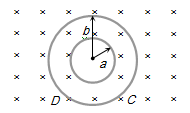
|
(a) 10– 4 A (Clockwise), 2 × 10– 4 A (Clockwise) |
|
(b) 10– 4 A (Anticlockwise), 2 × 10– 4 A (Clockwise) |
|
(c) 2 × 10– 4 A (clockwise), 10– 4 A (Anticlockwise) |
|
(d) 2 × 10– 4 A (Anticlockwise), 10– 4 A (Anticlockwise) |
In the network shown in the figure, each of the resistance is equal to 2Ω. The resistance between the points A and B is

|
(a) 1 Ω |
(b) 4 Ω |
(c) 3 Ω |
(d) 2 Ω |
The mass equivalent of 931 MeV energy is
|
(a) 1.66 |
(b) 6.02 |
(c) 1.66 |
(d) 6.02 |


