MCQ
The electronic configuration of calcium ion $(C{a^{2 + }})$ is
  • A
    $1{s^2},2{s^2}2{p^6},3{s^2}3{p^6},4{s^2}$
  • B
    $1{s^2},2{s^2}s{p^6},3{s^2}3{p^6},4{s^1}$
  • C
    $1{s^2},2{s^2}2{p^6},3{s^2}3{p^6}3{d^2}$
  • $1{s^2},2{s^2}2{p^6},3{s^2}3{p^6},4{s^0}$

Answer

Correct option: D.
$1{s^2},2{s^2}2{p^6},3{s^2}3{p^6},4{s^0}$
d
The electronic configuration for $Ca$ is $1 s ^2\, 2 s ^2\, 2 p ^6 \,3 s ^2 \,3 p ^6 \,4 s ^2$

The calcium atom loses two electrons for the formation of $Ca ^{2+}$.

So, two electrons are removed from the $4 s$ orbital for the formation of $Ca ^{2+}$

Hence, the electronic configuration of $Ca ^{2+}$ is $1 s ^2\, 2 s ^2 \,2 p ^6 \,3 s ^2 \,3 p ^6$.

Need a full question paper?

Generate a complete, print-ready paper with questions like this in minutes — across 16+ boards, with answer keys.
Start Generating Free

Similar questions

$2-$ Hexyne gives trans $-2-$ Hexene on treatment with :
Which one of the following contains asymmetric carbon atom
Solubility of $N_2$ gas in water at $25\,^oC$ and $0.78\, atm$ is $5.4 \times 10^{-4}\, M$. Calculate Henry's law constant for $N_2$ in water at $25\,^oC$.
Given below are two statement one is labeled as 
Assertion (A) and the other is labeled as Reason (R). 
Assertion (A): $CH _2$. = CH – CH2 – Cl is an example of allyl halide 
Reason (R): Allyl halides are the compounds in which the halogen atom is attached to $sp ^2$ hybridised carbon atom.
In the light of the two above statements, choose the most appropriate answer from the options given below: 
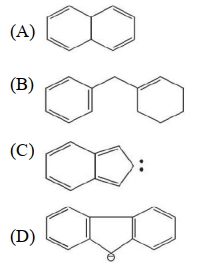
Among the given organic compounds, the total number of aromatic compounds is___________
Which of the following statements is not correct regarding $NO_2$ molecule
$pH$ of a $H_2SO_4$ solution is $5.0$ If more $H_2SO_4$ is mixed in this solution then  $pH$ becomes $2.0$ then concentration of $H^+$ will becomes.....$times$
A $100\,mL$ solution of $CH _{3} CH _{2} MgBr$ on treatment with methanol produces $2.24\,mL$ of a gas at $STP$. The weight of gas produced is $......mg$. [nearest integer]
Consider the following reactions
$K _2 Cr _2 O _7 \xrightarrow[- H _2 O ]{ KOH }[ A ] \xrightarrow[- H _2 O ]{ H _2 SO _4}[B]+ K _2 SO _4$
The products [A] and [B], respectively are :
Which of the following isomerism is not possible for complexes having molecular  formula : 
$(i)\, Pt(SCN)_2 · 3PEt_3$

$(ii)\, CoBr · SO_4 · 5NH_3$

$(iii)\, FeCl_3 · 6H_2O$