MCQ
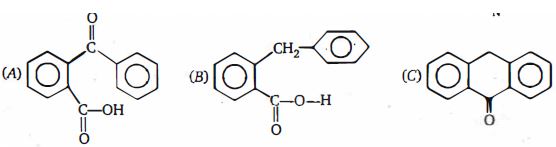
The end product $(C)$ is

- A
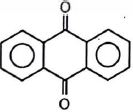
- ✓
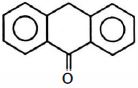
- C
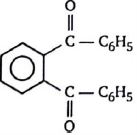
- D
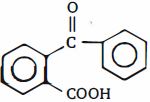
Generate a complete, print-ready paper with questions like this in minutes — across 16+ boards, with answer keys.
| Exp. | $[A]\,(mol\,L^{-1})$ | $[B]\,(mol\,L^{-1})$ | Initial rate $(mol\,L^{-1}\,s^{-1})$ |
| $1.$ | $2.5\times 10^{-4}$ | $3\times 10^{-5}$ | $5\times 10^{-4}$ |
| $2.$ | $5\times 10^{-4}$ | $6\times 10^{-5}$ | $4\times 10^{-3}$ |
| $3.$ | $1\times 10^{-3}$ | $6\times 10^{-5}$ | $1.6\times 10^{-2}$ |
$\frac{2}{3} Al_2 O_3 \rightarrow \frac{4}{3} Al + O_2$
$\Delta _rG = + 960\, kJ\, mol^{-1}$
The potential difference needed for the electrolytic reduction of aluminium oxide $(Al_2O_3)$ at $500^oC$ is at least ........ $V$.