Question
The extraction of Au by leaching with $NaCN$ involves both oxidation and reduction. Justify giving equations.
Answer

$4\text{Au}(\text{s})+8\text{CN}^{-}(\text{aq})+2\text{H}_2\text{O}(\text{aq})+\text{O}_2(\text{g})\\\xrightarrow{ \ \ \ \ \ \ \ \ \ \ }4[\text{Au}(\text{CN})_2]^{-}(\text{aq})+4\text{OH}^{-}(\text{aq})$
$2[\text{Au}(\text{CN})_2]^{-}(\text{aq})+\text{Zn}(\text{s})\\\xrightarrow{ \ \ \ \ \ \ \ }2\text{Au}(\text{s})+[\text{Zn}(\text{CN})_4]^{2-}(\text{aq})$
In the first reaction, $Au$ changes into $Au^+$, i.e., its oxidation takes place. In the second case, $Au^+$ changes to $Au,$ i.e., reduction takes place.

Need a full question paper?

Generate a complete, print-ready paper with questions like this in minutes — across 16+ boards, with answer keys.

Start Generating Free

Similar questions

How would you account for the following situations?
  1. The transition metals generally form coloured compounds.
  2. With $3d^4$​​​​​​​ configuration, $Cr^{2+}$ acts as a reducing agent but $Mn^{3+}$​​​​​​​ acts as an oxidising agent. (Atomic Numbers, $Cr = 24, Mn = 25$).
  3. The actinoids exhibit a larger number of oxidation states than the corresponding lanthanoids.
Consider a certain reaction $A \rightarrow$ Products with $k =2.0 \times 10^{-2} S^{-1}$. Calculate the concentration of A remaining after 100 $s$ if the initial concentration of $A$ is $1.0 mol L ^{-1}$.
  1. The cell in which the following reaction occurs:
$2 Fe^{3+} (aq) + 2 I^- (aq) \longrightarrow 2 Fe^{2+}(aq) + I_2 (s)$

has $\text{E}^0_{\text{cell}}$ = 0·236 V at 298 K. Calculate the standard Gibbs energy of the cell reaction. (Given : $1 F = 96,500 C mol^{-1}$)
  1. How many electrons flow through a metallic wire if a current of 0·5 A is passed for 2 hours? (Given : $1 F = 96,500 C mol^{-1}$)
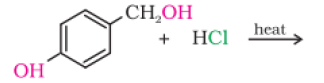
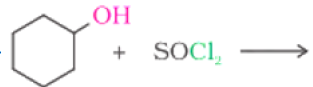
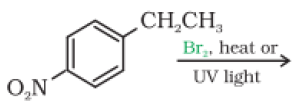
Draw the structures of major monohalo products in each of the following reactions:
(1)
Image
(2)
Image
(3)
Image
Write the structures of compounds A, B and C in the following reactions:
  1. $\text{CH}_3-\text{COOH}\xrightarrow{\text{ }\text{ }\text{ }\text{NH}_3/\triangle\text{ }\text{ }\text{ }}\text{A}\xrightarrow{\text{ }\text{ }\text{ }\text{Br}_2/\text{KOH(aq)}\text{ }\text{ }\text{ }}\text{B}\xrightarrow{\text{ }\text{ }\text{ }\text{CHCL}_3+\text{alc.KOH}\text{ }\text{ }\text{ }}\text{C}$
  1. $\text{C}_6\text{H}_5\text{N}_2^+\text{BF}_4^-\xrightarrow[\triangle]{\text{NaNO}_2/\text{Cu}\text{ }\text{ }}\text{A}\xrightarrow{\text{ }\text{ }\text{ }\text{Fe}/\text{HCL}\text{ }\text{ }\text{ }}\text{B}\xrightarrow{\text{ }\text{ }\text{ }\text{CH}_3\text{COCL}/pyridine\text{ }\text{ }\text{ }}\text{C}$
The density of copper metal is $8.95\ g\ cm^{–3}.$ If the radius of copper atom be $127.8$ pm, is the copper unit cell simple cubic, body-centred cubic or face-centred cubic$?\ ($Given: Atomic mass of $Cu = 63.54\ g\ mol^{–1}$ and $N_A = 6.02 \times 10^{23}\ mol^{–1}).$
  1. Deficiency of which vitamin causes night-blindness?
  2. Name the base that is found in nucleotide of RNA only.
  3. Glucose on reaction with HI gives n-hexane. What does it suggest about the structure of glucose?
Name the reagents used in the following reactions$:$
$i.$ Oxidation of a primary alcohol to carboxylic acid.
$ii.$ Oxidation of a primary alcohol to aldehyde.
$iii.$ Bromination of phenol to $2,4,6-$tribromophenol.
$iv.$ Benzyl alcohol to benzoic acid.
$v.$ Dehydration of propan$-2-$ol to propene.
$vi.$ Butan$-2-$one to butan$-2-$ol.
How would you bring about the following conversions?
i. Propanal to butanone
ii. Benzaldehyde to benzophenone
iii. Benzoyl chloride to benzonitrile
An optically active compound having molecular formula C6H12O6 is found in two isomeric forms (A) and (B) in nature. When (A) and (B) are dissolved in water, they show the following equilibrium.
$(\text{A})\ \ \ \ \rightleftharpoons\ \ \ \ \text{Equilibrium mixture}\ \ \ \ \rightleftharpoons\ \ \ \ \text{(B)}\\ [\alpha]_{\text{D}}=111^\circ\ \ \ \ \ \ \ \ \ \ \ \ \ \ 52.2^\circ\ \ \ \ \ \ \ \ \ \ \ \ \ \ \ \ \ \ \ \ \ \ \ \ \ \ 19.2^\circ$
  1. What are such isomers called?
  2. Can they be called enantiomers? Justify your answer.
  3. Draw the cyclic structure of isomer (A).