MCQ
The factors of x3 - 7x - 6 are.
  • A
    x(x - 6) (x - 1)
  • B
    (x - 1) (x - 3) (x + 2)
  • C
    (x + 1) (x + 2) (x - 3)
  • D
    (x2 - 6) (x - 1)

Answer

  1. (x + 1) (x + 2) (x - 3)
    Solution:
    The given expression to be factorized is x3 - 7x + 6
    This can be written in the form
    x3 - 7x + 6 = x3 - (1 + 6)x + 6
    = x3 - x - 6x + 6
    Take common x from the first two terms and -6 from the last two terms.
    Then we have,
    x3 + 7x + 6 = x(x2 - 1) - 6(x - 1)
    = x{(x)2 - (1)2} - 6{x - 1}
    = x(x + 1)(x - 1) - 6(x - 1)
    Finally, take common (x - 1) from the above expression,
    x3 - 7x + 6 = (x - 1) {(x + 1) - 6}
    = (x - 1) (x2 + x - 6)
    = (x - 1) (x2 + 3x - 2x - 6)
    = (x - 1) {x(x + 3) - 2(x + 3)}
    = (x - 1) (x + 3) (x - 2)

Need a full question paper?

Generate a complete, print-ready paper with questions like this in minutes — across 16+ boards, with answer keys.

Start Generating Free

Similar questions

Directions: In the following questions, the Assertions (A) and Reason(s) (R) have been put forward. Read both the statements carefully and choose the correct alternative from the following:
Assertion: a sequence finite or infinite list of numbers
Reason: 1, 2, 3, 4 ——– is the sequence an infinite sequence of natural no.
In each of the questions one question is followed by two statements I and II. Choose the correct option.
Is quadrilateral ABCD a rhombus?
  1. Quadrilateral ABCD is a ||gm.
  2. Diagonals AC and BD are perpendicular to each other.
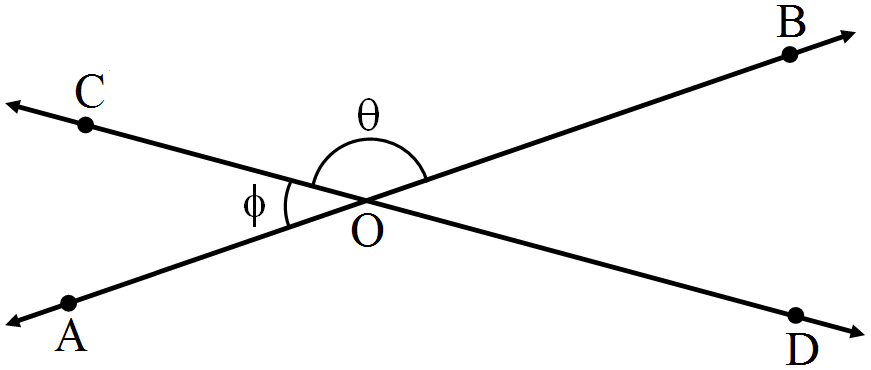
In the given figure, straight lines AB and CD interect at O.If $\angle\text{AOC}=\phi,\angle\text{BOC}=\theta$ and $\theta=3\phi,$
then $\phi=?$
  1. 30º
  2. 40º
  3. 45º
  4. 60º

Write the correct answer in the following:
Value of (256)0.16 × (256)0.09 is.
  1. 4
  2. 16
  3. 64
  4. 256.25
The number of angles formed by a transversal with a pair of parallel lines are.
Write the correct answer in the following:
Mode of the data 15, 14, 19, 20, 14, 15, 16, 14, 15, 18, 14, 19, 15, 17, 15 is:
  1. 14
  2. 15
  3. 16
  4. 17
A linear equation in two variables x and y is of the form ax + by + c = 0, where:
If the area of the adjacent faces of a rectangular block are in the ratio 2 : 3 : 4 and its volume is 9000cm3, then the length of the shortest edge is:
  1. 30cm
  2. 20cm
  3. 15cm
  4. 10cm