MCQ
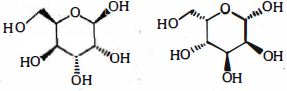
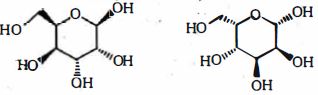
The following compounds differ in respect of
- Atheir chemical and physical properties
- Bnothing
- ✓the direction in which they rotate plane of polarized light
- Dtheir interactions with molecules
Generate a complete, print-ready paper with questions like this in minutes — across 16+ boards, with answer keys.
Statement $I :$ Bohr's theory accounts for the stability and line spectrum of $Li ^{+}$ ion.
Statement $II :$ Bohr's theory was unable to explain the splitting of spectral lines in the presence of a magnetic field.
In the light of the above statements, choose the most appropriate answer from the options given below:
$(i)$ $4.5\, mL$ $\quad (ii)$ $4.5\, mL$ $\quad (iii)$ $4.4\, mL$
$(iv)$ $4.4\, mL$ $\quad (v)$ $4.4\, mL$
If the volume of oxalic acid taken was $10.0 \,mL$ then the molarity of the $NaOH$ solution is .... $M.$ (Rounded-off to the nearest integer)
$H _{2}+\frac{1}{2} O _{2} \rightarrow H _{2} O , \cdots \cdots( ii )$ $\Delta H =-\,287.3 \,kJ\,mol ^{-1}$
$2 CO _{2}+3 H _{2} O \rightarrow C _{2} H _{5} OH +3 O _{2} \cdots \cdots ( iii )$; $ \Delta H =1366.8 \,kJ\,mol ^{-1}$
Find the standard enthalpy of formation of $C _{2} H _{5} OH (1)$