MCQ
The force of attraction or repulsion between two charges is given by __________.
- AGauss's law
- BKepler's law
- CCoulomb's law
- DGravitational law
Explanation:
Coulomb's law: The force exerted by one point charge is proportional to the product of the charge and varies inversely as the sure of the distance separating the charges.
Generate a complete, print-ready paper with questions like this in minutes — across 16+ boards, with answer keys.
A cylindrical rod magnet has a length of 5 cm and a diameter of 1 cm. It has a uniform magnetisation of 5.30 × 10³Amp/m3. What its magnetic dipole moment
(a) 1 
|
(b) 2.08
|
(c) 3.08
|
(d) 1.52
|
For the study of the helical structure of nucleic acids, the property of electromagnetic radiation generally used is
|
(a) Reflection |
(b) Interference |
(c) Diffraction |
(d) Polarization |
$\oint\limits_\text{S}\text{E.ds}=\frac{\text{q}}{\in_0}$
Which of the following statements is correct?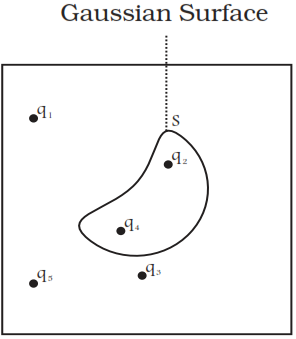
When a wire of uniform cross-section a, length l and resistance R is bent into a complete circle, resistance between any two of diametrically opposite points will be
|
(a) |
(b) |
(c) 4R |
(d) |
An object is placed at a distance of f/2 from a convex lens. The image will be
|
(a) At one of the foci, virtual and double its size |
|
(b) At 3f / 2, real and inverted |
|
(c) At 2f, virtual and erect |
|
(d) None of these |


